What Size Pipe Wrench for Each Pipe Diameter?
Pick a wrench whose maximum capacity is at least as wide as your pipe, and whose handle gives enough leverage without being oversized. As a rule of thumb, a 10 to 14 inch wrench suits 1 inch pipe, an 18 inch wrench suits 2 inch pipe, a 24 inch wrench suits 3 inch pipe, and 4 inch pipe usually calls for a 36 inch wrench or longer.
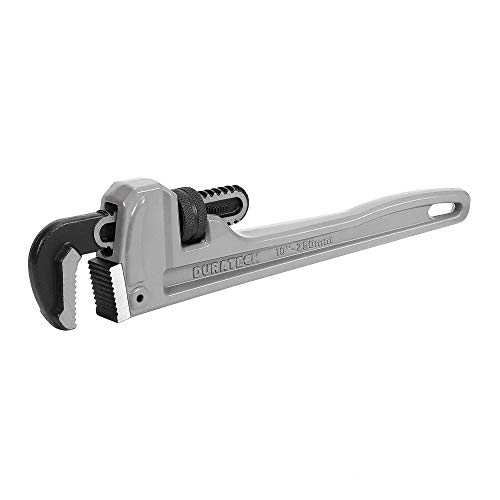 DURATECH DTAHDPW10Best overall
 KARRYTON KTAPW048Largest pipe capacity
 RIDGID 814Made in USA pick
How wrench size and pipe size relate
Pipe wrenches are sold by handle length, such as 10, 14, 18 or 24 inches. Each length has a maximum jaw opening, usually called pipe capacity. That capacity is the widest pipe the jaw can grip, so it is the first number to check.
One catch: pipe is sold by nominal size, and the real outside diameter is a bit larger. A 2 inch pipe measures about 2.375 inches across, for example. Wrench makers usually list capacity in nominal pipe size, but read the listing so you know which one they mean.
Length also matters because the handle is a lever. A longer handle gives more turning force, which large or stuck pipe needs. The tradeoff is weight and room to swing, which is why you want the shortest wrench that still has the capacity and leverage for the job.
Quick size chart by pipe diameter
This chart gives common rules of thumb for nominal pipe sizes. Brands differ a little, so confirm capacity on the wrench you plan to buy.
| Nominal pipe size | Typical wrench length | Notes |
|---|---|---|
| 1/2 to 3/4 inch | 8 to 10 inch | Small fittings and supply lines |
| 1 inch | 10 to 14 inch | Common for household gas and water lines |
| 1-1/2 inch | 14 to 18 inch | Many sink drains fall here |
| 2 inch | 18 inch | Good balance of reach and weight |
| 2-1/2 inch | 18 to 24 inch | Check the listed capacity |
| 3 inch | 24 inch | Needs real leverage |
| 4 inch | 36 inch or longer | Heavy and long, plan for room to work |
What size pipe wrench for 1 inch and 2 inch pipe
For 1 inch pipe, a 14 inch wrench is a comfortable all-around size. A 10 inch wrench also works on small fittings and in tight spaces. The DURATECH 10-inch aluminum wrench weighs 1.08 lb and has a slim head meant for tight and overhead spots, though its listing does not state a maximum capacity.
For 2 inch pipe, step up to 18 inches. The RIDGID Model 818 is an 18 inch aluminum wrench with a 2.5 inch capacity at 3.8 lb, and its listing calls it suited to pipe from 1 inch to 2 inches. The 14 inch RIDGID Model 814 tops out at 2 inches, so it would be right at its limit on 2 inch pipe. You can compare these and more on our best pipe wrench page.
What size pipe wrench for 3 inch and 4 inch pipe
For 3 inch pipe, you need a wrench with a capacity of at least 3 inches. The RIDGID Model 24 is a 24 inch ductile iron wrench with a 3 inch capacity. It weighs 9.55 lb, and its listing recommends it for pipe from 1-1/2 inches to 2-1/2 inches. That means 3 inch pipe is at the very edge of what it can grip.
Four inch pipe is beyond most of the wrenches in our lineup. The KARRYTON 48-inch aluminum wrench opens to 8 inches, and its listing says it suits pipe from 2 inches to 6 inches. It also weighs 17.5 lb, so it is a two-handed tool that needs space and a firm stance.
If you only work on 4 inch pipe occasionally, a chain wrench or strap wrench may be easier to handle than a very large pipe wrench. Check the capacity and weight on our pipe wrench comparison before you decide.
What size pipe wrench for a kitchen sink
Most kitchen sink work involves two kinds of pipe. The drain pieces are usually 1-1/2 inch, and the water supply lines are much smaller. A 10 or 14 inch wrench covers nearly all of it.
Before you grab a pipe wrench, check what you are turning. Pipe wrench teeth bite into metal and will chew up chrome and soft plastic. Plastic drain nuts are normally hand tightened or turned with slip-joint pliers. A pipe wrench is better for threaded steel or iron pipe, and for stubborn old fittings you plan to replace anyway.
How to choose and use the right size
Follow these steps to get the match right:
- Measure or read the nominal size printed on the pipe or fitting.
- Choose a wrench with a listed capacity at or above that size, ideally with the pipe well inside the jaw range, not at its limit.
- Use two wrenches when tightening or loosening a joint: one to hold the fitting still and one to turn.
- Set the jaw so the pipe sits deep in the hook, then pull toward the open side of the jaw so the teeth bite harder.
- Keep the jaws clean and replace worn parts, since dull teeth slip.
Safety notes
Turn off the water at the shutoff before you open any water line. For gas pipe, shut off the gas first and ask a licensed professional if you are not sure about the work. A leaking gas joint is a fire and health risk.
Wear safety glasses, because rust and debris can fly when a stuck joint lets go. Gloves protect your hands from sharp edges and pinch points.
Do not slide a length of pipe over the handle to get extra leverage. It can bend the wrench or make it slip suddenly. Use a longer wrench instead. If you work on a ladder or overhead, make sure your footing is stable, because a joint that suddenly breaks free can throw you off balance.
Frequently asked questions
Can one pipe wrench do every job around the house?
Not well. Many people keep a 10 or 14 inch wrench for small pipe and an 18 inch wrench for larger fittings, and use two when they need to hold one part still.
Is an aluminum or iron handle better?
Aluminum is lighter, and listings for the aluminum models in our lineup describe them as nearly 40% lighter than iron. Iron handles weigh more, and the iron models we list meet or are described under the GGG-W-651 federal spec.
Can I use a pipe wrench on PVC or chrome?
It is best not to. The teeth can crush plastic and scar chrome, so use a strap wrench or slip-joint pliers instead.
What happens if my wrench is too big for the pipe?
It will still turn the pipe, but the bulk makes it awkward in tight spaces, and the extra leverage makes it easy to overtighten and damage a fitting.