What Size Pipe Wrench Do I Need for My Project?
For most home plumbing, a 14-inch pipe wrench is the practical starting size, and an 18-inch wrench adds reach for stubborn fittings and slightly larger pipe. Choose by the widest pipe the jaw can grip, then pick the shortest handle that gives you enough leverage. Go to 24 inches or longer only for large pipe or very tight connections.
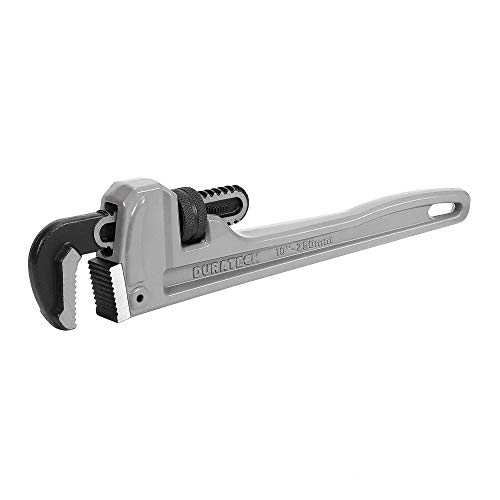 DURATECH DTAHDPW10Best overall
 KARRYTON KTAPW048Largest pipe capacity
 RIDGID 814Made in USA pick
How pipe wrench sizes work
Pipe wrenches are sold by handle length in inches, such as 10, 14, 18 or 24. That number tells you how much leverage you get. A longer handle turns a tight fitting with less effort from you.
Length also sets the jaw capacity, which is the widest pipe the jaw can open around. Capacity grows with length, but not by the same amount. In the products we compare, a 14-inch wrench lists a 2 in capacity, an 18-inch wrench lists 2.5 in, and a 24-inch wrench lists 3 in.
Keep one detail in mind. Pipe is named by its nominal size, and the outside diameter is larger than the name suggests. Measure across the outside of the pipe or fitting you plan to grip, and compare that to the wrench capacity, not to the pipe name.
Pipe wrench sizes at a glance
This table uses the published specifications from the wrenches on our comparison page. Capacity and weight vary by maker, so treat these as examples of each size, not fixed rules.
| Handle length | Max pipe capacity | Weight | Handle material | Example |
|---|---|---|---|---|
| 10 in | Not listed | 1.08 lb | Aluminum | DURATECH DTAHDPW10 |
| 14 in | 2 in | 2.5 lb | Aluminum | RIDGID Model 814 |
| 18 in | 2.5 in | 3.8 lb | Aluminum | RIDGID Model 818 |
| 18 in | 2.5 in | 4 lb | Ductile iron | RIDGID Model 18 |
| 24 in | 3 in | 9.55 lb | Ductile iron | RIDGID Model 24 |
| 48 in | 8 in | 17.5 lb | Aluminum | KARRYTON KTAPW048 |
What size works for home use
Most household jobs involve small supply lines, drain fittings and the occasional threaded connection. A 14-inch wrench with a 2 in capacity covers that range, and at 2.5 lb it is easy to carry and control. If you buy only one wrench, this is the size to look at first.
A 10-inch wrench is useful as a second tool. The DURATECH weighs 1.08 lb and has a slim head, which suits tight spaces under sinks and overhead runs. Its listing does not give a maximum pipe capacity, so check the jaw opening before you count on it for anything wider than small pipe.
An 18-inch wrench is a good step up if you expect to deal with seized fittings or slightly wider pipe. You get 2.5 in of capacity and more leverage, at 3.8 lb in aluminum or 4 lb in ductile iron. If you want to compare these options in more detail, see our best pipe wrench page.
When to go bigger
Bigger wrenches make sense when the pipe is wide or the joint has been tight for years. A 24-inch wrench opens to 3 in and weighs 9.55 lb in the ductile iron model we list. That weight is noticeable, so expect to use it with two hands and a stable stance.
At the far end, the KARRYTON 48-inch aluminum wrench opens to 8 in, the widest capacity on our page. It weighs 17.5 lb, so it belongs in the realm of large pipe and heavy-duty work, not routine repairs around the house. Its listing describes it for pipe from 2 to 6 inches.
Here is a simple way to think about it:
- Small supply and drain work: 10 to 14 inches.
- Mixed household plumbing and stuck fittings: 14 to 18 inches.
- Wider pipe or long-seized joints: 24 inches or more.
- Very large pipe: look at capacity first, and expect a heavy tool.
Aluminum or iron handle
Once you know the size, the handle material is the next choice. Aluminum handles are lighter. Several of the listings say they are about 40% lighter than comparable cast iron or heavy-duty models. That helps when you work overhead or for a long stretch.
Ductile iron is heavier, but some iron models are marked as meeting the GGG-W-651 federal spec, which gives you a documented standard to check. For occasional home use, aluminum is usually the easier fit. If you want a spec-backed build, compare the iron options on our pipe wrench comparison.
Also look at serviceability. A floating hook jaw adjusts quickly, and replaceable jaws and a spring let you repair a worn wrench instead of replacing it. Five of the six products we list include these features.
Use the wrench safely
A pipe wrench is made to bite into metal, and that grip can slip or shift under force. A few habits reduce the risk of injury and damage.
Wear safety glasses and sturdy gloves, because rust, scale and sudden slips are common. Shut off the water before you loosen any fitting, and keep a bucket or towel handy.
Do not work on gas lines unless you are qualified and the gas is shut off. A loose or damaged gas fitting is a fire and health hazard, so call a licensed professional if you are unsure.
If you work from a ladder or overhead, keep both feet planted and your body balanced. A wrench that slips can throw you off balance, and heavier wrenches make that risk larger.
- Place the jaw so the pull direction drives the pipe into the hook jaw.
- Set the jaw snug on the pipe before you apply force.
- Use a second wrench to hold the other fitting still, so you do not twist a pipe run.
- Do not slide a length of pipe over the handle for extra leverage. It can bend the wrench or break it.
A quick way to choose
Start by measuring the outside of the widest pipe or fitting you expect to grip. Pick a wrench whose listed capacity is comfortably above that number. A wrench that barely fits is awkward to set, and one far too large is heavy and clumsy.
Then think about space and effort. If you work in tight areas, a shorter, lighter wrench helps. If you face stuck joints, a longer handle gives more leverage, and you can add weight only as needed.
Last, check the jaw and parts. Look for forged jaws, replaceable parts and a floating hook jaw if you plan to use the tool for years. Our best pipe wrench page lines these specs up side by side so you can match a wrench to your project.
Frequently asked questions
Do I need two pipe wrenches?
For many jobs, yes. One wrench turns the fitting and a second holds the other part steady so the pipe run does not twist or loosen elsewhere.
Can I use a pipe wrench on chrome or finished fixtures?
It is best to avoid it. The teeth leave marks on soft or polished surfaces, so use a strap wrench or a tool made for finished fittings instead.
Which way should the jaw face?
Set the wrench so the open side of the jaw faces the direction you pull. The force then tightens the grip on the pipe instead of letting it slip.
Is a bigger wrench always better?
No. A larger wrench is heavier and harder to fit in tight spaces. Choose the shortest wrench that has the capacity and leverage you need.