What Size Oil Drain Plug and Gasket Do You Need?
The right size is set by your engine's oil pan, so there is no single answer. Look up the thread (diameter and pitch) in your owner's manual or parts listing, then match the gasket's inside diameter to that thread. For a 2018 Silverado, the plug depends on the engine, so confirm it against your exact engine before you buy.
 ValvoMax [VM-QT-001]Best overall
 Fumoto F106NLever clip included
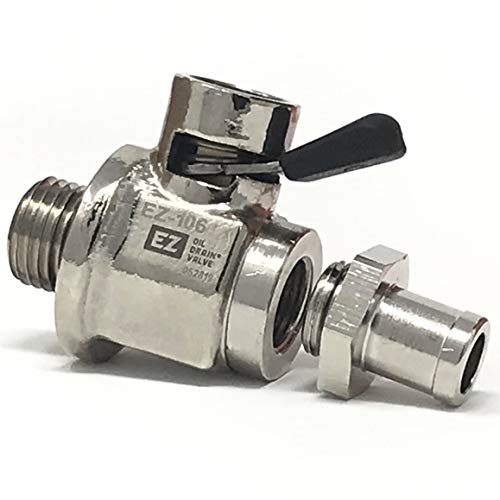 EZ Oil Drain Valve EZ-106RHTied for shortest length
Three sizes that people mix up
When someone asks what size drain plug they need, they usually mean one of three different measurements. Mixing them up is the most common reason a part does not fit.
The thread size is the diameter and pitch of the threaded shank, such as 14 mm with a 1.5 mm pitch. The gasket (or washer) size is its inside diameter, which has to match the shank, and its thickness, which affects how it seals. The socket size is the width of the hex head, and it has nothing to do with the thread.
A plug can have a 14 mm thread and a head that needs a completely different socket. Treat these as three separate checks.
How to find your thread size
Start with the sources that are specific to your vehicle, and only measure by hand if those fail.
Pitch is the part that surprises people. It is the distance between thread ridges, and two plugs with the same diameter can have different pitches. A wrong pitch may start to thread in and then bind, which can damage the aluminum threads in the pan.
- Check the owner's manual or a parts listing for your exact year, engine and pan.
- Look at the old plug. Many carry a size stamped on the head or sold in a labeled package.
- Measure the shank across the threads with calipers for the diameter.
- Use a thread pitch gauge to confirm the pitch, or compare the old plug against a known good plug.
- If you are unsure, ask a parts counter to match the old plug side by side.
Common thread sizes
Plugs vary by brand and engine. General references list common drain plug diameters from roughly 8 mm to 17 mm, so do not assume the size from the make alone.
If you plan to fit a drain valve, the thread is the first thing to match. The valves on our best oil drain valve page come in four thread and pitch pairs, shown below.
| Thread and pitch | Products on our page |
|---|---|
| 14 mm x 1.5 mm | 6 of 10 |
| 12 mm x 1.75 mm | 2 of 10 |
| 12 mm x 1.5 mm | 1 of 10 |
| 12 mm x 1.25 mm | 1 of 10 |
Choosing the gasket or washer
The gasket's inside diameter should match the plug shank so it sits flat against the pan. Common washer inside diameters include 12 mm, 14 mm, 17 mm and 20 mm, but your plug thread should drive the choice. The outside diameter and thickness matter too, because the washer has to seat on the pan's flat surface without hanging over the edge.
Gaskets come in a few styles. Crush washers, often made of copper or aluminum, deform slightly as you tighten. Fiber gaskets compress and seal on the same principle. Rubber or bonded seals and O-rings are used on some plugs.
Valves list the same variety. Among the valves on our page, one uses an O-ring, one a fiber gasket and one a copper washer, while several do not list a seal type. A listed seal gives you more to judge than a thread size alone.
Replace crush-style washers at every oil change unless the plug is designed to reuse its seal. A washer that was already squeezed flat will not seal as well the second time.
What about a 2018 Silverado?
We do not publish a single plug size for that truck, because the 2018 Silverado came with different engines and the plug can vary with the engine and pan. We compare published specifications, and the thread for your truck is not in the data we hold.
Check the owner's manual for your engine, or look up the plug by your VIN or engine code at a parts counter. Then compare the new plug and gasket against your old ones before you drive away. This is a good habit for any vehicle.
Finding the right socket
Because the head size is separate from the thread, the easiest method is to test-fit. Choose a six-point socket that fits snugly with no wobble. A loose fit rounds the corners of the head, and a rounded plug is hard to remove.
Some vehicles use a hex head, and others use a square, a Torx style or an internal hex. Look at the head before you buy a tool. If the plug is stuck, use a six-point socket and steady force instead of a loose wrench.
Safety and installation tips
A few precautions make the job safer and protect the pan.
- Let the engine cool a little. Hot oil can burn skin, and the plug can be hot.
- Support the vehicle on jack stands on level ground. Never work under a car held only by a jack.
- Wear eye protection, since oil can drip or spray when the plug comes out.
- Start the new plug by hand to avoid cross-threading, then tighten to the torque your manual lists.
- Do not overtighten. Stripped pan threads are costly to fix.
- Wipe the pan surface clean before fitting the new gasket.
Plan for the drain itself
Once you have the plug sorted, think about where the oil goes. A wide, shallow container catches the initial rush, and a pan with a spout makes pouring easier. Our best oil drain pan page compares options side by side.
If you use a drain valve, check ground clearance. Valve length runs from 1 in to 2.32 in among the models on our page that list it, and a longer valve hangs lower under the pan.
Frequently asked questions
Can I reuse an old drain plug gasket?
Crush washers are designed to deform once, so it is best to replace them. Fiber and rubber seals can also wear flat. A new gasket costs little compared with fixing a leak.
What happens if the plug is the wrong size?
A plug that is too small can leak or fall out. One with the wrong pitch can bind or strip the threads in the oil pan, which may need a repair.
Do all oil pans use the same plug?
No. Plug size changes between makes, engines and even pan designs on one model. Always confirm by your engine rather than by brand.
Is the socket size the same as the plug thread size?
No. The socket fits the head of the plug, while the thread size describes the shank. Measure or test-fit the head separately.