What Size Metal Cutting Tool Do You Need?
Pick the tool by the thickest and widest piece you will cut, not by the job's overall size. Snips, a thin disc or an oscillating blade handle thin and corrugated sheet. A 7-1/4 in chop saw suits small tube and flat bar, and a 14 in or 16 in chop saw is for pipe and solid bar over 120 mm round.
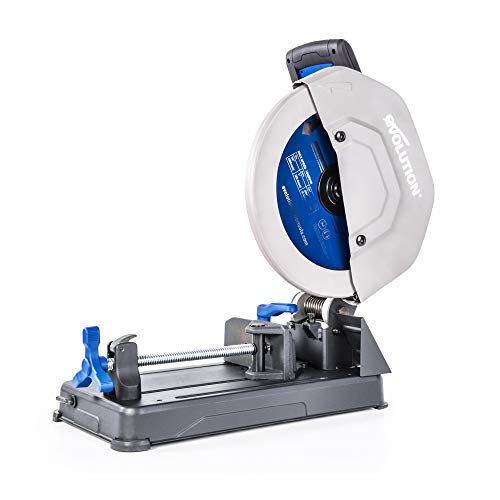 EVOLUTION S355CPSLBest overall
 EVOLUTION S14CPS
 EVOLUTION S14MCSBest for fabrication shops
Start by measuring your stock
Metal cutting tools are sized by what they can physically fit and how well they cut through it. Blade diameter sets the maximum thickness a chop saw can pass through. For hand tools and grinders, the blade or disc type matters more than the size.
Before you shop, write down three things about the material you cut most often. Then size the tool to your largest piece, with a little room to spare.
- Thickness: thin sheet, light tube wall or solid bar.
- Shape: flat sheet, corrugated panel, round pipe, square tube, angle iron or I-beam.
- Width or diameter: the largest piece you expect to cut, not the average one.
- Volume: a few cuts a month or repeated cuts all day.
A quick size guide by material
The table below gives a starting point. Chop saw figures come from published specifications for the saws on our comparison page. Everything else is general guidance, so check your own tool's limits before you buy.
| What you are cutting | Tool type that fits | Size note |
|---|---|---|
| Thin flat sheet, flashing, light gauge | Snips, hand saw or oscillating blade | Hand tools are enough; no large blade needed |
| Corrugated panels | Snips, nibbler or thin cutting disc on a grinder | Match the tool to the panel's ridge height and your cut length |
| Small tube and flat bar | 7-1/4 in chop saw | One listed 7-1/4 in saw cites 2.76 in cutting width and 2.56 in cutting thickness |
| Pipe and solid bar over 120 mm round | 14 in chop saw | The 14 in saws here list 120.65 mm to 130.2 mm round capacity |
| Heavy or frequent cutting in a shop | 16 in chop saw | The 16 in saw on our page has a 3000 W motor and a 4000-cut rated blade |
What size tool cuts thin metal?
For thin sheet, a large blade is a disadvantage. Big saws are built for stock that stays still in a vise, and thin sheet flexes, vibrates and can grab the teeth. A smaller, more controllable tool gives cleaner edges.
Snips work well for straight and curved cuts in light sheet. A fine-tooth hand saw suits tube and thin profiles, and our best hand saw for cutting metal page compares options. For flush cuts or tight spots, an oscillating tool with a metal-rated blade is handy, and you can see matching accessories on our best oscillating tool blades for metal page.
Use blades with fine teeth for thin material, so several teeth are always in contact with the metal. Coarse teeth tend to snag and tear.
What size tool cuts through thick metal?
Thick stock is where blade diameter matters. A larger blade can pass through more material in one pass, and a stronger motor keeps it from bogging down.
For small tube and flat bar, the compact 7-1/4 in saw on our list is enough. It weighs 14.44 lb, the lightest here, and runs at 4000 RPM. For pipe and solid bar, the 14 in saws list round capacities of 130.2 mm, 130 mm and 120.65 mm. The 16 in saw has the largest blade here and a 3000 W motor.
Capacity numbers describe round stock held square. Angled miter cuts reduce the usable thickness, so leave a margin if you cut at 45 degrees. You can compare all of these saws in one table on our best metal cutting tool page.
Blade type matters as much as size. Carbide and cermet toothed blades cut with little heat and few sparks, and slower blade speeds help keep teeth cooler. The saws on our page run from 1100 to 4000 RPM. Abrasive discs are an alternative, and our best angle grinder disc for cutting metal page covers those.
What size tool cuts corrugated metal?
Corrugated sheet is thin, but its ridges make it awkward. The wavy profile stiffens the panel, so a flat cutting blade meets alternating thick and open sections as it travels.
Snips are the simplest choice for a few cuts. For long cuts across many panels, an angle grinder with a thin cutting disc is faster, and an oscillating tool can finish notches and edges. If you plan to use the latter, our best oscillating tool for metal page lists models to compare.
A chop saw is rarely the right tool for loose sheet panels because the panels are hard to clamp flat. Cut them with the ridges facing up, support both sides of the cut, and expect sharp edges afterward.
Safety before you cut
Metal cutting throws sparks, chips and sharp offcuts, and the tools are loud. A few habits cover most of the risk.
- Wear safety glasses or a face shield, plus hearing protection, every time you cut.
- Wear snug gloves for handling sharp edges, but remove loose cuffs and jewelry near spinning blades.
- Clamp the work firmly. A loose piece can twist and kick back.
- Let the blade reach full speed before it touches the metal, and keep your hands clear of the cut line.
- Unplug the tool before changing a blade or disc, and check that guards are in place.
- Keep flammable materials away from sparks, and let cut metal cool before touching it.
Putting it together
Choose the smallest tool that comfortably handles your largest piece, then think about how often you will use it. A shop that cuts tube and bar every day benefits from a larger saw. Occasional roof or sheet work is better served by snips and a thin-metal blade.
If you are between two sizes, go with the larger one only when you often cut stock near the limit. Otherwise you carry extra weight for capacity you rarely use.
Frequently asked questions
Can one tool cut both thin and thick metal?
Sometimes, but compromises are common. A multi-material chop saw can cut mild steel and other materials, while snips or a thin disc still do better on light sheet.
Does a bigger blade always cut better?
No. A bigger blade raises cut capacity, but it is heavier and harder to control on thin or loose material. Match the blade to the stock.
How do I know if my pipe will fit a chop saw?
Measure the outside diameter and compare it with the saw's round cut capacity. Allow extra room if you plan to make angled cuts.
Is a cordless tool strong enough for metal?
It depends on the stock and the blade. For thin sheet and small profiles it can work, but check the manufacturer's stated limits for heavier cuts.