What Size Leak Detector Do I Need? A Practical Sizing Guide
For a home water leak detector, "size" really means how many sensors you need and how far they must reach. Plan one sensor for each spot where water could escape, then pick a kit whose wireless range and alerts fit your house. Most homes land between 3 and 6 sensors.
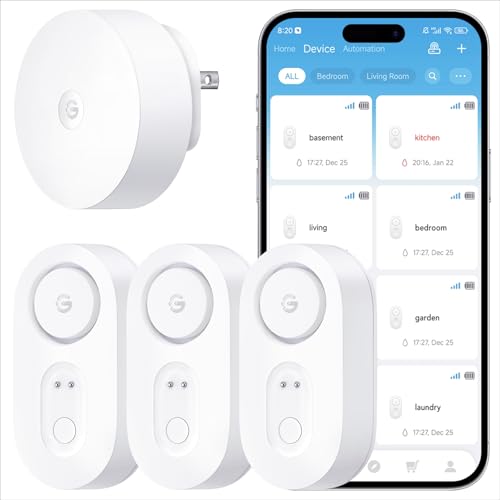 GoveeLife H5059+H5044Best overall
 YoLink YS1603+6YS7906Freeze alerts and shutoff
 YoLink YS1603+4YS7903Long-range shutoff starter
What "size" means for a leak detector
Home water leak sensors are small, palm-sized pucks, so there is no small, medium or large to pick from. The sizing question is about coverage. How many places need a sensor, how far are they from the hub or from you, and how will the alarm reach you?
If you searched for a leak detection kit and ended up here by accident, a quick note. Industrial helium and vacuum leak testers, package testers and flow-based whole-house systems are sized in different ways. Flow-based systems depend on your pipe diameter. This guide covers plug-in-free, stick-it-on-the-floor water sensors for houses and apartments.
Our best leak detector page compares these kits side by side if you want to jump ahead.
Step 1: Count the spots where water can escape
The safest plan is one sensor per risk spot. Walk through your home and note every place a hose, drain or tank sits near the floor. Water travels, but a sensor only helps when it is in the puddle's path early.
- Water heater
- Washing machine
- Dishwasher
- Kitchen sink and bathroom sinks
- Toilets
- Refrigerator with an ice maker or water line
- Sump pump, basement corners and utility rooms
- Fish tank or other large water feature
Step 2: Match your count to a kit
Kits on our comparison page range from 1 to 6 sensors. A small apartment with a washer and a kitchen sink may need only two or three. A two-story home with several bathrooms and a basement can fill six quickly.
Here is how the listed kits line up. Ranges are the manufacturer's open-air figures.
| Kit | Sensors | Wireless range | Alarm | Alerts |
|---|---|---|---|---|
| GoveeLife Smart Water Leak Detector 3-Pack | 3 | 1804 ft | 105 dB | Hub with app, SMS and email |
| YoLink Water Leak Sensor 4 Kit (6 sensors plus hub) | 6 | 2034 ft | 105 dB | Hub with app, SMS and email; freeze alert; shutoff support |
| YoLink Water Leak Sensor 1 Starter Kit | 4 | 2034 ft | Silent sensors | Hub with app, SMS and email; shutoff support |
| GoveeLife Smart Water Leak Detector 2 | 6 | 1968 ft | 100 dB | Hub with app, SMS and email |
| RUIKORING 5-Pack Water Leak Alarm | 5 | Standalone, no hub | 120 dB | None, alarm only |
Step 3: Check the range for your layout
Hub kits use long-range radio, with listed ranges from 1804 ft to 2034 ft. Those numbers are measured in open air. Walls, metal appliances and floors shorten the real distance, so treat the figure as headroom rather than a promise.
For a typical house, any of these ranges is more than enough. Range matters more if you want to cover a detached garage, a workshop or a vacation cabin. In that case, place the hub where your router can reach it, then confirm the farthest sensor connects before you tape it down.
Standalone alarms need no hub, so range is not a factor. The trade-off is that someone has to be close enough to hear them.
Step 4: Choose how you want to be alerted
The right kit size also depends on who needs to know. A loud local alarm helps when someone is home. App, SMS or email alerts matter when you travel or work away from the house.
The 120 dB standalone pack is the loudest option listed, but it sends no app alerts. The YoLink starter kit is the opposite, with silent sensors that notify you through the hub. Several kits do both, with a 100 dB or 105 dB alarm plus phone alerts.
A hub needs power and an internet link to send phone alerts. If your router sits far from the basement, factor that into where the hub goes.
Step 5: Think about extras and durability
Waterproofing and battery life are easy to overlook until a sensor fails. IP67 allows short immersion and IP66 resists strong water jets. Most kits here list 5 years of battery life, while the single standalone sensor on our page lists 2 years, so plan on more battery swaps with that one.
Freeze alerts and shutoff valve support add protection beyond detection. Only one kit lists both, and shutoff valves are sold separately. If you want automatic shutoff, that is a reason to size up to a hub-based kit.
Compare these details on our leak detector comparison before you buy, since the same sensor count can come with very different alerts.
Safety notes for placing sensors
Keep sensors away from live electrical connections and never set them where you would have to reach into standing water. If you find a leak near outlets, appliances or a breaker panel, switch off power at the breaker only if you can reach it while standing on dry ground. Otherwise call an electrician.
If you add an automatic shutoff device, have a licensed plumber install it on the main supply line. Do not climb on wet surfaces or unstable ladders to reach high pipes or a water heater. Place sensors on the floor, not up high.
A loud alarm can be uncomfortable at close range. Test it from a few feet away, and use hearing protection if you are testing a loud unit repeatedly.
A quick sizing recipe
Use this order to land on the right kit without overthinking it.
- List every risk spot and count them.
- Add one spare sensor for a spot you might add later, such as a new appliance.
- Pick a hub kit if you want phone alerts or travel often.
- Pick a standalone pack if you only need a loud alarm for a small home.
- Check that the range comfortably covers your farthest sensor.
- Confirm waterproof rating and battery life match where the sensors will sit.
Frequently asked questions
Can I mix sensors from different brands?
Usually not. Sensors are tied to their own hub or app, so buy extra sensors from the same brand and system as your kit.
Is one sensor enough for a small apartment?
It can be, if the washer or water heater is your only real risk. Most apartments are safer with at least two, such as one by the kitchen sink and one by the washer.
Do I need a hub?
Only for phone alerts. A hub kit sends app, SMS and email alerts, while standalone sensors just sound an alarm in the room.
How often should I check my sensors?
Press the test button every few months and check battery status in the app if your kit has one. Sensors under sinks are easy to forget.
Does a leak detector stop the water?
No. A detector only warns you. Stopping the flow needs a shutoff valve, which some kits support but is sold separately.