What Size Gate Hinges Do You Need for Your Gate?
Most gates need two hinges, and a strap or tee hinge should be about half as long as the gate is wide. Gates that are tall, heavy or wider than about 7 feet usually need a third hinge and a higher load rating. Weigh or estimate your gate first, because the hinge's rated capacity matters as much as its length.
 HTHOOOOOME N-Gate Latch-1Best overall
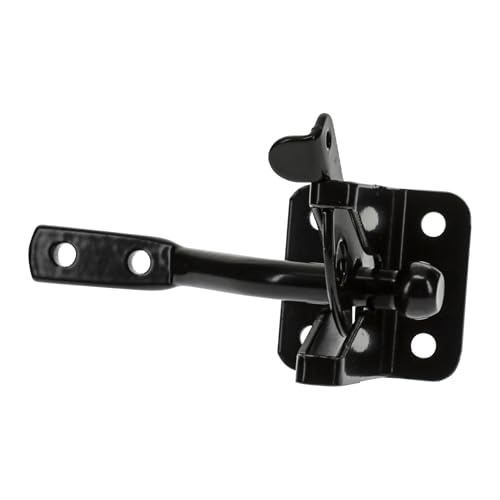 National Hardware N184-861Outswing farm gates
 SANKINS Powder-coated, screws listed
Start with width, weight and height
Hinge size comes down to three measurements. Width tells you how long a strap or tee hinge should be. Weight tells you how strong the hinge needs to be. Height tells you whether two hinges are enough.
Write these down before you shop. A solid wood gate weighs far more than a hollow metal or vinyl one of the same size, so width alone can mislead you. If the maker of your gate lists a weight, use it. If not, estimate it generously, since a wet wooden gate can weigh more than a dry one.
Here is the short checklist to bring with you:
- Gate width, measured across the frame in inches or feet
- Gate height from the bottom rail to the top rail
- Approximate weight, including any boards, mesh or decorative panels
- Gate material: wood, vinyl, steel or aluminum
- Post material and thickness, since the hinge screws or bolts must bite into it
- Swing direction: inward or outward
How long should gate hinges be?
For strap and tee hinges, a common rule of thumb is that the hinge should reach across at least half the width of the gate. The long arm spreads the load across the gate frame so the far edge does not sag. A short hinge on a wide gate puts all the stress on a few screws near the post.
Treat the table below as a starting point for heavier wooden gates. Light gates, such as a small garden gate, can often use a shorter hinge if its rated load covers the gate's weight. Always check the maker's rating on the hinge you are considering.
| Gate width | Minimum hinge length (half-width rule) | Notes |
|---|---|---|
| 3 ft (36 in) | 18 in | Light gates may use a shorter hinge if the load rating allows |
| 4 ft (48 in) | 24 in | A common size for side-yard gates |
| 5 ft (60 in) | 30 in | Consider a heavier-duty hinge for solid wood |
| 6 ft (72 in) | 36 in | Check the post for strength and size |
| 7 ft (84 in) or more | 42 in or more | Plan on three hinges and a stout post |
How many gate hinges do you need?
Two hinges work for most standard gates. One sits near the top and one near the bottom, and together they hold the gate's weight and keep it square.
Add a third hinge in the middle when the gate is taller than normal, wider than about 7 feet, or made of heavy solid wood. The extra hinge shares the load and helps stop the gate from twisting. It also gives you a backup if one hinge starts to wear.
Very wide double gates are usually built as two leaves, and each leaf carries its own hinges. Size each leaf as its own gate, using its own width and weight.
How far apart should gate hinges be?
Spread the hinges as far apart as the gate frame allows. A wider gap gives the hinges more leverage against sag. Putting them close together makes the screws and the post work much harder.
A practical layout is to set the top hinge a few inches below the top rail and the bottom hinge a few inches above the bottom rail. Keep both hinges on solid framing, not on thin boards or panels. If you use a third hinge, center it between the other two.
Two small tips help during installation:
- Line up the pins of all hinges on the same vertical axis, or the gate will bind and swing hard
- Use shims or a support block under the gate's latch side while you mark and fasten the hinges
Match the hinge to the gate and post
Length is only one part of the choice. Strap and tee hinges suit wooden gates, where the long arm lies across the boards. Bolt-on or weld-on hinges are common for metal gates and posts. Heavy gates often use adjustable hinges, which let you correct sag after the gate settles.
Check the finish too. Outdoor hinges rust where the coating wears, so look for a stated powder coat, galvanized or plated finish. Stainless steel is another option for wet or coastal spots. Metal gates and posts may need harder screws or bolts than the ones that ship with the hinge, so confirm what is included.
Some hardware comes as a set. In our best gate hardware comparison, for example, the HILLMASTER listing includes 2 hinges and a latch, and the WEKIS anti-sag kit includes 4 hinge brackets. Most other listings on that page are latches only, so check the contents before you assume hinges come with it. Our data on that page covers latches and kits, so it does not give hinge length or load numbers.
If your gate is heavy, solid wood or very tall, start with our best gate hinges heavy duty page. For typical garden and side-yard gates, the best gate hinges page lays out the specs side by side.
Install safely
Gates can be heavier than they look, and a gate that drops while you are lifting it can pinch hands or crush toes. Have a helper hold the gate while you fasten the hinges. Wear work gloves and sturdy shoes.
Wear safety glasses when drilling or driving screws, especially into metal. If you cut or grind a hinge or post, add hearing protection. Before drilling into a post, check for buried wires or pipes. If the gate is on a pool fence or serves children, local rules may require specific self-closing and self-latching hardware, so check your local code before you finish.
A simple way to decide
Follow these steps in order and you will land on the right size:
- Measure the gate width and halve it to find the minimum strap or tee hinge length
- Estimate the gate's weight and pick hinges rated above it
- Choose two hinges, or three if the gate is tall, wide or heavy
- Space the hinges as far apart as the frame allows
- Confirm the finish, screws and post compatibility before you buy
Frequently asked questions
Can I use bigger hinges than I need?
Yes, as long as they fit the gate frame and post. Longer, stronger hinges spread the load better. Just make sure the extra length lies on solid framing, and that the gate can still close without rubbing.
Do inward and outward swinging gates need different hinges?
Often the same hinge works for both, but the way it mounts changes. Check that the hinge allows the swing direction you need and that the pin sits at the right side of the post.
What if my gate already sags?
First check whether the post has shifted or the screws have loosened. If the hinges are undersized, upgrade to longer or heavier ones, or add a third hinge. Adjustable hinges can also help pull a sagging gate back into square.
Should gate hinges be the same on both gates of a double gate?
Yes, use matching hinges on both leaves if the leaves are the same size and weight. Each leaf carries its own load, so size each one by its own width and weight.