What Size Drill Driver Bit Set Do You Need?
For most homes, you need a set with 1/4-inch hex shank driver bits (Phillips #2, square #2, Torx T25 and a few slotted bits) plus twist drill bits from about 1/16 to 3/8 inch. Check that your drill's chuck can hold the shank sizes in the set. A mid-sized set that covers these basics will handle most household work.
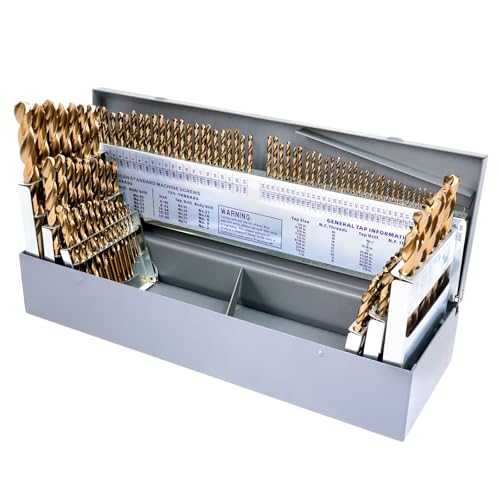 SEDIANAS 115 PCS Cobalt Drill Bit Set
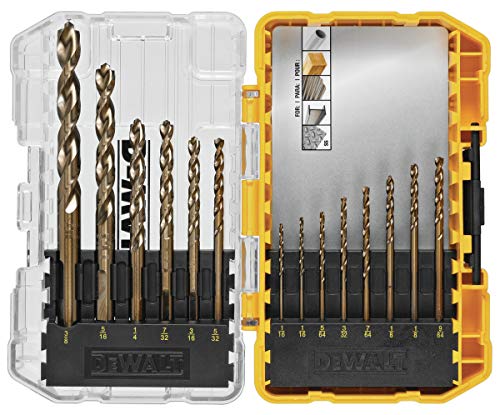 DEWALT DWA1240Cobalt set with adjustable case
 CRAFTSMAN CMAM2214Best overall
Start with your drill's chuck
Bit sets are not sized to the drill the way a shirt is sized to a person. What matters is whether your chuck can grip the bit. Most home drill drivers have a 3/8-inch or 1/2-inch chuck. That number is the widest shank the jaws can open to.
A 3/8-inch chuck holds any bit with a shank up to 3/8 inch. A 1/2-inch chuck holds larger shanks and is often found on more powerful drills. Larger chucks, such as 5/8 and 3/4 inch, are mostly used on heavy industrial tools, so you can ignore them for household projects.
Driver bits are different. Most are made with a 1/4-inch hex shank, and a drill driver holds them in the chuck jaws. If you are also shopping for a drill itself, our best drill and best drill driver set pages are a good place to compare chuck sizes and what comes in the box.
Match driver bits to the screws you use
Driver bits need to fit the screw head snugly. A bit that is too small or the wrong shape will slip and chew up the head, which is the most common cause of stripped screws.
These are the head types you are most likely to meet around the house:
- Phillips: #2 is the everyday size for wood screws and drywall screws. #1 shows up on small hardware, and #3 on larger construction screws.
- Slotted (flat): useful for older hardware, outlet cover plates and some cabinet fittings.
- Torx (star): many deck and construction screws use Torx heads. T25 is a common size, with T10 to T30 covering a lot of ground.
- Square (Robertson): #2 is widely used for deck screws and general carpentry.
- Hex: needed for some furniture, bike parts and bolts, usually in metric or fractional sizes.
Match drill bits to the holes you make
Twist bits make the holes, and here the useful range is wider. Pilot holes for screws are usually small, while holes for running cable or hanging hardware are larger.
A practical household range runs from about 1/16 inch up to 3/8 inch in 1/64 or 1/32 inch steps. Having small increments matters because a pilot hole should be slightly narrower than the screw's threaded core. Too large and the screw will not hold. Too small and the wood can split.
Specialty bits are separate from a general set. If you plan to drill clean, flat-bottomed holes for hinges or large cabinet work, a dedicated Forstner bit set is a better fit than stretching a basic twist set.
How big a set should you buy?
Piece count is not the goal. A huge case full of duplicates is less helpful than a smaller set with the sizes you actually use. Think about the kind of work you do, then choose the tier that fits.
Here is a simple way to match a set to your needs:
| Your situation | What to look for | What you can skip |
|---|---|---|
| Occasional repairs and furniture assembly | Phillips #1 and #2, a few slotted bits, small twist bits, a magnetic bit holder | Specialty bits and large-diameter bits |
| Regular DIY, decks and shelving | Phillips, square and Torx in several sizes, a full range of twist bits, a bit extension | Rarely used oddball tips |
| Frequent projects or small repair jobs for others | Broad driver coverage, hex and security tips, twist bits plus brad-point or masonry bits as needed | Nothing, but check that the case keeps bits organized |
Check shank type before you buy
Drill drivers and impact drivers are not interchangeable when it comes to bits. Standard driver bits are fine in a drill driver. An impact driver delivers sudden bursts of force, so it needs bits made for that job. These are usually labeled as impact rated and often have a flexible or torsion zone.
If you own both tools, it can make sense to buy a general set for the drill and a separate set for the impact driver. Our best drill driver bit set and best impact driver bit set pages compare the options so you can see which shank styles and tip types each set includes.
Also look at the case. A bit set you cannot find the right size in quickly will slow you down, so clear size markings and a sturdy case matter more than they seem to.
Safety basics when using bits
Small bits and fast spinning tools can cause injuries if you rush. A few habits keep things safe:
- Wear safety glasses. Chips, dust and broken bit tips can fly off the work.
- Use hearing protection for longer sessions, especially when drilling into masonry or using an impact driver.
- Clamp small or loose workpieces. Do not hold them in your hand while drilling.
- Let the bit cool before you touch it. Bits get hot after drilling through metal or thick wood.
- Unplug a corded drill or remove the battery before changing bits.
- Check for hidden wires and pipes before drilling into walls.
Frequently asked questions
Can I use a 1/4-inch hex bit in a 3/8-inch chuck?
Yes. A 1/4-inch hex shank fits easily in a 3/8-inch or 1/2-inch chuck. Tighten the chuck firmly so the bit does not slip.
Do I need a magnetic bit holder?
It is not required, but it helps hold screws in place and makes bit changes quicker. It is especially handy when you are working overhead or in tight spots.
What is a pilot hole, and do I always need one?
A pilot hole is a small hole drilled before a screw goes in. It reduces splitting in hardwood and near board edges, and it helps the screw start straight. Softwood and drywall often do not need one.
Why do my screws keep stripping?
Usually the bit is the wrong size or type, or it is worn. Press firmly as you drive and use a clutch setting that stops before the screw bottoms out.
Should I buy separate bits for wood, metal and masonry?
Yes, for best results. Standard twist bits work for wood and light metal, but masonry needs carbide-tipped bits and often a drill with the right mode.