What Size Core Drill for Ducting and Extractor Fans?
Choose a core drill slightly larger than the duct or fan spigot. For 100mm ducting that usually means 107 mm to 117 mm, for 125mm ducting about 133 mm to 136 mm, and for 150mm ducting about 152 mm to 162 mm. Always check the fan's template or instructions, because the exact hole size can differ by model.
 VEVOR Z1Z-9230Best overall
 VEVOR (8260H)Z1Z-9260Largest hole capacity
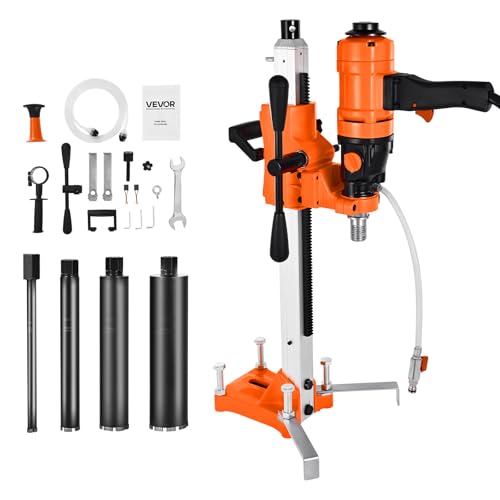 VEVOR Z1Z-CF03-80SHandheld or stand with four bits
The short rule: go a little bigger than the duct
A core drill cuts a round hole, and the hole has to be larger than the duct so the spigot or pipe slides through. The extra room, often a few millimeters on each side, also lets you seal the gap with foam or sealant and get the fan or vent cover to sit flush.
Duct sizes are quoted by the outside diameter of the pipe or spigot, not the hole. So a 125mm duct is not a 125 mm hole. If you drill exactly the duct size, you will struggle to push it through, and you will have no room to fit the seal.
Fan makers sometimes ask for a specific hole size in their instructions. When that number differs from the table below, follow the maker's number.
Core drill sizes for common duct and fan sizes
The sizes below are common starting points. Core bits are sold in a fixed set of diameters, so you pick the nearest size that clears the duct.
Treat the table as a guide, then confirm against the template or manual that came with your fan, vent or duct kit.
| Duct or fan size | Typical core bit | Notes |
|---|---|---|
| 100mm (4 inch) | 107 mm to 117 mm | The 117 mm size leaves room for foam and a flush fit of fan and vent. |
| 125mm (5 inch) | 133 mm to 136 mm | The larger size helps when rigid spigot-to-duct connectors are used. |
| 150mm (6 inch) | 152 mm to 162 mm | Use the larger bit if the duct has a thick connector or collar. |
| Air conditioning line hole | Varies by system | Follow the installation manual for the unit you are fitting. |
Choosing by what you are fitting
Different jobs call for slightly different thinking. Here is how to approach the most common ones.
- Wall extractor fan: read the fan's spigot size, then pick the core bit that clears it with a small gap. Many 100mm fans suit a 107 mm or 117 mm bit.
- Ducting run through a wall: measure the outside of any joiner, collar or insulation sleeve. The hole has to clear the widest part, not only the bare pipe.
- Insulated duct: insulation adds thickness around the pipe. Either size the hole for the insulated duct or stop the insulation at the wall.
- Air conditioning pipework: the hole holds refrigerant lines, a drain and sometimes cabling, so it depends on the unit. Check the manual, then size up for any sleeve.
Pick the right type of core drill
The bit has to suit the wall as well as the hole. Masonry core bits with a diamond or carbide edge suit brick, block and concrete. Brick and block are the usual walls for bathroom and kitchen fans.
The drill matters too. A rotary hammer-style core drill can handle large bits in brick, while a standard drill may bog down or overheat. If you are choosing a machine, our best core drill comparison lines up published specifications so you can match power and bit capacity to your hole size.
If you already own a general-purpose drill and only need pilot holes, our best drill page helps you compare models for the smaller jobs around the core hole.
Step by step: drilling the hole
The method is much the same for fans, ducts and air conditioning lines. Work slowly and keep the bit straight.
- Mark the center of the hole inside, then use a long, thin bit to drill a pilot hole straight through to the outside.
- Check for pipes, cables and studs before you drill. Use a detector and turn off the power to any nearby circuits.
- Fit the core bit and any extension, and tilt the hole very slightly downward toward the outside so water runs out, not in.
- Start slowly to let the bit bite, then increase speed. Let the tool do the cutting and clear dust often.
- Drill from the inside until the pilot hole shows, then finish from the outside if needed. This reduces breakout and chipped brick on the exit side.
- Dry-fit the duct or fan spigot, then seal the gap with foam or sealant once it is in place.
Safety notes
Core drilling throws out a lot of dust and noise, and the bit can grab suddenly. Wear safety glasses, hearing protection and a dust mask suited to masonry dust. Wear gloves when handling the cut core and the bit, which can be hot.
Check for live wires and gas or water pipes before drilling. Switch off the circuit if a cable could run in the wall. Never lean on a ladder while drilling a large hole, and use a stable platform instead.
Hold the drill with both hands and expect the bit to jam. A side handle helps you resist the twist if it catches. Fans are wired to the mains, so have a qualified electrician make the final connection if you are not trained to do it. Gas appliances such as boilers and tumble dryers have their own flue and venting rules, so do not vent a fan into those.
Common mistakes to avoid
The most frequent error is drilling to the duct size, not the spigot or collar size, which leaves the hole too tight. The second is forgetting the thickness of insulation or a rigid connector.
Another is drilling without a pilot hole, which makes it hard to line up both sides of a thick wall. A last one is skipping the downward tilt, which lets condensation run back toward the room.
When in doubt, choose the next size up and seal the gap. A slightly large hole is easy to fix with foam and a cover plate. A hole that is too small means more drilling, more dust and more risk.
Frequently asked questions
Do I need a different core drill for a kitchen extractor than for a bathroom fan?
The bit size depends on the fan or duct diameter, not the room. Kitchen fans and hoods often use larger ducting, so check the spigot size first.
Can I use a hole saw instead of a core drill?
Not in brick, block or concrete. Hole saws are made for wood, plasterboard and thin sheet. Masonry needs a core bit.
Should the core hole be sloped?
Yes, a slight downward slope toward the outside helps water and condensation drain away from the room.
How do I stop the wall chipping on the outside?
Drill a pilot hole first, then cut most of the way from one side and finish from the other. This limits breakout at the exit face.
Do I need to seal around the duct?
Yes. Fill the gap with expanding foam or suitable sealant, then fit the cover plate or vent to stop drafts and moisture getting in.