What Size Cobalt Drill Bits Do I Need?
Most people drilling metal are well served by a cobalt set that covers 1/16" to 1/2" in 1/64" steps, or 1mm to 10mm in 0.5mm steps if you work in metric. If you only drill a few repeat sizes, buy those individual bits or a small set instead. Let the hole you need, the fastener or tap that goes in it, and the drill you own decide the range.
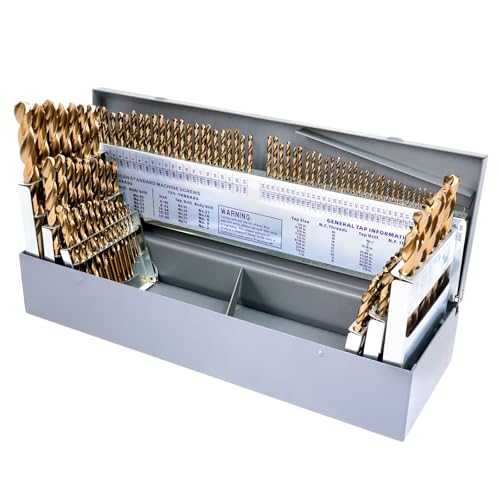 SEDIANAS 115 PCS Cobalt Drill Bit SetBest overall
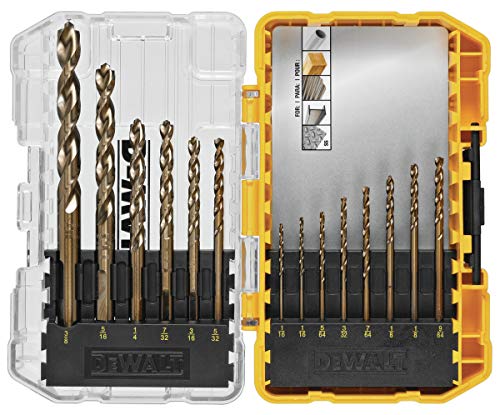 DEWALT DWA1240Fewest pieces, tidy case
 STROTON .M42 steel, 8% cobalt
Start with the hole, not the set
Cobalt bits are sold by diameter, so the first step is to write down the holes you need. A bolt hole, a rivet hole, a hole for a tapped thread and a pilot hole all call for different diameters, even on the same project.
Think in three groups: small holes (under 1/8"), medium holes (1/8" to 3/8") and large holes (3/8" and up). Most household metal work, such as brackets, hinges, stainless fasteners and sheet metal, lands in the small and medium groups.
If your list has only two or three sizes, a full set will leave most of the bits unused. If your list keeps changing from job to job, a set with fine steps saves trips to the store.
How set ranges compare
Sets differ in piece count and in how finely they step between sizes. The ranges below come from the listings on our comparison page, so you can see how much coverage each style gives.
Our best cobalt drill bits page puts these side by side with steel grade, tip angle and case details.
| Set style | Range and steps | Pieces |
|---|---|---|
| Metric set (STROTON M42, 8% cobalt) | 1mm to 10mm in 0.5mm steps | 19 |
| Fractional set (CaRoller M35) | 1/16" to 1/2" in 1/64" steps | 29 |
| Fractional set (Crosstar M35, three-flute) | 1/16" to 1/2" | 21 |
| Full range (SEDIANAS and HIDOTOL M35, 5% cobalt) | 29 fractional bits from 1/16" to 1/2", plus letter sizes A to Z and numbered sizes #1 to #60 | 115 |
| Small case (DEWALT, pilot point) | Check the listing for the exact sizes | 14 |
Match sizes to threads and screws
If you plan to tap threads, the drill must be a specific size, called the tap drill. Too small and the tap can bind or break. Too large and the threads will be shallow and weak.
These are standard tap drill sizes for common threads. Always confirm against the chart that came with your tap.
- 1/4"-20 thread: #7 bit (0.201"), or 13/64" as a close fractional match
- 5/16"-18 thread: letter F bit (0.257"), or 17/64"
- 3/8"-16 thread: 5/16" bit
- M6 x 1.0 thread: 5mm bit
- M8 x 1.25 thread: 6.8mm bit
- M10 x 1.5 thread: 8.5mm bit
Why letter and number sizes matter
Those tap drill sizes show why the biggest sets exist. The #7 and letter F bits are not on a plain fractional run, so they only come in sets that add wire gauge and letter sizes. The 115-piece sets on our page include 26 letter sizes (A to Z) and 60 numbered sizes (#1 to #60) alongside the 29 fractional bits.
If you tap threads often, that range can be worth having. If you only drill clearance holes for bolts and screws, fractional or metric sizes are usually enough, and a 29-piece fractional set is a sensible stopping point.
The 1/64" steps also help when you want a snug fit for a dowel or pin without reaming. Metric work follows the same idea, but 0.5mm steps cover less ground, so check that a metric set includes the size your fastener needs.
Use pilot holes for big holes
Large bits need more force and generate more heat. For holes above about 1/4", drill a smaller pilot hole first, then step up to the final size. A pilot around 1/8" is a common starting point for holes up to 1/2".
A pilot hole also helps the bigger bit center itself. Mark the spot with a center punch, start with the small bit, and enlarge in one or two steps rather than jumping straight to the full size.
A split point tip also helps a bit start without skating across the surface. The sets we list with a 135° split point are designed for that. Crosstar's listing does not show one, so a center punch matters even more with that set.
Check your drill and chuck
Your drill sets a practical upper limit. Many corded and cordless drills accept 3/8" or 1/2" bits in the chuck, so check the chuck capacity before buying large sizes. If you are also shopping for a drill, see our best drill comparison.
Shank style matters for grip. A three-flat shank resists slipping in the chuck, which is helpful when you drill hard metal with a lot of torque. The Crosstar set lists a three-flat shank, while others list round straight shanks.
Drilling steel is slower than drilling wood. Use a lower speed for larger bits and steady pressure, and add cutting oil when you can. Heat is what dulls bits, and cobalt resists heat better than plain steel but it is not immune.
Safety when drilling metal
Metal drilling throws hot chips and can grab the work. A few habits reduce the risk.
Wear safety glasses every time. Clamp the workpiece instead of holding it, because a bit that catches can spin the part out of your hand. Wear hearing protection when drilling thick or large pieces, since the noise can be sharp. Keep loose sleeves, gloves and long hair away from the chuck.
If you use a corded drill, keep the cord clear of the bit path. Let chips cool before you clear them, and never brush them away with a bare hand.
A simple way to decide
Choose by how often your sizes change. A small set with a tidy case suits occasional repairs. A 29-piece fractional or 19-piece metric set suits most home shops. A 115-piece set suits regular tapping and varied work.
Hard materials, stainless steel in particular, are where cobalt earns its place. For brick or concrete, cobalt is the wrong bit. Take a look at our best masonry drill bits page for that job.
Before you buy, compare the range, the steel grade and cobalt share, and whether the set includes the sizes on your list. Our cobalt drill bit comparison lays those specs out in one place.
Frequently asked questions
Is a bigger set always better?
No. A larger set gives more sizes, but you pay for bits you may never use. Match the range to your hole sizes and keep the set that fits your work.
Can I use cobalt bits in wood?
Yes, they will cut wood, and some listings mention wood use. They are made for hard metal, though, so a bit made for wood will usually be a better fit for wood work.
Do I need metric or fractional sizes?
Use the system your fasteners and parts use. Mixed projects are easier with a fractional set that also has a few metric bits, or one set of each.
Why does my cobalt bit wander at the start?
A flat start surface lets the tip slide. Use a center punch, start with a small pilot bit, and choose a split point tip when you can.
What cobalt grade should I look for?
Our listings show M35 with 5% cobalt and M42 with 8% cobalt. The higher cobalt share points to more heat resistance, but the maker's hardness and coating also matter.