What Size Chalk Line Do I Need for My Project?
For most jobs, a 100 ft line is the safe choice because it covers long framing, flooring, slab and wall runs in one snap. Choose a 50 ft line only for small rooms, tile and cabinet work. Then match thickness to the surface: about 1 mm for bold, easy-to-see marks on rough material, and about 0.5 mm for fine marks on finish work.
 Tajima CR301JFBest overall
 IRWIN IWHT48441BCTough aluminum case
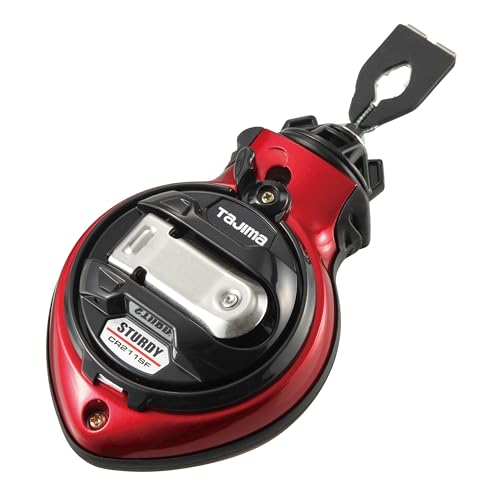 Tajima 1Metal body with belt clip
The quick size guide
Two sizes matter when you shop: how much line the reel holds and how thick that line is. Length decides how far you can mark in one snap. Thickness decides how bold or fine the mark looks. Case size and weight come third, and they mostly affect comfort.
The table below turns those choices into a starting point. Treat it as a guide, not a rule, since every job site is different.
| Project | Line length | Line thickness | Why |
|---|---|---|---|
| Concrete slabs and footings | 100 ft | 1 mm | Long runs and a rough, dusty surface need a bold mark |
| Framing and sheathing | 100 ft | 1 mm | Marks stay visible on rough lumber |
| Flooring layout | 100 ft | 1 mm or 0.5 mm | Long runs, bold for subfloor, fine for exact lines |
| Drywall | 50 ft or 100 ft | Either | Longer line saves repositioning on long walls |
| Tile and cabinets | 50 ft | 0.5 mm | Short runs and tight accuracy |
| Trim and finish carpentry | 50 ft or 100 ft | 0.5 mm | A fine mark is easy to cut to |
How to choose line length
A chalk line works by stretching a chalk-coated string tight between two points and snapping it. The farther apart your points are, the more line you need. If the line is too short, you have to mark in sections, and small shifts between sections can show up as a kink.
On our spec sheet, three models list 100 ft, which suits most framing and flooring runs. One lists 50 ft, which suits small rooms, tile and cabinet work. One does not publish a length at all, so confirm that number before you buy. You can see them side by side on our best chalk line page.
A longer reel also lets you work from one anchor point. You can snap a short run with a long line, but you cannot snap a long run with a short one. If you are unsure, the longer line gives you more room.
How to choose line thickness
Thickness changes how the mark reads. A 1 mm line carries more chalk and leaves a bolder mark that is easy to spot on rough framing, concrete and dusty surfaces. A 0.5 mm line leaves a finer mark, which is better when you plan to cut right on the line.
Not every maker lists thickness. Of the five models on our sheet, three publish it: two list 1 mm and one lists 0.5 mm. Braided nylon is the material on those three, while another model lists poly line and the Lufkin does not list a material. Where the spec is missing, check the listing before you commit to a project that depends on it.
A good rule of thumb is to ask what you will do with the mark. If you will cut or fasten near it, go fine. If you just need to see it from a few feet away, go bold.
Matching the line to your surface
Rough, porous surfaces swallow chalk. Concrete, plywood sheathing and framing lumber all hold a bold mark better than a hairline one. Smooth surfaces such as primed drywall, finished cabinet faces and tile show even a fine line clearly.
Color matters too. Chalk that works on one surface may be hard to see on another, and some chalk colors are hard to remove once snapped. Test a short mark in a hidden spot first, especially on finished surfaces or anything you plan to leave exposed.
- Concrete: 100 ft and 1 mm for visibility, and a case that survives drops.
- Framing: 100 ft and 1 mm for long, bold marks on lumber.
- Drywall: 50 ft or 100 ft, with thickness set by how exact the cut must be.
- Tile and cabinets: 50 ft and 0.5 mm for tight, close work.
- Trim: a 0.5 mm line for precise cuts.
Case size, weight and extras
Once length and thickness are settled, look at the body. Weights on our sheet run from 6.38 oz to 13.6 oz. The lightest, the Tajima CR302JF, also has the smallest case at 4 in and a 0.5 mm line. The Tajima CR301JF pairs a 100 ft, 1 mm line with a 7.2 oz case that is 10 in long.
Metal bodies are tougher but heavier. The IRWIN STRAIT-LINE has an aluminum housing at 13.4 oz, and the Tajima Chalk-Rite weighs 13.6 oz with a metal case. If you carry the tool all day, that weight adds up, so a belt clip can help. The Chalk-Rite lists one that fits belts up to 2.4 in wide.
Handling features save time. A line lock holds the string tight while you snap, and a 5-gear wind brings the line back faster. Only some models list these, so compare the extras you will really use. Our chalk line comparison lays them out in one table.
A simple way to decide
If you are still torn, work through these steps in order. They take a minute and prevent most wrong purchases.
- Measure the longest straight run you expect to mark. Pick a line at least that long.
- Decide whether visibility or precision matters more, then pick 1 mm or 0.5 mm.
- Choose a case for how you work: metal for drops, plastic for lighter carrying.
- Check for a line lock, fast wind, belt clip or plumb bob use if those matter to you.
- Confirm any spec the maker does not publish before you buy.
Safety notes
Snapping a line can look harmless, but a few habits keep you out of trouble. Wear safety glasses when you snap or refill, because chalk dust and a released line can reach your eyes. Chalk powder can irritate if you breathe it in, so refill outdoors or in a ventilated space.
When you mark walls, ceilings or roofs, use a stable ladder or platform and never lean out to reach a mark. On concrete, wear eye protection and hearing protection if you cut along your line with a saw, and keep the hook and line away from electrical cords and live work. Hold the end hook firmly so it cannot spring back at you.
Frequently asked questions
What size chalk line do I need for concrete?
Choose a 100 ft line for slabs and long layouts so you can mark in one snap. A 1 mm line leaves a bolder mark that is easier to see on rough, dusty concrete. A 0.5 mm line can be harder to see there.
What size chalk line do I need for drywall?
For most rooms, 50 ft or 100 ft of line is enough, and a 100 ft line saves repositioning on long walls. A finer 0.5 mm line gives a neat mark, while a 1 mm line is easier to see on dark or textured surfaces.
How long is a standard chalk line?
On our sheet, three models list 100 ft and one lists 50 ft, and one does not publish a length. A 100 ft line is the most common choice here because it covers most framing and flooring runs.
Does a thinner chalk line make a better mark?
A thinner line makes a finer, more precise mark, which suits finish work. A thicker line makes a bolder mark that is easier to see from a distance. Neither is better overall, so choose based on the surface and how exact the work needs to be.