What Should Not Be Stored in a Garage? A Practical Guide
Keep fuel, propane, oily rags, paint, pesticides, food, paper, photos, electronics and anything delicate out of the garage. These items either create a fire or leak risk, or they suffer from temperature swings, moisture and pests. Tools, tires, lawn gear and sealed hardware bins do well there, ideally on sturdy shelving off the floor.
 CCIOBTE storage shelvesBest overall
 SISESOL YSZXEHHJTallest at 79 in
 Letaya 1Steel panel shelf surface
Why the garage is a hard place to store things
A garage is not a small extra room. It is usually uninsulated, open to outdoor air each time the door lifts, and close to cars, water heaters and tools that can spark. That mix creates two kinds of problems.
The first is safety. Flammable liquids, gases and chemical products give off vapors that can ignite near a pilot light, a car's hot exhaust or a power tool motor. The second is damage. Heat, cold and humidity swing widely through the year, and they warp, rot, rust and spoil anything that is not built for it.
Pests add a third problem. Mice, insects and other critters find garages easy to enter, and they go straight for food, paper and fabric.
Hazardous items to keep out
These items carry the highest risk, so start here. Many have rules or label instructions of their own, so always read the product label and check your local guidance for disposal.
- Gasoline and extra fuel: Vapors are flammable and can travel along the floor to a spark. If you must keep a small amount for a mower, use an approved container, keep it well away from ignition sources, and prefer a detached shed.
- Propane cylinders: Store them upright and outdoors in open air, not in an attached garage or inside the house.
- Oily rags: Rags soaked in some oils and stains can heat up and ignite on their own. Lay them flat outdoors to dry, or keep them in a sealed metal container made for the purpose.
- Paint, stain and thinner: Freezing and heat can ruin latex paint, and solvents add fire risk. Store them in a cool indoor closet when you can.
- Pesticides, weed killers, antifreeze and pool chemicals: Leaks can harm kids and pets, and some chemicals react badly when stored side by side. Keep them in sealed original containers, away from each other, and out of reach.
- Lithium-ion batteries and chargers: Extreme heat or cold is hard on them. Avoid charging them unattended in a cluttered garage.
Items that suffer from heat, cold and damp
Not everything unsafe to store is dangerous. Plenty of household goods simply break down in a garage. Moisture and temperature swings are the main culprits.
Paper, books, photos and cardboard absorb humidity and can mold or stick together. Cardboard boxes also attract pests, so plastic bins with tight lids are a better container for anything you keep.
Upholstered furniture, mattresses, clothing and linens can pick up damp and odors. Wood furniture can warp or crack as it expands and contracts with the seasons. Electronics, musical instruments and collectibles are sensitive to both humidity and extreme temperatures. Medications and vitamins also do better in a cool, dry place indoors.
Food and pet supplies
Canned goods may last longer in a cool spot, but a garage is rarely cool and steady. Hot summer weeks and freezing nights can affect cans, packaging and the taste of dry goods.
Pet food, birdseed and grass seed draw rodents and insects. If you must store them in the garage, use a heavy lidded bin that animals cannot chew through, and keep it off the floor.
A spare refrigerator or freezer is common in garages. Check the manufacturer's stated operating temperature range for your model, since many are designed for indoor rooms. Extreme heat or cold can make them struggle.
Quick reference: where things should go instead
Use this table as a starting point. When in doubt, move the item to a conditioned indoor space or follow the label.
| Item | Main risk in a garage | Better option |
|---|---|---|
| Gasoline, propane | Fire and explosion | Detached shed or outdoors, approved containers |
| Paint and solvents | Freezing, heat, fumes | Cool indoor closet, original sealed cans |
| Oily rags | Self-heating and fire | Dry flat outdoors or sealed metal can |
| Photos, documents, books | Mold and warping | Indoor closet in sealed bins |
| Pet food, birdseed | Pests and spoilage | Lidded bin, or indoors |
| Mattresses, upholstered furniture | Damp, odors, pests | Indoor storage or wrapped and raised |
| Electronics, instruments | Heat, cold, humidity | Climate-controlled room |
| Medications | Heat and humidity | Cool, dry indoor cabinet |
What does belong in the garage, and how to shelve it
Garages work well for items that tolerate temperature swings and a bit of dust: hand tools, power tools in cases, tires, camping gear, lawn tools, hardware bins and sports equipment. Sealed plastic bins protect small items from dust and pests.
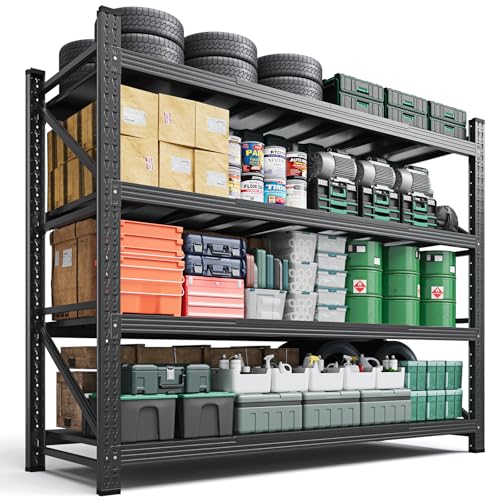
Getting everything off the floor also helps with moisture and spills. Shelving makes this easy, but the shelf has to match the load. Our best garage shelving page compares total capacity, per-shelf capacity, size and features in one place. For example, the top-ranked CCIOBTE unit lists 6000 lb total capacity and 1500 lb per shelf, with lateral bracing and a rust-resistant coating.
Look at the finish if your garage gets damp or sees oil spills. A powder coat, such as the one that CCIOBTE unit lists, helps the steel resist rust. Also check whether the unit has bracing, since lateral and diagonal bars limit sway when shelves are full.
If you are weighing a few models, our garage shelving comparison shows which ones publish a per-shelf rating and which do not. That matters because total capacity is shared across all shelves.
Safety checklist before you reorganize
Cleaning out a garage can be more hazardous than it looks. Take a few minutes to plan before you start moving things.
- Open the garage door and let the space air out before handling fuel, paint or chemicals.
- Wear gloves and eye protection when moving chemicals or leaking containers, and never mix products.
- Keep ignition sources such as cigarettes, space heaters and running engines away from anything flammable.
- Use a stable step stool or ladder for high shelves, and avoid standing on boxes or the shelf frames.
- Store heavy items on low shelves and anchor tall units to a wall when anchors are included.
- Get help moving large shelving units, since some weigh around 100 lb, such as the SISESOL unit on our page.
- Take old paint, pesticides and fuel to a local hazardous waste drop-off rather than pouring them out or tossing them in the trash.
Frequently asked questions
Can I keep a freezer in the garage?
Only if the manufacturer says the model is rated for the temperatures your garage reaches. Many freezers and refrigerators are built for indoor rooms and may run poorly or fail in extreme heat or cold.
Is it okay to store tires in the garage?
Yes, tires are generally fine in a garage. Keep them away from heat sources and direct sunlight, and stack or hang them so they do not deform.
Can I store paint in the garage over winter?
It is risky. Freezing can ruin water-based paint, and leftover solvents bring fire risk. A cool, dry indoor closet is usually a better spot.
What is the safest way to keep a small amount of gasoline for a mower?
Use an approved fuel container with a tight cap, store it away from ignition sources and living space, and keep the amount small. A detached shed is a better location than an attached garage.