What Should Be in an Electrician's Tool Bag?
An electrician's tool bag should hold a voltage tester, insulated hand tools, wire strippers, cutters, pliers, drivers, a tape measure and a small stock of connectors and fasteners, plus eye protection and gloves. Pack it by task, with the things you grab most often in outside pockets and meters and small parts inside. Choose a bag with enough pockets, tough fabric and a firm base to hold the load.
 DEWALT DWST560104Best overall
 LOKASS 8605Highest load rating
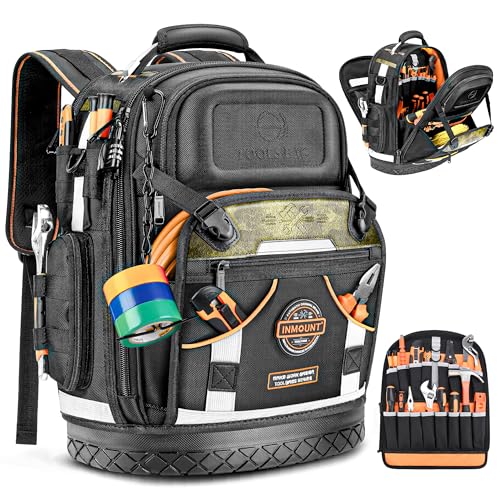 LOKASS 8603Most pockets overall
Start with testing and safety gear
Before any hand tool, pack the items that keep you safe. A non-contact voltage tester and a multimeter come first, because every job starts with confirming a circuit is dead. Test your tester on a known live source before and after you check the circuit you plan to work on.
Safety gear rides in the bag too. Safety glasses protect against falling debris and wire clippings, especially on overhead work. Add work gloves, and insulated gloves if your work calls for them. Keep hearing protection in an easy-reach pocket for drilling into masonry or working near loud equipment.
Always turn off power at the panel and follow lockout and tagout procedures where they apply. If you are not trained to work on live or high-energy circuits, hire a licensed electrician.
The core hand tools
These are the tools most electricians reach for on nearly every job. Look for insulated handles on anything that could touch a conductor. Many insulated tools carry a voltage rating marked on the handle, so check it matches your work.
- Wire strippers sized for the gauges you work with
- Lineman's pliers and needle-nose pliers
- Diagonal cutters (side cutters)
- Slotted and Phillips screwdrivers in several sizes
- Nut drivers, since many boxes and fixtures use hex-head screws
- Tape measure and a small level
- Utility knife or cable knife, kept in a sheath
- Fish tape or a glow rod for pulling wire
- Flashlight or headlamp, with spare batteries
- Pencil or marker for layout marks
Small parts, connectors and consumables
Loose parts are what clutter a bag fastest, so give them their own pockets or small cases. Wire connectors in a few sizes, electrical tape, cable ties and spare screws cover most small fixes. Add a few extra wire staples and cover plates if you do service calls.
Keep these items in zippered or lidded pockets. A spilled pile of connectors at the bottom of a bag is hard to sort through, and it wastes time on the job.
How to set up the bag
A simple rule works well: the more often you use a tool, the easier it should be to reach. Put pliers, strippers, cutters, a screwdriver or two and your tape measure in outside pockets. Put the meter, tester, and small parts in interior pockets, where they are protected and easy to find.
Heavy items like a drill and spare batteries go low and close to your body, near the base. Lighter items go higher. A well-balanced bag is easier to carry up stairs and ladders.
Here is a quick order of operations for setting up a new bag:
- Sort every tool into daily, weekly and occasional piles.
- Assign daily tools to outside pockets and loops.
- Place testers and meters in padded interior pockets.
- Group small parts into labeled cases.
- Store the drill and heavy items low, near the base.
- Review the layout after a week and move whatever you keep digging for.
Choosing a bag that fits your kit
Bag specs decide how well all of this works. Pocket count, fabric, base and weight matter most. Our best electrician tool bag page puts these specs side by side so you can compare them in one place.
Pocket counts vary widely. Among the five bags reviewed there, pockets run from 26 to 78. More pockets help if you carry many separate small items, but fewer, larger pockets can suit a lean kit. Fabric is measured in denier, which reflects thread thickness. Higher numbers point to tougher cloth, and 1680D is the top rating on that page.
A molded base keeps the bag upright and helps keep tools off wet floors. Weight matters because you carry the bag all day, and it adds to what you pack.
| Bag | Pockets | Weight (empty) | Fabric and base |
|---|---|---|---|
| DEWALT 20in PRO Tool Bag | 33 | 5.42 lb | 1680D, molded base |
| LOKASS 8605 backpack | 56 | 5 lb | 1680D, molded base, 110 lb load listed |
| LOKASS 8603 backpack | 78 | 6 lb | 1680D, molded base |
| Ytonet 16-inch tote | 46 | 3.97 lb | 1680D, molded base, 100 lb load listed |
| Amazon Basics TB002 | 26 | 1.79 lb | No denier or molded base listed |
Tote, backpack or kit?
A tote suits short carries from the truck to the work area, and it is easy to open and grab from. A backpack spreads weight across both shoulders, which helps on stairs and long walks. The LOKASS 8605 and 8603 are both backpacks, while the DEWALT, Ytonet and Amazon Basics bags are totes with handles.
If you are just starting out or only do light home projects, a smaller pre-built set may be enough. Our best electrician tool kit page compares ready-made options, and you can add a bag later as your tool collection grows.
Whatever you choose, check the specs the maker leaves out. Max load is listed for only 10 of the 37 products on our bag page, so confirm it on the maker's page if it matters to you.
Care and safety habits
Inspect insulated tools often. Cracked, nicked or melted insulation means the tool should be retired. Wipe tools clean and keep the bag dry, since moisture and electricity do not mix.
Do not overload the bag beyond its listed capacity, and lift with your legs. When climbing a ladder, keep both hands free and haul heavy bags up on a rope or by other means instead of carrying them.
Frequently asked questions
Should an electrician's bag include a drill?
Many electricians carry a cordless drill with spare batteries and bits. Some bags have a dedicated drill pocket, such as the DEWALT 20in PRO Tool Bag, which lists one for a cordless drill and battery.
How often should I check my insulated tools?
Look them over before each job. Replace any tool with damaged, cracked or worn insulation, because it no longer protects you as intended.
Is a hi-vis interior useful?
It can be. A bright interior, like the yellow one listed for the DEWALT bag, makes dark tools easier to spot in low light, though it is not essential.
Do I need a lock on my tool bag?
Only if you leave tools in shared spaces. The two LOKASS backpacks list combination locks, so check the listing if security matters to you.