What Should Be in a Basic Home Tool Kit?
A basic home tool kit should hold a tape measure, a claw hammer, screwdrivers, pliers, an adjustable wrench, hex keys, a utility knife and a level, plus safety glasses. These handle most shelf, furniture, picture and small repair jobs. Add sockets only if you plan to work on a car or larger bolts.
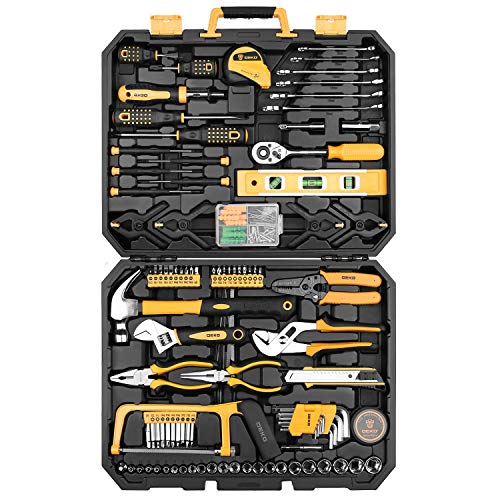 DEKOPRO ET00654Best overall
 DEWALT DWMT75049Three drive sizes
 DEKOPRO DKMHTK094BMC-OrangeClosest to a basic kit
The short checklist: 15 tools most homes need
Most small household repairs come down to four actions: measuring, driving screws, gripping and striking. If your kit covers those well, you can handle the majority of everyday fixes. Everything beyond that is a bonus you can add later.
Here is a practical list of 15 items to look for, whether you buy a ready-made kit or build your own.
- Tape measure
- Claw hammer
- Phillips and slotted screwdrivers, or a bit driver with a set of bits
- Combination pliers
- Needle-nose pliers
- Adjustable wrench
- Hex keys (Allen keys) in several sizes, for flat-pack furniture
- Utility knife
- Level
- Flashlight or headlamp
- Cordless drill and driver bits, if you want faster work
- Putty knife or scraper
- Safety glasses
- Work gloves
- Hearing protection for loud jobs such as drilling into masonry
Why these tools earn their place
A tape measure and a level prevent most mistakes before they happen. Hanging a shelf or a mirror is mostly about measuring twice and checking that it sits straight. A hammer handles nails, picture hooks and the occasional stubborn part that needs a tap.
Screwdrivers and hex keys cover furniture assembly, cabinet hinges, outlet covers and battery compartments. A bit driver with a range of bits can replace a drawer full of single screwdrivers, which is why many compact kits lean on bits.
Pliers and an adjustable wrench deal with gripping and turning. Combination pliers hold, bend and pull. Needle-nose pliers reach into tight spots. An adjustable wrench fits many nuts and fittings without needing a full wrench set.
Buying a kit versus building your own
A ready-made kit saves time and gives you a case for storage. The catch is that many large kits are really mechanics sets built around sockets and ratchets. Some of those sets leave out a hammer or tape measure entirely, so the piece count can mislead. A high number often means a lot of small sockets and bits.
Our best home tool kit comparison puts several kits on one spec sheet so you can see piece count, ratchet teeth, bits, case type, weight and warranty side by side. Read each kit's contents list before you decide, and check that it includes the basic hand tools above.
Building your own works well if you already own a few tools. You pick only what you need, and you can choose better versions of the tools you use most, such as pliers or a tape measure.
What the kit data shows
The kits in our comparison vary a lot in weight and case size. Weights range from 5.07 lb to 39.19 lb, and case length runs from 6.97 in to 17.9 in among the products that list it. A lighter kit is easier to keep on a closet shelf or carry up a flight of stairs.
The table below uses published specifications to show how three kinds of kit differ.
| Kit type | Example from our data | What it includes | Best fit |
|---|---|---|---|
| Compact starter kit | DEKOPRO 94 Piece Basic Home Tool Kit | 4 oz steel claw hammer, 5.5-inch combination pliers, utility knife, 6.56-foot tape measure, 5 hex keys, 10 bits, 4 small sockets | Apartments, first homes, furniture and simple repairs |
| Mixed home and auto kit | CRESOLVIA 199-Piece Home and Auto Tool Kit (13.2 lb, 17.9 in case) | Pliers, hammers, hex keys, spirit levels, 40 screwdriver bits and 1/4 in and 3/8 in socket sets | Homeowners who also do light car or garage work |
| Mechanics set | DEWALT Mechanics Tool Set 192-pc (39.19 lb) | 1/4 in, 3/8 in and 1/2 in drive ratchets, sockets, wrenches and extensions | Car and machinery work; not a general home kit |
Optional upgrades as your jobs grow
Once the basics are covered, add tools based on the repairs you actually face. Hanging heavy items may call for a stud finder. Drilling many holes or driving long screws is where a cordless drill and driver set pays off. If you work on a bike or car, a socket set with a 72-tooth ratchet gives you finer movement in tight spaces.
If you are weighing a drill purchase, our best power tool combo kit for the money page compares kits that bundle a drill with other power tools. Treat power tools as a second step, not a starting point. A hand-tool kit with bits handles light jobs for a long time.
Safety notes before you start
Wear safety glasses whenever you hammer, cut, drill or pry. Small fragments and flying nails can hurt your eyes in an instant. Use hearing protection for drilling into masonry or any long, loud task.
Before drilling or driving screws into a wall, find out where wires and pipes run. Switch off power at the breaker for any job near outlets or wiring, and do not work on live electrical circuits. If you are unsure about electrical or gas work, call a licensed professional.
Cut away from your body with a utility knife, and retract the blade after each use. When using a ladder, keep three points of contact and do not overreach. Store tools in their case so small parts stay away from children and pets.
A quick way to decide
Write down the last five repairs you did or wanted to do. If they involved shelves, furniture, curtain rods or picture frames, a compact kit with a hammer, pliers, tape measure and bits is plenty. If they involved a car or large bolts, choose a set with sockets and several drive sizes.
Check the materials too. Chrome vanadium steel and a corrosion-resistant finish help tools last through damp garages. Not every maker lists the steel type, so treat a missing spec as unknown rather than a flaw.
Frequently asked questions
Do I need a socket set in a basic kit?
Not for most household jobs. Sockets help with car work and larger bolts, but shelves, furniture and picture hanging rarely need them.
Is a higher piece count always better?
No. Many pieces in large kits are small sockets and bits. Check that the listing includes a hammer, pliers, screwdrivers and a tape measure.
Where should I store my tool kit?
Keep it in a dry, easy-to-reach spot such as a closet shelf or cabinet. Damp areas can rust tools, so a corrosion-resistant finish helps in a garage.
Should I buy a drill with my first kit?
It is optional. A bit driver handles light jobs, and you can add a drill later if you start drilling often or driving long screws.