What Should a First Aid Kit at Home Contain?
A home first aid kit should hold wound care supplies (adhesive bandages, gauze, medical tape, antiseptic wipes), burn and sting care, basic tools like scissors and tweezers, disposable gloves, a cold pack, and any medicines your household uses. Add a printed list of emergency numbers and check the kit twice a year. You can buy a ready-made kit or build your own with the same list.
 1st Aid first aid kitBest overall
 Vriexsd Compact tourniquet kit
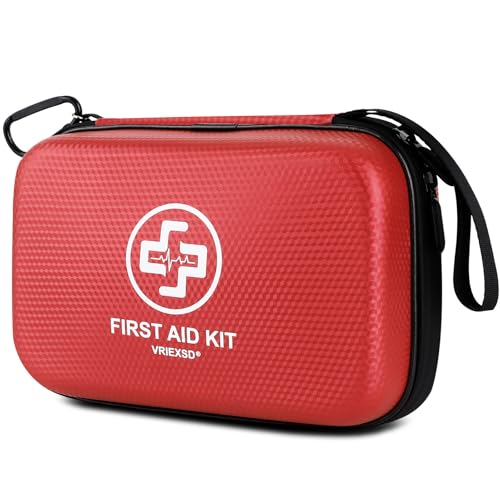 Vriexsd Hard shell, 320 pieces
The 10 core items every home kit needs
If you only have room for a short list, start here. These items handle the cuts, scrapes, blisters and minor burns that make up most household mishaps.
Quantities depend on how many people live with you. A single adult needs fewer bandages and pads than a family with kids and a dog that likes to roam.
- Adhesive bandages in assorted sizes, including some large ones and fingertip shapes
- Sterile gauze pads and a roll of gauze for larger wounds
- Medical tape or self-adhesive wrap to hold dressings in place
- Antiseptic wipes or a wound wash to clean around a cut
- Antibiotic ointment for minor scrapes
- Disposable gloves, such as nitrile, so you can treat a wound without touching blood
- Scissors and tweezers, kept clean, for cutting tape and removing splinters
- An instant cold pack for bumps, sprains and stings
- An elastic wrap bandage for sprained ankles and wrists
- A printed card with emergency numbers and each family member's allergies
Burns, stings and skin care
Kitchens cause a lot of minor burns, so it helps to stock a few extras. Sterile non-stick burn dressings are useful because they will not stick to damaged skin. Burn gel or cream can soothe a small, superficial burn after you have cooled it with cool running water.
For bug bites and rashes, many families keep 1% hydrocortisone cream and calamine lotion. Saline eyewash is handy for dust or debris in the eye. Keep a small pack of sterile cotton swabs for applying ointment without using your fingers.
Triangular bandages are worth a spot too. They can hold a dressing in place, support an arm in a sling, or help immobilize an injured limb until you can get medical help.
Medicines and personal items
This is the part that differs most from house to house. Choose medicines that suit the people in your home, and read each label for the right dose and age limits. If you are unsure, ask a pharmacist or your health care provider what is safe for your family.
Common choices include a pain and fever reliever, an oral antihistamine for allergic reactions and a hydrocortisone cream. Some households also keep a digital thermometer, any prescribed items such as an inhaler or epinephrine auto-injector, and a spare supply of personal medications.
Keep medicines up high or in a locked box if children live in or visit your home. Many first aid kits sold in boxes or bags come with ointment and wipes but no tablets, so you usually add these yourself.
Ready-made kit or homemade kit?
Building your own lets you choose better quality supplies and tailor the contents. It takes more effort, though, and you need a container with some organization. A loose pile of supplies in a shoebox is hard to use when someone is bleeding.
A ready-made kit gives you a starting point. Our best first aid kit for home page puts piece counts, weight and dimensions on one spec sheet. Counts there range from 150 pieces to 520 pieces, so it is worth looking at what the pieces actually are, not just the total.
Here is how a few listed specs compare, based on published data:
- Pick a kit with compartments or labeled sleeves so you can find items fast.
- Check the contents list against the core items above and fill any gaps yourself.
- Match the size to where it will live: a drawer, a closet or a wall.
| Kit | Pieces | Weight | Case | Notable listed items |
|---|---|---|---|---|
| 1st Aid 300-Piece Travel Kit | 300 | 0.625 lb | Soft bag | Cold pack, compartments |
| Vriexsd Mini First Aid Kit | 150 | 0.73 lb | Hard shell | Tourniquet, compartments |
| VRIEXSD Premium 320-Piece | 320 | Not published | Hard shell | Tourniquet, labeled sleeves |
| Aidehelp 520-Piece Premium | 520 | 2.87 lb | Soft bag | Tourniquet, cold pack, mountable |
Do you need a tourniquet?
Some kits list a tourniquet. It is meant for severe, life-threatening bleeding from an arm or leg that does not stop with firm direct pressure. Most home injuries never call for one.
If you want one, learn how to use it before you need it. A first aid class from a recognized provider is a good way to do that. Our best first aid kit with tourniquet page lists kits that include one. Whatever you own, call 911 for serious bleeding and keep pressure on the wound while you wait.
Where to keep it and how to maintain it
Store the kit somewhere everyone can reach in seconds, away from heat and damp. A kitchen cabinet or hall closet works well. A wall-mountable case suits a garage. Many families keep a second small kit in the car.
Make a habit of checking it twice a year. Replace anything used, and swap out medicines and ointments that have passed their expiration dates. Tape and adhesive bandages can also dry out over time, so look at those too.
Show every older child and adult in the house where the kit is. If you want a smaller, lighter pack for trips, see our best first aid kit for hiking page.
Safety notes
A first aid kit helps with minor injuries. It does not replace professional care. Call 911 for heavy bleeding, trouble breathing, chest pain, signs of a severe allergic reaction, head injuries with confusion or a loss of consciousness, or deep and large burns.
Wear gloves when you handle blood. Do not put ointment on deep or dirty wounds without medical advice. Cool a burn with running water and do not use ice directly on skin. Keep scissors and tweezers clean, and store small items out of reach of toddlers and pets.
Frequently asked questions
How often should I check my first aid kit?
Twice a year is a good rhythm. Replace anything you used, and discard medicines or ointments past their expiration date.
Should I keep a first aid manual in the kit?
Yes, if you can. A short guide helps when you are stressed. Some kits include one, and you can also print a simple reference card and a list of emergency numbers.
Can I use a travel kit as my home kit?
You can use it as a starting point. Compare the contents to the core list in this guide, then add larger dressings, medicines and any personal items your household needs.
What should I add for babies and young children?
Add a digital thermometer and child-appropriate medicines and dosing tools as advised by your pediatrician or pharmacist. Check labels for age limits.