Carbide vs Cobalt Drill Bits: Which Is Better for Your Job?
For most people drilling metal with a handheld drill, cobalt is the better choice. It resists heat, tolerates some flex, and can be resharpened. Carbide is harder and wears more slowly, but it is brittle and works best in a rigid setup such as a drill press, or as a tip on masonry bits.
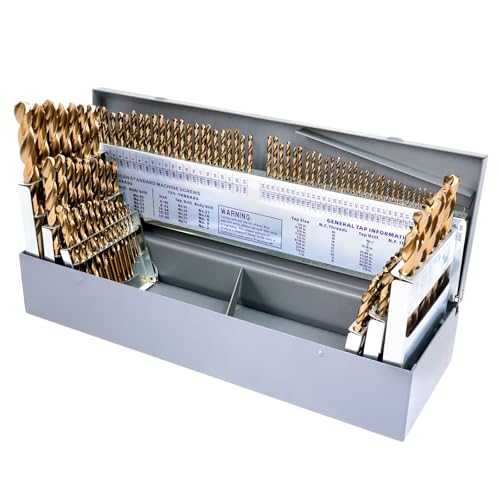 SEDIANAS 115 PCS Cobalt Drill Bit SetBest overall
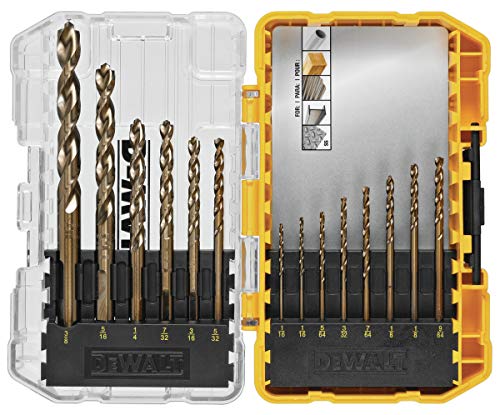 DEWALT DWA1240Fewest pieces, tidy case
 STROTON .M42 steel, 8% cobalt
The short version
Cobalt bits are high speed steel with extra cobalt mixed in. That cobalt helps the steel keep its hardness when the cutting edge heats up, which is the main reason bits go dull in stainless steel and other hard metals. Cobalt steel still bends a little under load, so a wobbly hand or a bit of side pressure is less likely to snap it.
Carbide is a different material. It is a very hard ceramic-like compound, usually bound with a metal. It holds a sharp edge longer than any steel, but it is brittle. Drop it, twist it sideways, or let the drill wander, and the tip can chip or the bit can break.
So the answer depends on how you drill. A handheld drill and mixed jobs point to cobalt. A fixed, rigid machine and repeated holes in tough material can justify carbide.
How cobalt and carbide differ
The table below summarizes the general differences between the two materials. These are broad characteristics, not figures for any one product.
Hardness is not the whole story. A harder bit stays sharp longer, but it also gives up flexibility. In a handheld drill, flexibility often matters more than edge life, because small movements are constant.
| Trait | Cobalt (HSS with cobalt) | Carbide |
|---|---|---|
| Hardness and edge life | Hard and heat resistant | Harder, holds an edge longer |
| Toughness | Tolerates some flex and shock | Brittle, can chip or snap |
| Best drill type | Handheld drill, drill press | Drill press, rigid setups, masonry tips |
| Resharpening | Possible with a bit grinder or sharpening jig | Needs special diamond tools, usually left to a shop |
| Typical materials | Stainless steel, cast iron, hard metals, general use | Very hard metals, abrasive materials, masonry |
| Set availability | Wide range of sizes and case styles | Often sold as single bits or small groups |
When cobalt is the better pick
Cobalt suits most home and shop work in metal. It handles stainless steel, cast iron, and other tough materials without demanding a perfectly steady setup. If you also drill softer metal, plastic, or wood now and then, a cobalt set covers all of it.
Listings on our best cobalt drill bits page show two common grades. M35 is listed with 5% cobalt, and M42 is listed with 8% cobalt. A higher cobalt share points to more heat resistance, but the maker's listed hardness and any coating also matter.
Tip shape matters as much as material. A 135° split point helps a hole start where you marked it instead of skating across the surface. Most of the ranked sets list one, so check for it before you buy.
- Choose cobalt for stainless steel, cast iron, and mixed-material jobs.
- Choose cobalt if you drill by hand and want a bit that forgives small movements.
- Choose cobalt if you want to resharpen bits instead of replacing them.
- Choose cobalt if you need many sizes in one case.
When carbide earns its place
Carbide makes sense when you drill a lot of holes in very hard or abrasive material and your setup is stable. A drill press with the work clamped down is the ideal case. The bit stays square to the surface, so the brittle tip is not asked to flex.
The other common use is masonry. Bits for brick, block, and concrete usually have a carbide tip brazed onto a steel body, because steel alone would wear away in seconds. If that is your work, see our best masonry drill bits page rather than a metal-cutting set.
Carbide also asks for more care. Keep the feed steady, avoid rocking the drill, and back out to clear chips. Solid carbide bits are not the right choice for a loose, handheld approach on thin or springy material.
How to choose a set
Start with the material you drill most. Then work through the checklist below.
Size coverage is worth a look. One set on our cobalt page lists 29 bits from 1/16 inch to 1/2 inch in 1/64 inch steps. The largest sets add letter and numbered sizes. If you only drill a few sizes, a smaller set is easier to carry and keep organized.
Your drill matters too. A capable drill with good speed control makes any bit last longer, so our best drill page is worth a look if yours is limited to one speed.
- Name your main material: stainless and hard metal point to cobalt, masonry points to carbide tips.
- Decide how steady your setup is: handheld favors cobalt, a drill press opens the door to carbide.
- Check the tip: look for a split point and the listed angle.
- Check the shank: a three-flat shank grips better in a chuck or impact driver.
- Match the set size to the holes you actually drill.
- Look at the case: size markings make bits easy to find.
Safety and technique
Wear safety glasses every time. Metal chips and broken bit fragments can fly, and carbide shards are especially sharp. Add hearing protection for long sessions or loud masonry work.
Clamp the workpiece. A bit that grabs can spin a loose part out of your hand. Chips and the bit itself get hot, so let them cool before handling and use gloves for long cuts.
Use steady pressure and moderate speed in hard metals. Pushing too hard or running too fast builds heat and dulls any bit. Cutting oil helps in steel. If you use a corded drill, keep the cord clear of the bit and the work area.
Frequently asked questions
Can I use carbide bits in a regular handheld drill?
Yes for masonry bits with carbide tips, which are made for it. Solid carbide metal bits are risky by hand because side load can snap them. A drill press is the safer pairing.
Are cobalt bits only for stainless steel?
No. Stainless steel is where they stand out, but they also drill mild steel, cast iron, aluminum, plastic, and wood without trouble.
Can I sharpen cobalt and carbide bits at home?
Cobalt bits can be resharpened with a bench grinder or a sharpening jig if you keep the original tip angle. Carbide needs diamond abrasives and is usually sent to a shop.
Does a higher cobalt percentage always mean a better bit?
Not always. More cobalt points to more heat resistance, but hardness, coating, tip shape, and how you drill all affect results.