What Polish, Compound and Pads Do You Need for Paint Correction?
For most paint correction you need a dual action polisher, a cutting or medium pad with a compound for deeper defects, and a polishing pad with a finishing polish to refine the surface. Start with the least aggressive pad and product that removes the defect, and only step up if it does not. Add prep supplies, good lighting and eye and hearing protection to complete the kit.
 Niusken PGJ-21V-RED
 Niusken PGJ-21V
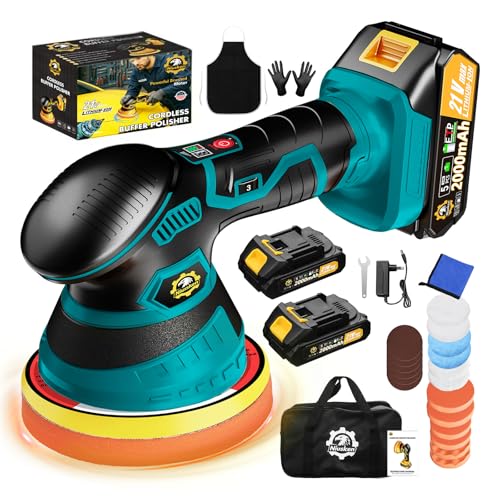 Niusken PGJ-21V-BLUE
The short kit list
Paint correction means removing a very thin layer of clear coat to level out swirls, light scratches and haze. Doing it well comes down to three consumables working together: a pad, an abrasive liquid, and a machine to spin them.
Here is a basic kit for a first correction job:
- A machine polisher (a dual action model is the usual starting point)
- Two or three cutting or medium pads, plus two or three polishing pads
- A compound for heavier defects
- A finishing polish for refining the surface
- Microfiber towels, kept clean and reserved for polish removal
- Painter's tape for edges, trim and badges
- An inspection light and a clean, shaded work area
- Safety glasses, hearing protection and a dust mask if you are working in a dusty space
Start with the polisher
The machine matters because it decides how safely you can work. A dual action (random orbital) polisher moves the pad in two motions, which spreads heat and friction and makes burning through paint less likely. That is why it is the common choice for beginners. A rotary polisher spins on a single axis, cuts faster and generates more heat, so it rewards experience.
If you have not picked a machine yet, our best polisher for paint correction comparison lays out the published specifications of several models side by side, so you can check pad size support, speed range and cord or battery type against your project.
A larger pad covers panels quickly, while a smaller pad reaches around mirrors, pillars and tight curves. Many people end up using both, but one pad size is enough to begin with.
Compound vs polish: what is the difference?
Both are liquid abrasives, and the main difference is how aggressive they are. A compound uses larger or harder abrasives to cut away more clear coat, so it removes deeper swirls, oxidation and moderate scratches. A polish uses finer abrasives to remove lighter marks and leave a clearer, glossier surface.
Compounding often leaves a slight haze or fine marring of its own. That is normal, and it is the reason a polishing step usually follows. The compound does the heavy leveling, and the polish refines the finish.
Many brands also sell all-in-one products that sit between the two. These can save time on paint with light to moderate defects, but they will not match a dedicated compound on heavy damage or a dedicated polish on final clarity.
Check the product label for the type of paint it is meant for. Paint hardness varies between manufacturers, and some clear coats are harder to correct than others.
Choosing the right pad
The pad does as much work as the liquid. A cutting pad gives the compound more bite and suits heavier correction. A polishing pad is the middle option for common swirls and moderate defects. A finishing pad is the softest and is meant for refining gloss or applying a fine polish or sealant.
Pads come in foam, microfiber and wool. Foam is the most common and the most forgiving. Microfiber cuts more aggressively than foam of a similar firmness, and wool cuts the most but is usually reserved for rotary machines and experienced users.
Use a fresh or cleaned pad for each panel or two, because a pad loaded with spent product and paint residue cuts poorly and runs hotter.
Matching products to the problem
Use this table as a starting point. Always test on a small, hidden area first, then adjust.
| Paint condition | Pad | Liquid | Notes |
|---|---|---|---|
| Light haze, dull gloss, fine swirls | Polishing or finishing | Finishing polish | Often a one-step job |
| Common swirls and moderate marks | Polishing | Polish, or an all-in-one product | Go to a cutting pad only if needed |
| Heavier swirls, oxidation, deeper marks | Cutting or medium | Compound | Follow with a polishing step |
| Scratches you can feel with a fingernail | Cutting, with caution | Compound | May be too deep to fully remove |
A simple step-by-step method
Work from the gentlest option upward. This protects your clear coat, which is thin and cannot be put back once it is gone.
Follow these steps:
- Wash and decontaminate the paint so no grit gets trapped under the pad.
- Dry the car, tape off trim and edges, and move it into shade with good lighting.
- Pick a small test section and start with a polishing pad and polish.
- Apply a few small drops of product to the pad, spread it on the panel at low speed, then work in slow overlapping passes across a section about two feet square.
- Wipe off the residue with a clean microfiber towel and inspect under a light.
- If defects remain, step up to a cutting pad or compound, then refine again with the polish.
- Once the paint looks right, finish with a wax, sealant or coating to protect it.
Safety and common mistakes
Treat the polisher like any power tool. Wear safety glasses, because polish can spray from a spinning pad. Wear hearing protection if the machine is loud. If you use a corded model, keep the cord clear of the pad and off wet ground, and plug it into a properly protected outlet. Do not run electrical equipment while standing in water.
Common mistakes include using too much product, pressing hard, and working on hot panels. Edges, body lines and raised badges have thinner paint, so keep the pad flat and avoid dwelling on them. If you are not sure about the paint's condition, a paint thickness gauge can help you decide whether a panel is safe to correct.
Frequently asked questions
Can I skip compound and just use polish?
Yes, if your paint has only light swirls or haze. Compound is only needed when polish alone does not remove the defects.
Do I need a different pad for compound and polish?
Yes. Keep separate pads for each product, because mixing residues can make the finish less consistent and reduce cutting performance.
Can I do paint correction by hand?
You can improve very light defects by hand, but it is slow and uneven. A machine gives more consistent results over a whole panel.
How do I know if a scratch is too deep to fix?
If your fingernail catches in it, it has likely gone past the clear coat. Polishing may soften its appearance, but it probably will not remove it completely.