What Not to Do With a Jigsaw: Safe Cutting Tips
Don't force the saw, don't cut unclamped material, and don't touch the blade or put your hand under the workpiece. You push a jigsaw gently forward with the base plate flat on the work and let the blade do the cutting. You never pull it back toward you.
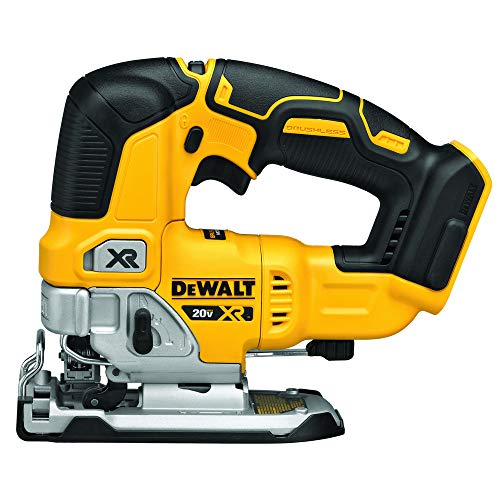 DEWALT DCS334BBest overall
 FLEX FX2231-ZFastest with long stroke
 DEKOPRO JigsawBest corded value
The short list of jigsaw mistakes
Most jigsaw problems come from a handful of habits. They cause crooked lines, torn edges, snapped blades and, in the worst cases, injuries. Here is what to avoid.
Each item on this list has a simple fix, and the rest of this guide covers them in turn.
- Forcing the saw through the cut instead of letting the blade work at its own pace.
- Cutting material that is not clamped down, so the workpiece bounces or shifts.
- Putting a hand underneath the workpiece or near the blade.
- Starting the saw with the blade already pressed against the wood.
- Using a dull, bent or wrong-type blade.
- Changing a blade while the saw is plugged in or the battery is attached.
- Turning tight curves with a wide blade.
- Skipping eye and hearing protection.
Do you push or pull a jigsaw?
You push. Hold the saw firmly with the front of the base plate resting flat on the workpiece, then guide it forward along the line with light, steady pressure. The blade teeth point upward in most wood-cutting blades, so the cutting happens on the upstroke and the saw wants to press the base plate down against the surface.
Pushing does not mean shoving. If you lean into the saw, the blade bends, the cut drifts away from vertical and the motor strains. If the saw slows or the blade smokes, ease off and let the blade clear the cut. A good rule is to move only as fast as the blade can remove material.
Never pull a jigsaw backward toward your body. If the blade binds in the cut, the saw can jump toward you. When you need to back out of a cut, release the trigger, wait for the blade to stop, and then lift the saw away or slide it back.
Set up the saw before you cut
A few minutes of setup prevents most bad cuts. Disconnect the power first: unplug a corded saw or remove the battery from a cordless one before you change a blade or adjust the shoe. Then work through the checklist below.
- Match the blade to the material. Coarse teeth cut faster in thick wood, while finer teeth leave a cleaner edge in plywood and thin stock.
- Seat the blade fully in the clamp and give it a gentle tug to confirm it is locked.
- Choose an orbital setting. High orbit suits rough cuts in softwood, and low or zero orbit gives cleaner curves and better results in plywood.
- Set the speed dial lower for tight curves and higher for straight, rough work.
- Check that the base plate is tight and set at the angle you want, usually 0 degrees for square cuts.
Match the settings to the job
This table pulls together the orbital guidance in one place. It is a starting point, so adjust to what you see in the cut.
If a setting leaves a rough edge, drop the orbit one step and slow your feed rate before changing anything else.
| Job | Orbital setting | Speed and feed |
|---|---|---|
| Rough cut in softwood | High | Higher speed, steady feed |
| Clean curve in plywood | Low or zero | Moderate speed, slow feed |
| Tight curve in solid wood | Low | Lower speed, narrow blade |
| Quick crosscut in sheet goods | Low to medium | Moderate speed, support both sides |
Support and clamp the work
An unsecured workpiece is the most common cause of a jigsaw jumping. Clamp the board to a bench or sawhorses so the cut line hangs past the edge of the support. That keeps the blade from cutting into your bench and gives it room to move through the whole stroke.
Keep both hands on the saw, and keep your free hand well away from the blade path. Never reach under the workpiece while the saw is running. The blade extends below the material, and it keeps moving for a moment after you release the trigger.
Let the blade reach full speed before it touches the wood, and enter the cut gently. Starting a cut with the blade pressed against the surface can make the saw chatter and kick. When you finish, release the trigger and let the blade stop completely before you lift the saw. A hot blade can burn you, so avoid touching it right after a cut.
Protect yourself
A jigsaw is a small tool, but it throws chips and dust and it is loud. Wear safety glasses every time, hearing protection for longer sessions and a dust mask when cutting sheet goods or hardwood. Tie back long hair, and avoid loose sleeves and jewelry that could catch.
Watch the cord on a corded saw so it stays behind you and away from the blade. Keep the cutting area well lit and free of clutter. If you are cutting near an existing wall or floor, check for hidden wires, pipes or nails before you start, since the blade can hit them and the saw can kick back.
Choose a saw that makes good habits easier
Some features make the right technique easier to follow. Good line visibility, dust control and low vibration all help you keep a steady pace. Our best jigsaw for woodworking comparison looks at these features side by side so you can see which saws offer them.
For example, the DEWALT DCS334B lists an LED light, an integrated dust blower, variable speed, four orbital settings and a bevel up to 45 degrees. The RIDGID R86345B lists a dust blower with an on/off switch and a vacuum attachment option, and it weighs 4.2 lb. The Bosch JS470E lists a blade ejection lever that means you do not need to touch a hot blade, along with a low vibration design.
If you are still deciding between corded and cordless, our jigsaw comparison page explains how each type fits different shop setups. Whichever you choose, the technique in this guide applies the same way.
Frequently asked questions
Why does my jigsaw blade keep breaking?
Usually the blade is being forced, bent in a tight curve or run too fast for the material. Slow your feed, use a narrower blade for curves and keep the base plate flat on the surface.
Why does the cut wander off the line?
A dull blade, too much pressure or a high orbital setting can all push the blade off course. Try a fresh blade, lower the orbit and let the saw move at its own pace.
How do I reduce splintering on the top face?
Use a fine-tooth blade, set the orbit low or to zero and cut slowly. Some people also apply masking tape along the line, which can help hold the surface fibers in place.
Can I cut with the battery attached while I change settings?
It is safer not to. Remove the battery or unplug the saw before changing blades or adjusting the base plate so the saw cannot start by accident.