What Is TIG Welding and What Is It Used For?
TIG welding, also called GTAW, is an arc process that uses a non-consumable tungsten electrode and an inert shielding gas to make clean, precise welds. It is used for thin metal, stainless steel, aluminum and any job where weld appearance and control matter. It is slower and takes more practice than other methods, so people pick it for quality rather than speed.
 Sunstac TIG-250 TP ACDCBest overall
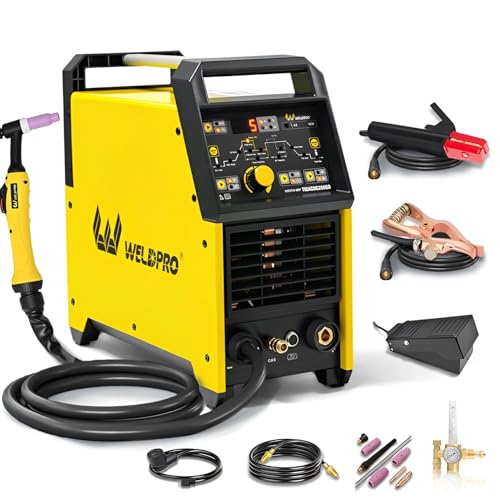 W Weldpro TIG200-KT26 TorchPedal-ready aluminum machine
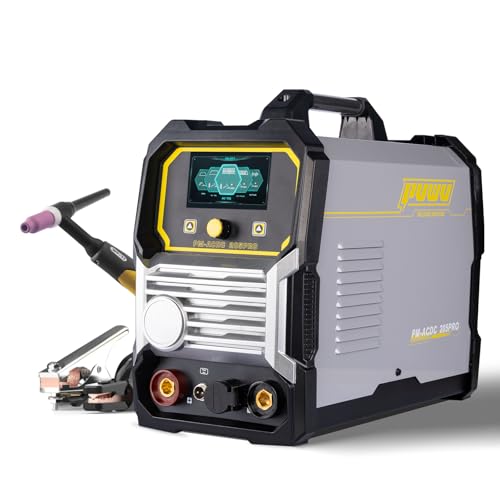 PUWU PM-ACDC-205PROCompact 205A option
How the TIG process works
TIG stands for tungsten inert gas. A pointed tungsten electrode carries current to the work and creates an arc. Tungsten has a very high melting point, so the electrode does not melt into the weld the way a stick electrode or MIG wire does.
Inert shielding gas, most often argon, flows from the torch and covers the molten puddle. This keeps oxygen and moisture in the air out of the weld, which is what gives TIG its clean, spatter-free look.
Most of the time you add filler metal by feeding a thin rod into the puddle with your free hand. For thin parts or tight joints, you can sometimes fuse the pieces together with no filler at all. Your other hand runs the torch, and on many machines a foot pedal adjusts the current while you weld.
Why people choose TIG
TIG gives you more control over heat than most other arc processes. You steer the puddle slowly and decide exactly when to add filler. That control is why the process shows up wherever neat joints matter.
- Clean welds with little or no spatter, so less grinding afterward.
- Fine heat control, which helps on thin sheet and delicate parts.
- Works on many metals, including steel, stainless, aluminum, copper and magnesium alloys.
- Good visibility of the puddle, because there is no smoke-heavy flux or wire in the way.
- Low-amp work is possible, which suits small, precise joints.
What TIG welding is used for
TIG is common in fabrication shops, auto and motorsport work, bicycle frames, food and beverage equipment, repair work and art projects. Hobbyists use it for exhaust parts, brackets, tanks, trailers and custom pieces where the weld will be visible.
The metal you plan to weld decides which kind of machine you need. This table sums up the basics.
| Metal | Current type | Typical uses |
|---|---|---|
| Mild and carbon steel | DC TIG | Frames, brackets, repairs, custom fabrication |
| Stainless steel | DC TIG | Food-grade equipment, exhaust parts, railings |
| Copper | DC TIG | Specialty fittings and decorative work |
| Aluminum and aluminum alloys | AC TIG | Boat parts, bike frames, tanks, automotive pieces |
| Magnesium alloys | AC TIG | Specialty and repair work |
AC or DC: the choice that matters most
DC TIG covers steel, stainless and copper. Aluminum needs AC TIG, because the alternating current helps break up the oxide layer that forms on aluminum's surface. Without it, the oxide resists the arc and the weld turns messy.
This is the biggest filter when you shop. A DC-only machine, such as the YESWELDER or the ARCCAPTAIN 205P on our comparison page, works on steel, stainless and copper but not aluminum. If you might ever weld aluminum, choose an AC/DC model. Our best TIG welder page sorts the options by exactly this split.
Features worth knowing about
Output current sets how thick a plate you can handle. Among the models on our page that list it, maximum output runs from 160A to 250A. The Sunstac TIG-250 lists 250A and a 0.24 in aluminum rating, while the ARCCAPTAIN TIG200PACDC lists 200A and 0.5 to 5 mm (0.02 to 0.20 in) for aluminum. Aluminum carries heat away fast, so it usually needs more current than steel of the same thickness.
Input voltage matters too. Every model in our top ten accepts 110V or 220V, but output is usually lower on 110V. The Sunstac listing shows 4 mm of aluminum at 110V and 6 mm at 220V.
Pulse TIG switches the current between a high and low level many times per second. It reduces heat input, which helps on thin metal. The Weldpro 200A lists a pulse range of 0.5 to 200 Hz. A foot pedal gives live amperage control. The Weldpro includes one, while the Sunstac supports a pedal that is not in the box. Check that a pedal adjusts current, because the PUWU 205A lists one that only switches power on and off.
Weight varies a lot, from 10.7 lb to 85 lb among models that list it. If you will move the machine often, check that number. You can compare these points in one place on our TIG welder comparison.
Safety basics
TIG is quieter and cleaner than some processes, but it still carries real hazards. Follow the maker's manual and local rules, and ask a qualified person if you are unsure about your wiring.
- Eye protection: the arc gives off intense light and UV. Use an auto-darkening welding helmet rated for TIG, and cover all exposed skin to avoid arc burns.
- Electricity: use a properly rated circuit and a grounded outlet. Never weld on wet floors or with damaged cables.
- Gas cylinders: chain or strap them upright, and keep the valve closed when you are not welding.
- Ventilation: fumes from stainless, coated or dirty metal can be harmful. Weld in a well-ventilated space and clean the metal first.
- Heat: the work and the torch stay hot long after you stop. Wear leather gloves and flame-resistant clothing, and keep flammables away.
- Hearing: grinding and prep work around TIG welding are loud, so wear ear protection for those tasks.
Is TIG right for you?
TIG rewards patience. You coordinate the torch, filler rod and, on many setups, a foot pedal at the same time. That takes practice, and the process is slower than MIG or stick welding. The metal also has to be very clean, since oil, rust and paint show up as flaws in the weld.
If you mostly do thick structural work or outdoor jobs in wind, another process may suit you better, because drafts can blow the shielding gas away. If you want neat joints on thin metal, stainless or aluminum, TIG is a strong fit. Start with your metal and thickness, then pick a machine that matches both.
Frequently asked questions
What gas does TIG welding use?
Argon is the most common shielding gas for TIG. Some jobs use argon mixed with helium, but pure argon covers most steel, stainless and aluminum work.
Is TIG harder to learn than MIG?
Most people find it harder at first, because you control the torch, filler rod and often a pedal at once. It takes practice, but the slower pace gives you more control once you get the rhythm.
Do I always need filler rod for TIG?
No. Thin edges and tight joints can sometimes be fused with no filler, which is called an autogenous weld. Thicker joints and gaps usually need filler to build up the weld.
Can I run a TIG welder on a household outlet?
Many models accept 110V as well as 220V, so a household outlet can work. Output is usually lower on 110V, so check the maker's thickness chart for the voltage you plan to use.