What Is the Number One Mistake When Using Jacks?
The number one mistake is trusting the jack to hold the vehicle while you work. A jack is built to lift, not to support, and a hydraulic seal can leak or a car can shift. Always set jack stands under solid points and never put any part of your body under a car that only a jack is holding.
 SATA 3T AluminumBest overall
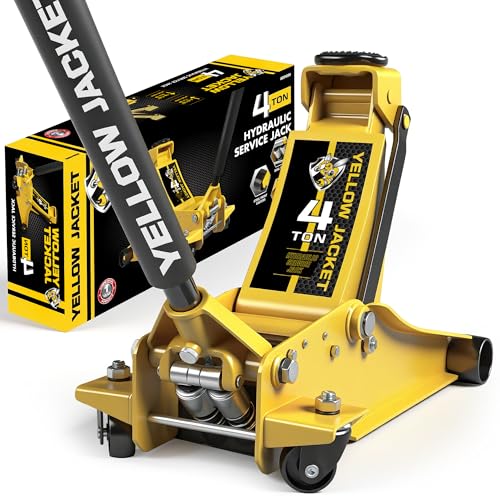 YELLOW JACKET AS840094-ton capacity
 VEVOR Aluminum and Steel Racing JackThree safety standards listed
Why relying on the jack alone is the biggest mistake
A floor jack is a lifting tool. Its hydraulic system pushes fluid to raise the saddle, and that same fluid is the only thing keeping the car up once you stop pumping. A worn seal, a bumped handle or a shifting load can let the car settle or drop with no warning.
The mistake is easy to make because a raised car looks stable. The jack is holding it, you have a job to do, and stands feel like an extra step. But the risk is highest exactly when you are reaching under the car, because that is where a drop does the most harm.
Our low profile floor jack comparison makes the same point: always support a raised car with jack stands. Even a jack with an overload valve and a slow-release system is still a lifting device, not a support.
What a jack does and what a jack stand does
The two tools have different jobs. Mixing them up is where trouble starts.
| Tool | Job | Safe to work under? |
|---|---|---|
| Floor jack | Raises and lowers the vehicle | No |
| Jack stands | Hold the raised vehicle at a fixed height | Yes, when placed correctly on level, solid ground |
| Wheel chocks | Stop the vehicle from rolling | They do not support weight, but they are required for safe lifting |
A safer lifting sequence
Follow the same order every time. It takes a few extra minutes and removes the biggest risk.
- Park on hard, level ground. Avoid soft dirt, sloped driveways and cracked pavement.
- Set the parking brake, put the car in park or first gear, and chock the wheels that stay on the ground.
- Read your owner's manual to find the approved lift points and stand points.
- Center the saddle under a lift point and raise the car slowly, watching that the jack stays upright.
- Place jack stands under approved support points, then lower the car gently onto them.
- Leave the jack in place under the car, just touching, as a light backup, and give the car a firm push to confirm it is steady before you go under.
- When finished, raise the car slightly, remove the stands, then lower it slowly and clear the area first.
Other common jack mistakes
Skipping stands is the biggest error, but it is not the only one. These come up often and are just as avoidable.
- Lifting on the wrong spot. Suspension arms, thin floor pans and exhaust parts can bend or fail. Use the points the manufacturer lists.
- Ignoring the rating. A jack's rated capacity is the most it should lift. Pick one rated above the part of the car you will raise.
- Using the wrong tool for the job. A small emergency scissor jack is not meant for shop work, and a heavy floor jack is awkward on the roadside.
- Working on soft or sloped ground. A jack that sinks or rolls can tip the car off the saddle.
- Using blocks, bricks or stacked wood as stands. These can crack or slip under load.
- Skipping wheel chocks. A car can roll as it is raised if the wheels on the ground are free to move.
Choosing a jack that makes the safe routine easier
The right jack will not replace stands, but it can remove problems that lead to shortcuts. If a jack cannot slide under your car, people tend to improvise. If it cannot lift high enough, they stack things under it.
Start with minimum saddle height, then check maximum lift height and capacity. On our best low profile floor jack page, the Sunex 6602LP starts at 2.75 in and lifts to 24 in, though it is rated at 2 tons. The SATA 3-Ton Aluminum Floor Jack starts at 3.75 in and lifts to 19.125 in, with a dual-piston pump and overload protection.
If you want more capacity, the Yellow Jacket low profile jack is rated at 4 tons, but its saddle starts at 4.3125 in and it weighs 87 lb. That is a real trade-off for a low car. Whichever you choose, make sure your jack stands can also fit at your car's support points.
Safety notes before you lift
Never get under a car that is held only by a jack, even for a quick look. If you must reach under, use stands first.
Wear safety glasses when working under a vehicle, since rust, dirt and fluids can fall. Keep your body clear of the car's path in case it moves, and do not run the engine or rock the car while it is raised.
Inspect your jack and stands before each use. Look for fluid leaks, bent parts, cracks, damaged welds and a saddle that does not sit flat. Retire any tool that looks damaged. Use stands in matched pairs at the same height, and check the rating printed on them.
Frequently asked questions
Is it safe to change a tire with just the jack?
Do not put any part of your body under the car. For a tire change, keep your head, arms and legs out of the space under the vehicle, and lower the car quickly if it moves. For anything beyond a wheel swap, use stands.
Where should jack stands go?
Use the support points listed in your owner's manual, such as the frame rails or reinforced pinch welds. Place them on firm, level ground, and set them at the same height on both sides.
Can a jack with an overload valve replace jack stands?
No. An overload valve helps prevent lifting beyond the rating. It does not hold the load once the car is up.
How do I know my jack is too worn to use?
Stop if you see leaking fluid, a bent handle or frame, cracked welds, or if the jack slowly sinks under load. Do not use it until it has been repaired or replaced.