What Is the Easiest Way to Remove Shingles From a Roof?
The easiest way depends on how much roof you are stripping. For a few damaged shingles, slide a short pry bar or roof snake under the course above and pull the hidden nails. For a whole roof, a long-handled roof shovel or shingle ripper lifts rows of shingles and nails together, and fall protection comes first either way.
 PacTool RS501 Roof SnakeBest overall
 Hoqqf 54UCB060Most compact
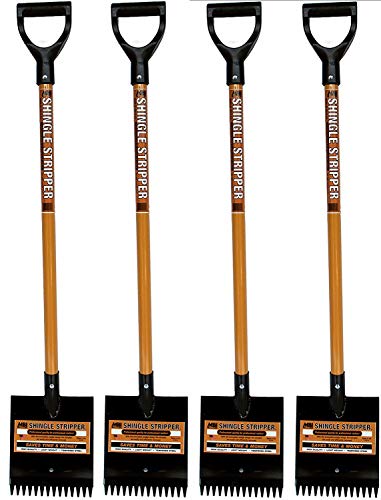 MBI Tools MBISS-4LBest for full tear-offs
Match the Method to the Job
Shingle removal is really two different jobs, and each has its own easiest approach. Replacing a handful of damaged shingles is a nail-pulling job. Stripping a roof down to the deck is a lifting and scraping job.
Using the wrong tool makes either one harder. A short pry bar on a full roof means hours of bending and tugging. A long shovel on a single shingle can tear up the good shingles around it.
Here is a quick way to decide:
- Replacing one to a dozen shingles: use a short pry bar or roof snake.
- Stripping a small section: a mid-length ripper gives more leverage.
- Tearing off an entire roof: use a long-handled roof shovel and work in rows.
- Installing new shingles afterward: look for a tool with a nail slot.
Tools That Fit Each Job
The tools on our shingle removal tool comparison fall into three groups: pocket pry bars, a mid-length ripper and a long roof shovel. Length is the main spec to compare, since longer tools give more leverage.
The table below uses the published specifications from that page. Weight is listed for four of the five tools, and the Hoqqf bar does not list one.
| Tool | Style | Length | Weight | Best for |
|---|---|---|---|---|
| PacTool RS501 Roof Snake | Pocket pry bar | 13 in | 1.4 lb | A few shingles, with claw and nail slot |
| Hoqqf 54UCB060 | Pry bar | 11.6 in | Not listed | Tight repairs, with claw and nail slot |
| SDSNTE 1 | Pry bar | 12 in | 1.52 lb | Repairs, with 4140 steel and nail slot |
| Dasco Pro 640 | Shingle ripper | 24 in | 7.2 lb | Larger sections and partial tear-offs |
| MBI Stripper Roof Shovel | Roof shovel | 47 in | 1.52 lb | Full tear-offs with an 8 in blade |
Removing a Few Shingles
For small repairs, a roof snake style bar is the gentlest option. It has a claw that hooks under a nail head, so you can pull fasteners without prying up the neighboring shingles more than needed. The shingle above hides the nails you need to reach, so you work from underneath the course above.
Take it slowly. Asphalt shingles can crack in cold weather, so patience protects the good ones.
- Slide the flat end of the bar under the shingle above the damaged one to break the seal strip.
- Find the nails holding the damaged shingle. Hook the claw under each nail head.
- Roll or twist the tool to lift each nail out. Pull any stray nails left behind.
- Slide the damaged shingle out and check the felt underneath for tears.
- Slide the new shingle in. If your tool has a nail slot, use it to hold each nail while you drive it.
Tearing Off a Whole Roof
A full tear-off is a different kind of work. The easiest approach is a long-handled roof shovel, such as the 47 in MBI shovel with its 8 in blade on our page. The long handle lets you work standing more upright, and the wide blade lifts a strip of shingles and nails at once.
Start at the ridge and work down the slope in rows. Push the blade under the shingles, lever them up, and let the debris slide toward the edge or a waiting dumpster. Keep a steady rhythm instead of forcing it.
A shingle ripper, like the 24 in Dasco Pro, sits between the pocket bars and the shovel. At 7.2 lb it is the heaviest tool listed, so plan breaks on bigger sections. A mid-length tool suits partial tear-offs where a full shovel is more than you need.
Pull or flatten leftover nails as you go. Hammering them flat is fine if the deck stays intact, but nails left sticking up will snag the next layer.
Safety Before You Start
Roof work is where most of the real risk lives. Falls are the main danger, and loose shingles on a slope make footing worse.
Take these steps before the first shingle comes off:
- Wear a roof harness tied to a secure anchor, with non-slip boots.
- Wear safety glasses, since nails and grit can fly when you pull them.
- Wear gloves to protect against sharp shingle edges and nail points.
- Skip wet, icy or windy days, and avoid working in strong heat.
- Keep people and pets clear of the ground below the work area.
- Set up a ladder at a safe angle and extend it above the roofline.
- Check overhead power lines before moving ladders or long tools. A 47 in shovel can touch lines you did not notice.
Finishing the Job Cleanly
Once the shingles are off, walk the deck looking for soft spots, rot or exposed gaps. Damaged decking should be repaired before new roofing goes on.
Sweep up nails and debris. A magnetic sweeper helps on the ground, and keeping nails out of the yard protects tires and feet.
If you only replaced a few shingles, check that the new ones sit flat and that nearby shingles still seal down. If you are weighing tools for your own project, our best shingle removal tool page puts length, weight, steel and nail slot features side by side.
Frequently asked questions
Can I remove shingles without a special tool?
A flat bar and hammer can work for a few shingles, but a roof snake or shovel is built for the job and reduces damage to nearby shingles. For a full roof, a long-handled tool saves a lot of bending.
Should I remove shingles in hot or cold weather?
Mild, dry weather is best. Cold shingles crack more easily, and very hot days make the roof surface slick and tiring to work on. Early morning often suits summer jobs.
Do I need to remove old shingles before reroofing?
Not always, since some roofs allow a layer over the old one, but local codes and roof condition decide. A tear-off lets you inspect the deck, which is why many people choose it.
What should I do with the old shingles?
Most people rent a dumpster or arrange pickup. Asphalt shingles are heavy in bulk, so check local disposal rules and keep the debris away from the edge of the roof while working.