What Is the Easiest Way to Dig Post Holes?
For more than a few holes, a powered auger is the easiest way to dig post holes, because the engine or motor does the cutting and you mostly steer. For one or two holes in soft soil, a manual post hole digger is simple and needs no fuel or cord. Match the tool to your soil, hole count and hole size, then follow the steps below.
 NEO-TEC NEO-TECLightest gas digger
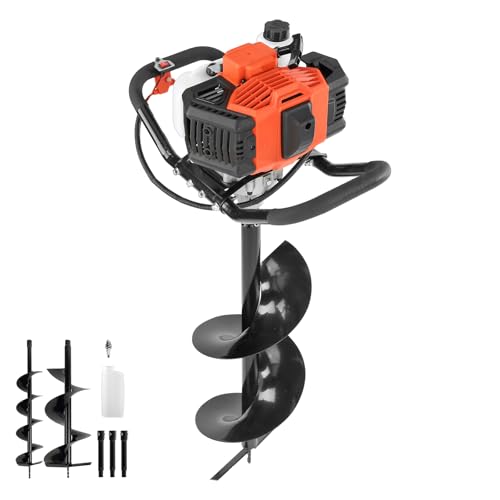 VEVOR D52-FMost extension rods
 WORKIT OO-EA62BWidest bit included
Pick the method that fits the job
The easiest method depends on how many holes you need and what is in the ground. Digging by hand costs you the most effort per hole but needs no setup. A powered auger turns that effort into a short, steady push on the handles.
Here is how the main options compare in general terms.
| Method | Best for | Trade-off |
|---|---|---|
| Manual clamshell digger | One to a few holes in soft, loose soil | Slow and tiring in clay, gravel or roots |
| Gas auger | Many holes, tough soil, open areas with no outlet | Heavier, needs fuel mixing, loud, has exhaust |
| Corded electric auger | Small yards and lighter digging near an outlet | Limited by cord reach, usually smaller bits |
| Rented or hired machine | A very large job or a one-time project | Availability and sizing vary, so plan ahead |
Prepare before you dig
Good prep makes every hole easier. Start by calling 811 in the US a few days ahead so buried utility lines get marked. Never dig until the marks are down, since an auger can cut a line in seconds.
Next, lay out string or marking paint for each post location and check your local rules for required depth. A common rule of thumb is to bury about one third of the post length and to go below the frost line where winters are cold. Your local building code or the product's instructions take priority over any rule of thumb.
Also decide on hole width. Many builders aim for a hole roughly three times the width of the post, which leaves room for concrete or gravel backfill. That width decides which auger bit you need.
How to dig with a powered auger, step by step
The process is similar for gas and electric units. Always read the manual for your exact model first.
- Put on safety glasses, hearing protection, gloves and sturdy boots.
- Clear rocks, sod and debris from the spot, and check that nobody is standing close by.
- Attach the right bit and make sure it is locked on the drive shaft.
- Place the bit tip on your mark, hold the handles firmly with both hands, and start at low throttle.
- Let the weight of the machine and the bit do the cutting. Do not force it downward.
- Lift the auger out every so often to clear loose soil, so the hole does not pack and bind.
- Add an extension rod when the bit is buried, then keep going to your target depth.
- Shut the machine off before you set it down, and clear the spoil away from the hole edge.
Hard ground, clay and roots
Hard ground is where most people get frustrated. Dry, packed clay can stall a bit, so soaking the spot lightly with water the day before can soften the top layer. Do not dig in standing water or mud, which makes footing unsafe and fills the hole.
If you hit a root or a rock, stop the machine first. Back the bit out and clear the obstruction with a digging bar, loppers or a hand saw for small roots. Then restart at low speed. Pushing through at full throttle is how bits bend and operators get hurt.
Engine size and power output show how much cutting force a unit has. Dense clay and roots call for more, as we explain on our best post hole digger comparison. In frozen ground, use a unit made for it, and check the manufacturer's notes before you try.
Is it hard, and how long does it take?
A powered auger is not hard to run, but it takes some respect. The main challenge is the torque. If the bit catches on a root or rock, the handles can twist hard against your arms. Keep a wide stance and a firm grip, and do not wrap straps or cords around your wrists.
Time per hole depends on soil, depth, bit size and how often you stop to clear the hole. Loose soil goes quickly, while clay, gravel and roots slow things down. Digging by hand takes noticeably longer in tough soil, which is why people often switch to a powered unit partway through a fence line. Plan extra time for layout, moving the machine and refueling, since those add up on a long run.
Choosing an auger for your holes
Check the bit diameter first, since it sets hole width. In our group of products, the largest bit is 12 in on the WORKIT 72CC, which also includes 4 in and 6 in bits and two extension rods. The NEO-TEC 72CC and the VEVOR 52cc both include 6 in and 10 in bits. The VEVOR 43CC comes with an 8 in bit, and the XtremepowerUS electric model has a 6 in bit.
Weight matters because you hold the machine up as it digs. The NEO-TEC lists 17.6 lb, the lightest gas model that lists weight. The VEVOR 43CC lists 26.24 lb, and the VEVOR 52cc lists 34.5 lb. The corded XtremepowerUS lists 28.3 lb and 1500 W, and its listing mentions a digging depth of about 28 in with the 6 in bit.
For depth, extension rods help. The VEVOR 52cc includes three rods, the WORKIT includes two, and the NEO-TEC includes one. You can see all of these specs side by side on our post hole digger comparison page. A corded model also needs a power source close to the work area, so it suits small yards best.
Safety notes that matter
Powered augers are loud and can kick hard, so treat them with care.
- Wear eye protection, hearing protection, gloves and closed-toe boots every time.
- Use a model with a stop switch and know where it is before you start.
- Mix and pour gas away from sparks and flames, and let a hot engine cool before refueling.
- Run gas engines only outdoors, with good airflow.
- For corded electric units, use an outdoor-rated extension cord, keep it dry and away from the bit, and plug into a GFCI outlet.
- Keep children and pets well away from the work area.
- If the bit jams, turn the machine off before you try to free it.
Frequently asked questions
Can I use a post hole digger on rocky soil?
Small stones are usually fine, but large rocks can stall or bend a bit. Stop the machine, remove what you can with a digging bar, and move the post location slightly if the rock is too big.
Do I need two people to run an auger?
Many units are made for one person, and the XtremepowerUS listing calls its model a one-man digger. Still, a helper is useful for safety, for moving materials and for shutting the machine off if something goes wrong.
What do I do with all the dirt?
Pile it on a tarp next to the hole so you can reuse it as backfill or spread it elsewhere. Keep the pile back from the edge so it does not slide into the hole.
Should I dig when the ground is wet?
Slightly damp soil is easier to cut, but soaked or muddy ground is hard to work in and can make footing unsafe. Wait for standing water to drain first.