Pruners vs Loppers: What Is the Difference and Which Do You Need?
Pruners are small, one-handed cutters for thin stems and precise work. Loppers are essentially pruners with long handles, which give you more leverage, reach and cutting capacity for thicker branches. Most gardeners end up using both: pruners for detail, loppers for the heavier cuts.
 Fiskars 391461-1003Best overall
 Fiskars 394801-1003Gear leverage for 2 in
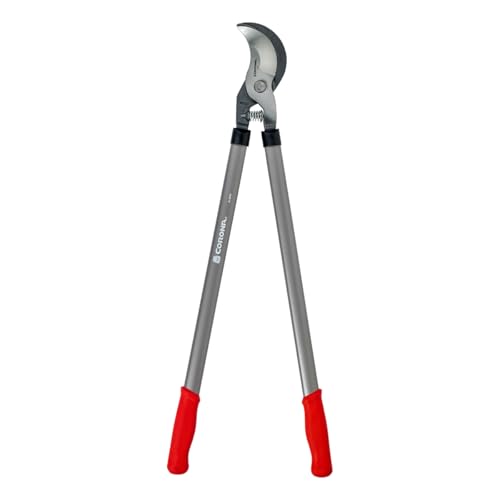 Corona Clipper SL 6500Highest cutting capacity
The core difference: size and leverage
Pruners (also called hand pruners or secateurs) have short handles and small blades. You hold them in one hand and squeeze. They are built for control, so they work well on soft stems, flower heads and small woody shoots.
Loppers use the same basic idea but stretch the handles out. Longer handles act as levers, so the same hand force turns into much more cutting force at the blades. That extra force is why loppers can take on branches a pruner would struggle with or damage.
The trade-off is simple. Pruners give you precision and a light touch. Loppers give you power and reach, but they are bulkier and slower to place.
Pruners vs loppers at a glance
The table below sums up the general differences. Exact capacity and weight depend on the model, so always check the published specs.
| Feature | Hand pruners | Loppers |
|---|---|---|
| Hands needed | One | Two |
| Handle length | Short | Long, often 28 in or more |
| Best for | Small stems, deadheading, shaping | Thicker branches, overgrown shrubs |
| Reach | Arm's length | Extra reach into dense growth |
| Precision | High | Moderate |
| Fatigue on long jobs | Hand and wrist | Arms and shoulders |
| Storage | Fits in a pocket or holster | Needs a hook or wall space |
When pruners are the better choice
Reach for pruners when the stem is small enough to close the blades around easily, roughly from a soft green shoot up to something about as thick as your thumb. They are quicker to position, which matters when you are shaping a shrub or trimming roses.
Using a lopper on thin stems is awkward. The long handles get tangled in foliage, and it is harder to place the cut just above a bud.
- Deadheading flowers and trimming herbs
- Harvesting vegetables, fruit and cut flowers
- Detailed shaping of small shrubs
- Cutting close to the main stem where space is tight
When loppers are the better choice
Loppers earn their place when a branch is too thick for pruners or when you cannot reach comfortably. The long handles let you work deep inside a shrub or cut overhead growth without bending or stretching.
Capacity varies a lot between models. On our best loppers page, rated cutting capacity runs from 1.5 in to 3 in. For example, the Fiskars 28 in bypass lopper is rated for 1.5 in branches, while the Corona SL 6500 is rated for up to 3 in. A good rule is to choose a lopper that covers your thickest branch with room to spare, because pushing a tool past its rating means more effort and a rougher cut.
Weight matters too. Among the loppers that list it, weight runs from 2.7 lb to 4.6 lb. A heavier tool may offer more capacity, but it tires your arms faster on a long afternoon.
Blade type and features to check
Both tools come with two main blade styles, and the choice affects plant health. Bypass blades slide past each other like scissors and give clean cuts on live wood. Anvil blades close onto a flat surface and suit dry, dead wood. If you mostly prune living shrubs and trees, bypass is the safer pick.
Loppers add a few extras worth comparing. Compound lever and gear and cam designs multiply your hand force further. Shock-absorbing bumpers soften the jolt at the end of a cut. Telescopic handles let you adjust length, such as the 41 in maximum on the Ymachray, though they add joints that you should check for play.
When you are ready to compare specific models side by side, our best loppers comparison lays out capacity, blade type, weight and warranty on one spec sheet.
Safety notes
Cutting tools are simple, but a few habits prevent most injuries.
Wear gloves and eye protection, because snapped twigs and flying bark can hit your face. Keep your free hand well away from the blades, and never cut toward your body. Make sure you have stable footing before you put force into a lopper, since a sudden release can throw you off balance.
Stay clear of power lines when working overhead, and never use long-handled tools near them, especially metal-handled ones. If a branch is too large, too high or under tension, call a qualified arborist instead of forcing the cut.
How to decide in four steps
Use this quick checklist to settle the question for your own yard.
- Measure your thickest branches. If they are thumb-sized or smaller, pruners will do the job.
- Note anything you cannot reach comfortably. Dense or overhead growth points to loppers.
- Decide on blade type. Pick bypass for living wood and anvil only for dry, dead wood.
- Check weight and handle length against how long you will work at a stretch, then compare published specs.
Frequently asked questions
Can loppers replace pruners entirely?
Not really. Loppers are clumsy on small stems and tight spots. Most people keep a pair of pruners for detail work and add loppers for thicker branches.
What should I use when a branch is thicker than my lopper's rating?
Switch to a pruning saw. Forcing a lopper past its rated capacity makes the cut harder and can damage the blades.
Do I need to oil or clean these tools?
Wipe off sap and moisture after use and keep the pivot lightly lubricated. Clean blades cut better and resist rust, and wiping them between plants helps limit the spread of disease.
Are longer loppers always better?
No. Longer handles add reach and leverage, but they also add weight and can be harder to control. Choose a length that suits your reach and the space you work in.