Pry Bar vs Crowbar: What Is the Difference?
A crowbar is a kind of pry bar. The term "pry bar" covers any bar that works as a lever, while "crowbar" usually means a longer, heavier bar with a curved or hooked end and a nail slot, built for demolition and stuck framing. Smaller flat bars handle trim and light prying, and the other names, such as wrecking bar, pinch bar and Halligan, describe specific shapes and jobs.
 Titan 11509Lightest in the lineup
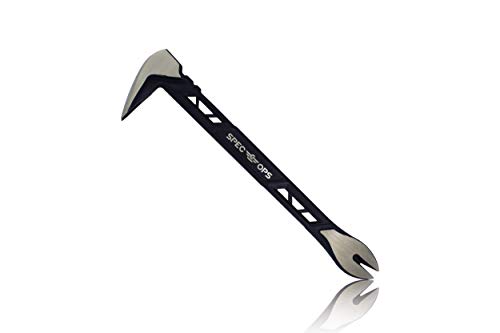 Spec Ops SPEC-D10CLAWBest for pulling nails
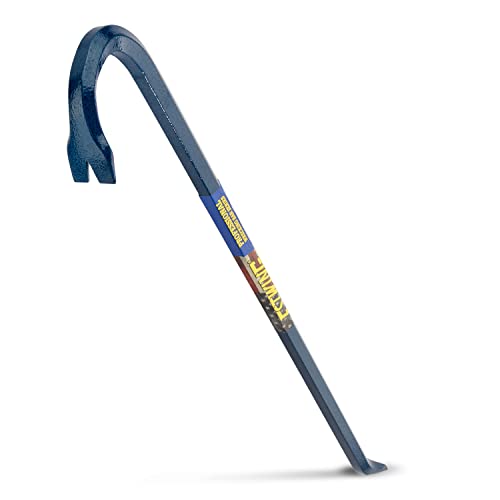 Estwing EWB-30Classic forged gooseneck
The short version: one is a family, the other is a member
"Pry bar" is the broad category. Any steel bar that uses leverage to pull, lift or separate things belongs to it. A crowbar sits inside that family, so every crowbar is a pry bar, but not every pry bar is a crowbar.
In everyday use, people also split them by size and purpose. A crowbar is the long, heavy tool you lean on to pull apart framing, lift a pallet or tear out boards. A pry bar, in the narrower sense, is the shorter and often flatter tool you use for trim, molding, tile and fine work where control matters more than raw force.
The names overlap a lot in stores. Our best crowbar page notes that many bars sold as crowbars are really small flat pry bars, so look at the shape and length instead of trusting the label.
What makes a crowbar a crowbar
The classic crowbar has a few traits that show up again and again. Knowing them helps you read a product listing quickly.
Length is the big one. More length means more leverage, so you can move stubborn material with less effort. The trade-off is weight and reach, since a long bar needs room to swing and a firm stance.
- A curved or gooseneck end that gives a pivot point and extra pulling force.
- A slotted hook or claw for gripping nails and spikes.
- A wedge or chisel tip at the other end for getting under boards and into seams.
- Heavy, solid steel, ideally forged in one piece so there are no joints to fail.
How the common bar names compare
Most of the confusing terms describe a shape or a trade, not a separate kind of physics. Every one of these is a lever. The table gives the usual meaning of each name, though makers do not always use the words the same way.
Pinch bars and Halligans are the two that most often trip people up. A pinch bar typically has a pointed or wedge tip and is used to nudge heavy objects or lift one edge, which is why it shows up in moving and flooring work. A Halligan is a forcible entry tool used mainly by firefighters, with a fork, an adze and a pick on one tool. It is a specialty item, not a general household substitute.
| Name | Typical shape | Best for |
|---|---|---|
| Crowbar | Long, curved end, nail slot, chisel tip | Demolition, framing, heavy prying |
| Wrecking bar | Crowbar style, often with a gooseneck and slotted claw | Tearing out boards, pulling spikes |
| Flat bar | Thin, flat, short to mid length | Trim, molding, tight gaps, light nail pulling |
| Pinch bar | Pointed or wedge tip, straight shaft | Nudging heavy loads, lifting an edge |
| Cat's paw | Small, with a sharp claw end | Digging out and pulling nails |
| Halligan | Fork, adze and pick on one tool | Forcible entry by emergency crews |
Real examples from our spec sheet
Specs make the split easier to see. In the best pry bar and crowbar comparisons, the small end of the range is the Titan 11509, a 9.25 in flat pry bar scraper that weighs 0.1 lb and has a nail puller slot. At 10 in and 0.7 lb, the Spec Ops cat's paw is built around two nail pullers. These are pry bars in the narrow sense, made for control and detail work.
At the other end, the Estwing EWB-30 is a 30 in gooseneck wrecking bar with a slotted hook end, forged in one piece. The Spec Ops 30 in demo bar lists a weight of 6.4 lb and a cushioned grip. Those are the tools most people picture when they say crowbar.
In between sit tools like the Estwing PB-18, an 18 in I-beam bar at 1.5 lb with a nail slot, and the STEELHEAD 15 in flat bar at 1.55 lb. They show how the line blurs. At the far extreme is the Mayhew Dominator at 58 in and 9.32 lb, a curved bar aimed at heavy automotive and industrial work.
How to choose between them
Start with the job, then pick the shortest bar that can do it comfortably. A bar that is too long is awkward in tight spots, and one that is too short makes you fight for leverage.
Here is a simple way to decide:
- For trim, baseboards, tile and small nails, choose a flat bar of roughly 10 to 15 in.
- For pulling nails during cleanup, look for a cat's paw or a bar with a slotted claw.
- For stuck framing, decking and demolition, choose a forged crowbar or wrecking bar, around 24 to 30 in.
- For moving heavy objects, a pinch bar is the better fit than a hooked crowbar.
- For emergency forced entry, leave the Halligan to trained crews.
Safety notes before you pry
Prying stores a lot of force in the bar, and it can release suddenly. Wear safety glasses, since nails, splinters and chips can fly when material gives way. Work gloves help protect your hands from pinch points and rough steel.
Keep your body out of the line the bar will travel if it slips, and never pry toward your face or hands. If you strike a bar with a hammer, use one made for striking, and check the bar for chips or cracks first. Before you pull apart any wall, check for hidden electrical wiring, gas lines and water pipes, and shut off power at the breaker if there is any doubt. When working on a ladder or at height, take extra care, because a bar that slips can cost you your balance.
Frequently asked questions
Can I use a small pry bar instead of a crowbar?
For light work, yes. For heavy demolition or large framing, a short bar may not give enough leverage, and forcing it can bend the bar or cause a slip.
Is a wrecking bar the same as a crowbar?
They are very close. A wrecking bar is a crowbar style, often with a gooseneck, a slotted claw and a chisel end. Many sellers use the two names for the same tool.
Does a heavier bar always pry better?
No. Extra weight adds force, but it also tires your arms and makes the bar harder to control. Length and a solid forged build matter more than raw weight.
Do I need a nail puller slot?
It helps if you work with framing or cleanup, since you can pull nails without switching tools. It matters less if you only lift trim or move heavy objects.