What Is the Correct Way to Wear a Tool Belt?
Wear a tool belt snug on your hips, not your waist, with the heaviest pouches on your sides and the hammer holder on your dominant-hand side. Keep the buckle at the front, load the belt before you tighten it, and use suspenders if the weight drags it down.
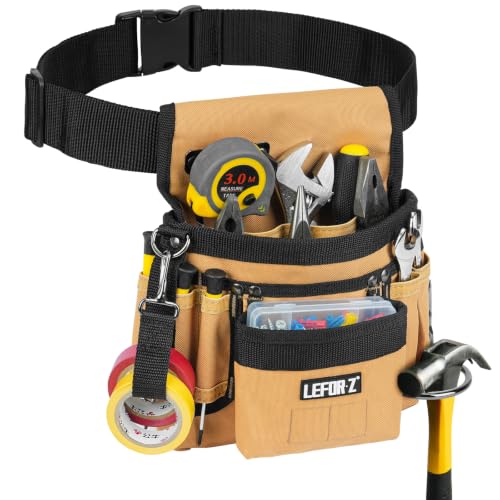 LEFOR·Z L-Single Tool Pouch-A-BK/BN-USBest overall
 UUP Tool belt yellowMagnetic, pocket-rich belt
 LEFOR·Z Heavy Duty Tool Belt-Black-UKSuspenders and widest waist range
Where the belt should sit
Wear the belt on your hips, just above the hip bones, rather than on your soft waist. Your hips are a solid shelf that can carry weight. Your waist cannot, so a belt cinched there pulls down and digs in.
Put the belt on over your work clothes, with the tools already in the pouches. Then tighten it until it stays put when you bend and squat but does not squeeze. If it slides down when you walk, it is either too loose or too heavy for a belt alone.
Front or back: where the pouches go
Pouches belong at your sides and slightly toward the front, not centered on your back. Anything you reach for often should sit where your hand can find it without looking. A pouch on your spine gets crushed when you sit, lean on a wall or climb a ladder.
Most people wear the buckle at the front. Many belts also let you slide pouches along the belt. For example, the LEFOR·Z 14-pocket belt is listed with detachable pouches that can be moved to different positions on the waist, so you can fit the layout to how you work.
Where the hammer goes
The hammer holder goes on your dominant-hand side, a little behind the hip line. That way your hand drops straight to the handle and the head rides clear of your leg. Right-handed workers put it on the right, and left-handed workers put it on the left.
Some belts include a metal holder. The LEFOR·Z 14-pocket belt and the Custom Leathercraft apron both list a steel hammer holder, and the Klein Tools combo lists a hammer holder too. Check that the holder sits where you want it before you load the belt, and that it can move or detach if your hand preference differs from the default.
Step by step: putting it on
A good routine takes a minute and saves aches later.
- Measure your waist over your work clothes and confirm it falls inside the belt's stated range.
- Load the pouches with the tools you will use that day, and leave out the rest.
- Place the heaviest items, such as a drill or pliers, toward your sides so the weight rides on your hips.
- Put the belt on, set the buckle at the front, and cinch until it is snug but not tight.
- Position the pouches and hammer holder, then bend, squat and reach to check nothing swings or blocks you.
- If suspenders are included, connect them after the belt is secure, then adjust so they share the load without pulling the belt up.
When suspenders make sense
Suspenders move part of the load from your hips to your shoulders. They help most when the belt is heavily loaded or you wear it for long shifts. A belt that rides low all day usually needs either lighter pouches or suspenders.
Fit matters here too. Some belts list a narrow range and others a wide one. The Gatorback B240 is listed for 31 to 35 inch waists, while the LEFOR·Z Heavy Duty belt lists 32 to 60 inches and includes suspenders with a four-point connection. Our best tool belt page puts these ranges side by side.
Matching setups to the job
How you arrange the belt depends on the work. Weight also changes what feels comfortable, so a belt with more pockets is not always the better pick. You can compare these listed figures on our tool belt comparison.
| Product | Listed weight | Listed pockets and loops | Suspenders |
|---|---|---|---|
| LEFOR·Z 14-Pocket | 0.99 lb | 14 | No |
| UUP Magnetic | 1.87 lb | 26 | No |
| LEFOR·Z Heavy Duty | 2.84 lb | 27 | Yes |
| Klein Tools 55298H | 3.76 lb | 27 | No |
| MELOTOUGH Camo | 5.51 lb | 23 | Yes |
Safety and comfort notes
Heavy tools on a belt change your balance, so take extra care on ladders and scaffolds. Keep sharp tools in closed or lined pouches, and do not carry loose blades or nails in a pocket you press against your leg.
Never leave a hammer or other tool hanging where it can swing free at height. A dropped tool can seriously injure someone below. Use a tether where your site requires one, and wear eye protection when you drive nails or cut.
Take the belt off during breaks and when you drive or sit for long periods. If you feel pain in your hips or lower back, lighten the load or add suspenders before it becomes a habit.
Frequently asked questions
Should a tool belt be tight?
Snug, not tight. It should stay in place when you bend and walk without squeezing your ribs or stomach. If you must cinch it very tight to stop it sliding, the load is too heavy for a belt alone.
Can left-handed people wear the same belt?
Yes. Move or flip the hammer holder and place your most-used pouch on your dominant side. Belts with detachable pouches make this easier.
Should I wear a tool belt over or under a jacket?
Over your work clothes in most cases, and measure for fit the same way. Wearing it over a bulky layer can make it loose once you take the layer off, so recheck the fit.
How many tools should I carry?
Carry what you will use during the current task. A lighter load is easier on your hips and back, and detachable pouches let you remove extra weight for simpler jobs.