What Is the Correct Way to Use a Pipe Wrench?
Set the jaw so the pipe sits snugly in the throat with a small gap behind the hook, then pull the handle toward the open side of the jaw so the teeth bite harder as you pull. Use it on round steel or iron pipe that can take some marks, and back it up with a second wrench when you work on a joint. Skip it for PVC and for good nuts, where a strap wrench or a proper socket or wrench is the better tool.
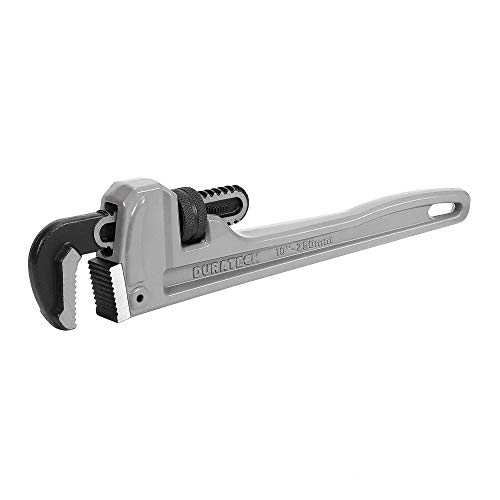 DURATECH DTAHDPW10Best overall
 KARRYTON KTAPW048Largest pipe capacity
 RIDGID 814Made in USA pick
How a pipe wrench actually works
A pipe wrench is built to grip round stock that smooth-jawed wrenches would slip on. It has two toothed jaws: a hook jaw that floats and a heel jaw that is fixed. When you apply force to the handle, the hook jaw tilts and digs in. More pull means a tighter bite.
That self-tightening action is the whole trick, and it only works in one direction. The wrench turns the pipe when you pull toward the side where the jaw opens. In the other direction it just slides. If the wrench feels like it is ratcheting freely, you are turning it the wrong way.
Because the teeth are hardened and sharp, a pipe wrench leaves marks. That is fine on rough threaded steel pipe. It is a problem on chrome, brass trim, plastic or anything you want to keep looking new.
Step-by-step: using a pipe wrench correctly
Follow this order every time. It takes a minute and saves rounded pipe, skinned knuckles and damaged teeth.
- Turn off the water, or confirm the line is isolated and drained, before you start. Never work on a gas line unless you are qualified and the gas is shut off.
- Clean the pipe where the jaws will sit. Dirt, rust flakes and old thread sealant let the teeth slip.
- Open the jaw with the adjusting nut until it is a little wider than the pipe. Place the wrench so the open side of the hook jaw faces the direction you want to turn.
- Close the jaw by turning the nut until the pipe sits deep in the throat. Leave a small gap between the back of the hook jaw and the pipe. Without that gap, the teeth can strip or the jaw can bend under load.
- Pull the handle toward you in the direction the jaw opens. The jaws should snap tight. If they slip, reset the wrench instead of forcing it.
- Use a second wrench for any threaded joint. Put one on the fitting and one on the pipe, turning in opposite directions, so you do not twist the rest of the system.
- Keep the handle in a position you can pull, not push. Pulling keeps your body balanced and your hands clear if the jaws let go.
How to use a pipe wrench without scratching
The teeth are designed to bite, so the cleanest way to avoid scratches is to avoid the pipe wrench on finished surfaces. A strap wrench or a smooth-jaw wrench is a better match for chrome, polished brass and painted pipe.
If you only have a pipe wrench, you can reduce the marks. Wrap the pipe in a few layers of heavy cloth, thin leather or a strip cut from a rubber sheet. Place the jaws over the wrap and keep the grip snug. This spreads the bite and cuts down on tooth marks, though it will not remove them completely on soft metal.
Also keep the jaws clean and the teeth in good shape. A worn or clogged jaw slips, and slipping is what drags the teeth across a surface and makes long scratches.
Can you use a pipe wrench on PVC or a nut?
PVC and other plastic pipe are the wrong match for a pipe wrench. The teeth dig in and can crack or crush the wall, and a cracked pipe may not leak until later. Use a strap wrench, which grips by friction and spreads the force. For solvent-welded PVC joints, you generally cut and replace rather than twist.
Nuts are a similar story. A pipe wrench works on round stock, so on a hex nut it grips only the corners and tends to round them off. For a nut or bolt you want to keep, use a box wrench, a socket or an adjustable wrench that fits the flats.
There is one fair exception. If a nut is already rounded off and you plan to replace it, a pipe wrench can get it moving. Some listings for large aluminum models, such as the 48-inch KARRYTON, mention use on pipes, bolts and hex nuts. Treat that as a last-resort option, not routine use.
For high-speed or heavy-duty fastener work, such as lug nuts or suspension bolts, a pipe wrench is not the tool. Our best impact wrench for automotive use page compares tools made for that job.
Match the wrench size to the pipe
Using the right size makes everything above easier. A wrench that is too small cannot close around the pipe. One that is far too big is heavy and awkward in tight spaces. Check the maximum pipe capacity first, then weigh handle length against weight. Our best pipe wrench page lays out these specs side by side.
Here is how the models on that page compare, using published specifications:
| Model | Handle | Max pipe capacity | Weight |
|---|---|---|---|
| DURATECH DTAHDPW10 | 10-inch aluminum | Not listed | 1.08 lb |
| RIDGID 814 | 14-inch aluminum | 2 in | 2.5 lb |
| RIDGID 818 (31100) | 18-inch aluminum | 2.5 in | 3.8 lb |
| RIDGID Model 18 (31025) | 18-inch ductile iron | 2.5 in | 4 lb |
| RIDGID Model 24 (31030) | 24-inch ductile iron | 3 in | 9.55 lb |
| KARRYTON KTAPW048 | 48-inch aluminum | 8 in | 17.5 lb |
Safety and care
Models with a floating hook jaw, replaceable jaws and self-cleaning threads are easier to keep in working order. On the page above, five of the six products list all three.
- Wear safety glasses. Rust, scale and old sealant can flake off when you break a joint loose.
- Wear gloves with a good grip, and keep fingers out of the space between the handle and the pipe.
- Do not slide a length of pipe over the handle for extra leverage. It can overload the wrench and cause the jaw or handle to fail. Choose a longer wrench instead.
- Work from a stable stance. At height, use a ladder rated for the job and avoid reaching, since a slip can pull you off balance.
- Never use a pipe wrench as a hammer.
- Check the jaw teeth and the adjusting nut regularly. Clean them, and replace worn jaws if your model allows it.
Frequently asked questions
Why does my pipe wrench keep slipping?
The most common causes are dirty or worn teeth, a jaw set too loose, or turning in the wrong direction. Clean the pipe and jaws, tighten the nut, and make sure you are pulling toward the open side of the hook jaw.
Does handle material matter?
It affects weight and feel. Listings say aluminum handles are about 40% lighter than iron ones, which helps in overhead or tight work. Iron handles are heavier but are the material used on the heavy-duty RIDGID models listed above.
Can I use a pipe wrench to tighten a fitting?
Yes, on threaded metal pipe. Back up the fitting or pipe with a second wrench so you do not strain the rest of the line, and stop when the joint is snug rather than cranking it as far as it will go.
Do I need a pipe wrench for small household jobs?
Not always. Many small jobs involve chrome fittings or plastic lines where a strap wrench or adjustable wrench is gentler. A pipe wrench earns its place on threaded steel or iron pipe.