What Is the Correct Way to Flush a Toilet?
Close the lid if there is one, press or push the handle firmly, and hold it until the bowl starts to empty. Then wait for the tank to refill before you walk away or flush again. You do not have to flush after every urination, but flushing after solid waste and toilet paper is always the right call.
 CASTA DIVA CD-W001Best overall
 Simple Project HT-140Tallest seat listed
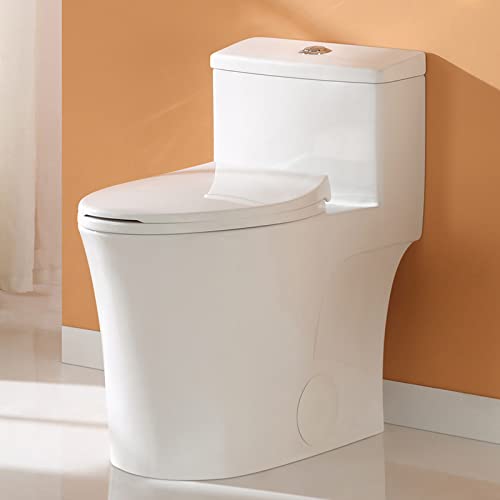 HOROW T0338WShortest depth listed
The basic steps for a clean flush
Most toilets work the same way. Pressing the handle lifts a flapper or opens a valve, and water from the tank rushes into the bowl and pulls waste through the trap. A quick tap often cuts that rush short, so a firm press is better than a flick.
Here is a simple routine that works for nearly any standard toilet:
- Check that the bowl contains only waste and toilet paper.
- Lower the lid if your toilet has one.
- Press the handle or button firmly and hold it until you hear the water start to move.
- Watch the bowl to confirm it empties and the water level resettles.
- Wait until the tank stops refilling before you flush again.
- Wash your hands with soap and water.
Should you flush after every urination?
No rule says you must. Urine is mostly water, and many households skip the flush after a quick trip to save water. That is a personal choice, and it works best in a bathroom used by one or two people who agree on it.
There are good reasons to flush anyway. Urine left in the bowl can leave a smell, and over time it can contribute to stains and mineral buildup, especially if you have hard water. In a shared or guest bathroom, flushing every time is simply more considerate.
Always flush after solid waste, after toilet paper, and after anything that could leave a lasting odor. If you are not sure, flush.
Lid up or lid down?
If your toilet has a lid, close it before you flush. A flushing toilet can throw a fine mist of water out of the bowl, and a closed lid keeps most of that inside. It also keeps the area around the toilet a little cleaner, including your toothbrush if it sits nearby.
A closed lid is a sensible habit rather than a guarantee. Wiping the seat, rim and nearby surfaces regularly still matters. Skirted one-piece models are easier to wipe because there are fewer seams, which is one reason we list construction type on our best toilet comparison.
Using each flush type correctly
Not every toilet flushes the same way, and using the wrong control wastes water or leaves waste behind. Here is how a few of the designs on our comparison page work, based on the published specifications.
On a dual flush toilet, use the smaller button for liquid waste and the larger one for solid waste. The Casta Diva CD-T005 lists 1.1 GPF for liquids and 1.6 GPF for solids, and the HOROW T0338W lists dual flush options of 1.1 and 1.6 GPF. If you press the small button and the bowl does not clear, just flush again with the full button.
| Flush type | Example from our page | What to do |
|---|---|---|
| Dual flush | HOROW T0338W (1.1 and 1.6 GPF) | Small button for liquids, large button for solids |
| Single flush | Simple Project HT-140 (1.28 GPF) | Press the handle and hold until the bowl empties |
| Pressure-assisted | Casta Diva CD-W001 (1.0 GPF) | Use the foot kick or side button as designed |
| Tankless smart toilet | Loniko U5-1-WK | Use the auto, foot sensor, remote or manual knob option |
What not to flush
The most common cause of a bad flush is something that should never have gone down. Toilets are built for human waste and toilet paper, and that is all.
Wipes, even ones labeled flushable, do not break down like paper and can catch inside pipes. Cotton swabs, dental floss, feminine products, paper towels, hair and cat litter belong in the trash. If you are unsure, put it in the bin.
Using too much toilet paper at once can also cause a clog. If you use a lot, flush once partway through, or flush twice instead of forcing it all down in one go.
When the flush does not work, and staying safe
If the bowl fills toward the rim after a flush, stop. Do not flush again. Lift the tank lid and push the flapper down into its seat to stop more water entering the bowl. You can also turn the small shutoff valve behind or beside the toilet clockwise to cut the water supply. Then use a toilet plunger to clear the clog.
A weak flush, a flush that keeps running or a tank that refills slowly often points to a worn part inside the tank. Our best toilet flush valve page compares replacement valves if you need one. If the problem keeps returning, a plumber can check the drain line.
A few safety notes:
- Never mix bleach with ammonia-based or acidic cleaners, because the fumes can be dangerous. Ventilate the room when you clean.
- Wear rubber gloves and eye protection when plunging or cleaning, since splashes can happen.
- Keep electrical devices away from water. Smart toilets plug into an outlet, so follow the maker's instructions and unplug before any repair.
- Do not stand on a wet floor to lift a heavy tank lid. A cracked ceramic lid can be sharp and heavy.
Frequently asked questions
How long should I hold the handle?
Hold it until the water starts to swirl and drain, usually a second or two. Holding the handle longer than needed does not improve the flush on most toilets.
Is it okay to flush twice?
Yes. If the first flush leaves waste behind, wait for the tank to refill, then flush again. Repeated double flushing may mean the toilet needs cleaning or repair.
Can I flush a toilet during a power outage?
Standard gravity-fed toilets work without power. Pouring a bucket of water into the bowl also forces waste down the drain. For electric smart toilets, check the manual, since some have a manual knob or backup option.
Why does my toilet sometimes flush on its own?
A leaking flapper or worn valve lets tank water slip into the bowl, which then triggers a refill. Replacing the flapper or flush valve usually fixes it.