What Is One Common Mistake When Using a Multimeter?
One very common mistake is leaving the red lead in the amps (current) jack, or the dial in current mode, while measuring voltage or checking a live circuit. In that setup the meter acts like a near-short circuit across the source, which can blow a fuse, damage the meter or cause injury. Build a habit of checking the jack and dial position before every probe touches a circuit.
 allsun EM133AWidest RPM range
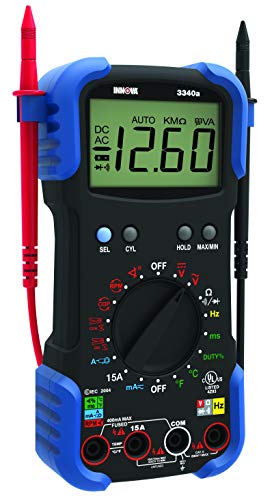 Innova 3340Lightest and simplest
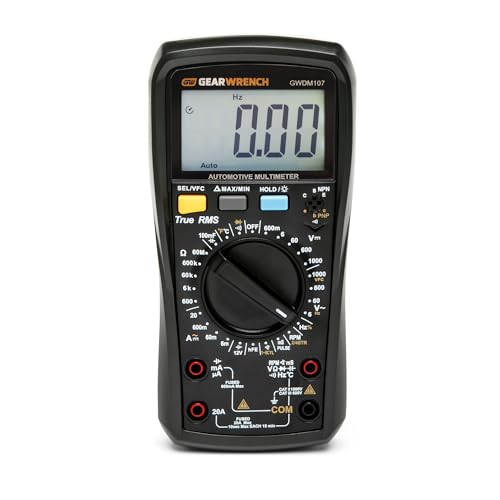 GEARWRENCH GWDM107_1Highest safety rating
The mistake: wrong jack or wrong mode
A multimeter measures voltage and current in very different ways. To read voltage, the meter sits across two points and draws almost no current. To read current, the meter becomes part of the circuit, so all the current flows through it. Inside, the current path has a very low resistance and is protected by a fuse.
The problem starts when the red lead is still plugged into the amps jack from a previous job and you touch the probes across a battery or outlet. The meter now offers an easy path for current. Best case, the fuse blows. Worst case, the fuse fails to protect you, or the leads and internal parts overheat.
This happens to beginners and experienced technicians alike, because it usually comes from rushing. You finish a current test, move to the next task and forget to move the lead back.
Why it matters more than it seems
A blown fuse is the mild outcome. A meter with a fuse that is the wrong type, or has been replaced with a cheap wire or a lower-quality part, may not interrupt the surge fast enough. That is when a simple mistake turns into a hazard.
Some meters list their fuse details in the published specs. For example, the allsun EM133A listing mentions a 630mA/1000V fuse and a 20A/1000V fast fuse. Fuse ratings like these are there for a reason, so always replace a blown fuse with the exact type the manual calls for.
There is a second cost. A meter with a blown current fuse often keeps working for voltage, but may show nothing in the current ranges. People then blame the circuit when the real problem is the meter.
How to avoid it: a quick pre-test routine
The fix is a short routine you repeat every time, even for a quick check. It takes a few seconds and removes most of the risk.
- Black lead goes in the COM jack. This one rarely moves.
- Red lead goes in the voltage and ohms jack for almost every test. Only move it to the amps jack when you are deliberately measuring current.
- Set the dial to the function you want before the probes touch anything.
- Look at the screen. If it shows the symbol for current or the wrong range, stop and correct it.
- After any current test, put the red lead back in the voltage jack right away.
Other mistakes in the same family
Wrong jack is the headline error, but it has close relatives. Knowing them helps because the same careful habits prevent all of them.
The table below sums up the most frequent ones and what to do instead.
| Mistake | What can go wrong | Better habit |
|---|---|---|
| Red lead in amps jack while measuring voltage | Blown fuse, damaged meter, possible injury | Return the lead to the voltage jack after every current test |
| Measuring resistance on a live circuit | Wrong readings and possible meter damage | Turn power off and discharge capacitors first |
| Connecting the meter in parallel for current | Short circuit through the meter | Break the circuit and put the meter in series |
| Ignoring the meter's safety category rating | Meter may not handle voltage spikes | Match the rating to the job |
| Using worn or cracked test leads | Shock risk and unreliable readings | Inspect leads and replace damaged ones |
Automotive work adds its own twists
Car electrical work gives this mistake plenty of chances to happen. A parasitic drain test, for example, needs the meter in series with the battery, so the red lead really does belong in the amps jack. Once you finish, it is easy to forget and then check battery voltage with the lead still in that jack.
Current range matters here too. Meters on our best multimeter for automotive page measure 10A to 20A, which covers most drain tests. If a test might exceed your meter's limit, such as cranking current, do not try to measure it through the meter. Use a different tool made for that job.
Meter choice also plays a role. Input impedance is a spec worth checking for car work. The Innova 3340 lists 10 MegOhm input impedance, which is meant to protect the vehicle's ECU. Our automotive multimeter comparison lays these specs side by side, along with safety ratings such as CAT III on the FROGBRO and CAT IV on the GEARWRENCH.
Safety notes
Treat every circuit as live until you have confirmed otherwise. Wall outlets and household wiring can hurt you, so keep fingers behind the probe guards and use one hand when you can.
Never measure current directly across a battery or a power source. Never use a meter on a circuit that exceeds its voltage or category rating. If the meter or leads look damaged, stop using them until they are repaired or replaced.
Remove jewelry before working near a car battery, since a metal ring can bridge terminals and cause severe burns. Wear safety glasses when working in an engine bay, where fluids, belts and sparks are all possible.
What to do if you already made the mistake
If your meter suddenly reads zero in the current ranges, or shows nothing at all, check the fuse first. Turn the meter off, remove the leads, open the case as the manual describes and inspect the fuse.
Replace it only with the same type and rating the manufacturer specifies. Do not use a generic fuse with a lower interrupt rating or a piece of wire. If the meter still misbehaves after a new fuse, retire it rather than risk a bad reading.
Frequently asked questions
Can I measure voltage with the red lead in the amps jack?
No. That setup gives the circuit a very low-resistance path through the meter. Move the red lead to the voltage jack first.
How do I know if my multimeter fuse is blown?
Typical signs are no reading or a zero reading in the current ranges while voltage still works. Remove the leads, power the meter off, and check the fuse with the meter's resistance or continuity function.
Is it safe to test resistance on a powered circuit?
No. Turn the power off and discharge any capacitors first. A live circuit will give wrong readings and can damage the meter.
Does auto-ranging prevent these mistakes?
Not really. Auto-ranging picks the measurement range for you, but it does not move the leads or choose between voltage and current. You still need to set the dial and the jack correctly.