Multimeter Auto Ranging vs Manual Ranging: What's the Difference?
Auto ranging means the multimeter picks the right measurement range for you, so you only turn the dial to a function such as volts or ohms. Manual ranging means you choose the range yourself, which takes a little more know-how but gives you full control. For most beginners and car work, auto ranging is the easier choice, and a meter that offers both is the most flexible.
 allsun EM133AWidest RPM range
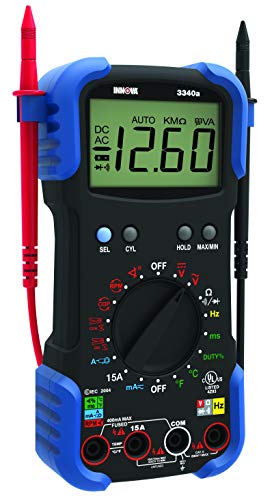 Innova 3340Lightest and simplest
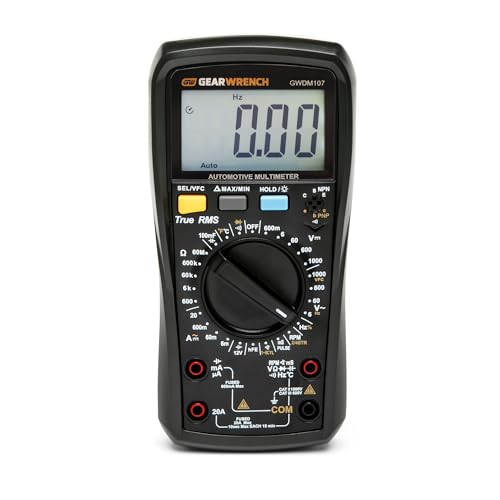 GEARWRENCH GWDM107_1Highest safety rating
What a measurement range is
A multimeter can only display a limited span of values at a time. That span is called the range. A voltage setting might have a range that tops out at a few volts, another that tops out at tens of volts, and another that reaches hundreds.
Picking the right range matters because it affects both safety and readability. If the range is too small for the signal, the meter shows an over-range message, often "OL". If the range is far too large, the reading loses detail and small values look like zeros or noisy digits.
Auto ranging and manual ranging are two ways of solving this same problem. One lets the meter decide. The other leaves the decision to you.
How auto ranging works
With auto ranging, you set the dial to a function, touch the probes to the circuit, and the meter steps through its ranges until it finds one that fits the signal. It then shows the reading with as much detail as it can.
This is why auto ranging is usually the friendlier option. You do not need to guess whether a battery reads closer to 12 volts or 120 volts before you measure. You also cannot forget to change the range after moving from one job to another.
Auto ranging meters often have fewer dial positions, because each function needs only one spot instead of several. That makes the dial easier to read and easier to use with gloves on or in a dim engine bay.
How manual ranging works
With a manual ranging meter, the dial has several positions for each function. For DC voltage, for example, you might see a series of steps, each with a higher maximum. You pick the step that is just above the value you expect.
If you do not know what to expect, the usual habit is to start at the highest range and work down until the reading has useful detail. This protects the meter from a signal much larger than you planned for.
Manual ranging has real advantages. The reading appears right away, with no pause while the meter searches. The display also stays steady because the range will not change when the signal wobbles near a range boundary. Some experienced users like the sense of control.
Auto vs manual ranging side by side
Here is how the two approaches compare on the points most buyers care about.
| Point | Auto ranging | Manual ranging |
|---|---|---|
| Setup | Choose the function, then measure | Choose the function and the range |
| Learning curve | Gentle, good for beginners | Steeper, needs a sense of expected values |
| Reading speed | May pause briefly while it picks a range | Shows the reading right away |
| Display stability | Can flicker near a range boundary | Steady once the range is set |
| Risk of a wrong setting | Low | Higher if you pick a range that is too small |
| Dial layout | Fewer positions, simpler | More positions, busier |
Which one fits automotive and home jobs
For general diagnostics, auto ranging saves time and prevents mistakes. When you are checking a battery, a ground, or a sensor signal, you can focus on the probe placement instead of the dial.
Our own spec data shows that many automotive meters list auto ranging. The allsun EM133A, the Innova 3340 and the AIOMEST AN-770K are all listed as auto-ranging, and the BTMETER BT-770K is listed as Auto/manual. The Innova 3340 also lists a 10 MegOhm input impedance and a weight of 0.5 lb, which is a handy combination for a simple, light meter.
If you are shopping for car work specifically, our best multimeter for automotive page puts these specs next to each other, along with RPM range, dwell angle, current capacity and safety ratings.
A meter with both modes is the most flexible. You can let it auto range most of the time, then lock a range when a reading keeps jumping or when you need quick, steady numbers.
When manual mode helps even if you prefer auto
There are a few situations where holding a range is useful, even on a meter that usually picks one for you.
- A fluctuating signal that keeps pushing the meter between ranges and makes the display hard to read.
- Watching a value drift over time, where a fixed range keeps the digits comparable.
- Quickly checking many similar points, such as a row of fuses or connectors, where waiting for each reading adds up.
- Comparing readings from one circuit against another, using the same range for both.
Safety and buying tips
Auto ranging does not make a meter safe on its own. Always check the following before you measure.
Set the dial to the right function first. Using a current setting on a live voltage source can blow a fuse or damage the meter. Keep the leads in the correct jacks, and move them back to the voltage jack after a current measurement.
Check the safety rating. Ratings such as CAT III and CAT IV describe protection against voltage spikes. In our data, the GEARWRENCH GWDM107 lists CAT IV, while several others list CAT III. Match the rating to the work you plan to do, and do not use a meter on mains wiring if its rating is not stated.
Never touch bare probe tips or metal parts while a circuit is live, and turn off power before testing resistance or continuity. Discharge capacitors first. Hybrid and electric vehicle high-voltage systems are not a place for a basic meter. Leave those to trained technicians.
When you are ready to compare models, look at ranging mode alongside the other specs on our automotive multimeter comparison. Display counts, true RMS, input impedance and current rating all affect how useful the meter will be.
Frequently asked questions
Is auto ranging less accurate than manual ranging?
Not by itself. Accuracy depends on the meter's design and the range it ends up using. Auto ranging simply picks that range for you.
Can I switch an auto-ranging meter to manual?
Some can, usually with a range button. Others are auto only. Check the product listing, since our data shows some meters as auto only and some as Auto/manual.
Why does my auto-ranging meter take a moment to show a reading?
It is stepping through ranges to find the best fit. Locking a range, if your meter allows it, can make readings appear faster.
Does ranging mode matter for continuity and diode tests?
Usually not. Those tests have their own dial positions and give a beep or a fixed display, so range choice matters mostly for voltage, current, resistance and capacitance.
What does OL on the display mean?
OL means over limit. The signal is higher than the selected range can show. On an auto-ranging meter it can also mean the value is beyond the meter's highest range, so stop and check your setup.