What Is Kitchen Cabinet Refacing and Is It Right for You?
Kitchen cabinet refacing means keeping your existing cabinet boxes and giving them a new face: new doors and drawer fronts, plus new veneer or laminate on the visible frames. It suits you if your layout works and the boxes are solid. If the boxes are damaged, swollen or badly arranged, replacing them is the better route.
 Quicklock Cabinets QLRTABBest overall
 Quicklock Cabinets QLRTA-KSSMost cabinets in one set
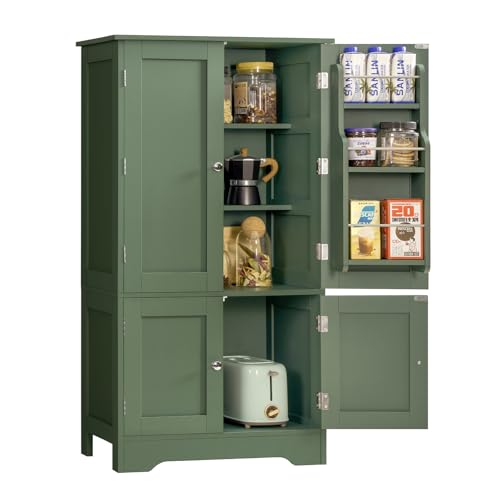 TEENFON Storage CabinetShallowest pantry storage
What cabinet refacing means
Cabinet refacing is a makeover that leaves the cabinet boxes (often called shells or carcasses) in place. The old doors and drawer fronts come off and new ones go on. The exposed frame and side panels get a fresh surface, usually thin wood veneer or a laminate, so everything matches. New hinges and pulls are normally part of the job.
The big idea is simple. The box is the structural part of a cabinet, and the face is the part you see. If the structure is sound, you can change the look without tearing out the kitchen. Your layout, plumbing and counters stay where they are.
Refacing is not the same as painting. Painting changes a color. Refacing changes the doors, the frame surface and often the hardware, so the finished kitchen can look like a different style.
Resurfacing, wrapping and refinishing: what the terms mean
People use several words for similar projects, and companies do not always use them the same way. Here is how the terms are most often used.
Kitchen cabinet resurfacing is a loose label. Some contractors use it as another word for refacing. Others mean sanding and recoating the existing surfaces. Ask exactly what is being removed, replaced or covered before you compare quotes.
Kitchen cabinet wrapping means covering surfaces with a thin film, usually vinyl. Yes, you can wrap kitchen cabinets. It works best on smooth, flat doors and frames in good shape, because the film shows dents, peeling paint and rough texture underneath. Deep routed panels and heavily worn edges are harder to wrap cleanly.
Refinishing means stripping, sanding and repainting or restaining the original doors and boxes. You keep the same door shape, so the style does not change much.
How the refacing process works
Every project differs, but most follow the same order.
The steps below describe a typical job.
- Measure every door and drawer front, then order new fronts to size.
- Remove the old doors, hinges and pulls, and clean the boxes of grease and residue.
- Repair damage such as chipped edges or loose face frames so the surface is flat.
- Apply veneer or laminate to the visible frame and exposed sides.
- Hang the new doors, align them and fit new hinges and pulls.
- Check that every door closes evenly and every drawer slides smoothly.
Refacing compared with other options
The right choice depends on how much of the cabinet you want to change. This table summarizes the main differences.
| Option | What changes | What stays | Best when |
|---|---|---|---|
| Refacing | Doors, drawer fronts, frame surface, hardware | Boxes and layout | Boxes are sound and you want a new style |
| Wrapping | Surface film over existing parts | Doors, boxes, layout | Surfaces are smooth and you want a quick color change |
| Refinishing | Paint or stain on existing parts | Doors, boxes, layout | You like the door style and only want a new color |
| Replacing | Everything | Nothing, apart from walls and utilities | Layout is wrong or boxes are damaged |
When refacing is right for you
Refacing makes the most sense when you are happy with how the kitchen works but not how it looks. Check the following before you commit.
- Your layout suits the way you cook, with enough counter space and good traffic flow.
- The boxes are straight, firmly attached to the wall and free of water damage.
- You want a new door style, not just a new color.
- You would like to avoid removing countertops or disturbing plumbing and electrical work.
- You are fine with the same box sizes and depths you have now.
When to replace instead
Refacing cannot fix a box that is the wrong size or shape for your life. If you want a different layout, a larger pantry run or a bigger sink, new cabinets are the only way to get there. Swollen particleboard around a sink, sagging shelves and loose frames are also signs that the structure has reached the end of its life. A new face on a failing box will not last.
If you do replace, measure first. Our best kitchen cabinet comparison lists base cabinets that are 24 in deep and 34.5 in tall, so you can plan counter height around that. Widths on that page run from 9 in for a single box to 96 in for a full set, which helps you match boxes to the gaps on each wall.
Materials matter too. Hardwood and plywood boxes hold screws well and handle moisture better than engineered wood or MDF. Soft-close hinges and six-way adjustable hinges are also worth checking, since they stop slamming and let you align doors after install. You can see which products include them on our cabinet comparison page.
Ready-to-assemble cabinets are a DIY-friendly route, but plan for the work. Weights on that page run from 10 lb for a single narrow base to 275.8 lb for a 9-cabinet set, so heavier boxes need two people, and wall cabinets need secure screws into studs.
Safety and prep notes
Refacing and wrapping are lighter jobs than a full remodel, but they still carry risks.
Wear safety glasses when sanding, cutting veneer or drilling hinge holes. Use a dust mask when sanding, and add hearing protection if you run a saw or sander for long stretches. Open windows when using contact cement or other strong-smelling adhesives, and keep them away from pilot lights and open flames.
Turn off power at the breaker before you touch outlets, under-cabinet lights or switches. Use a stable step stool or ladder for upper cabinets and never stretch to reach. Take doors off before you work on them, and ask a helper to hold heavy doors while you hang them.
Frequently asked questions
Can you reface cabinets yourself?
Some people do, especially with pre-made doors and peel-and-stick surfaces. Veneering frames and aligning many doors takes patience and careful measuring, so many homeowners hire a pro for the whole job.
How long does refacing take?
It depends on kitchen size and the method. Because the boxes stay in place and counters are not removed, it is usually faster than a full replacement, and you can often keep using the kitchen during the work.
Can I change the layout when I reface?
No. Refacing keeps the existing boxes where they are. To move or resize cabinets, you need to replace them.
Will refacing fix water-damaged boxes?
No. Refacing only changes the surface. Swollen or soft boxes should be repaired or replaced first, or the new face will fail along with them.