What Is Core Drilling and How Does It Work?
Core drilling is a method of cutting a clean, round hole by using a hollow, tube-shaped bit that leaves a solid cylinder of material, called a core, in the middle. A core drill machine spins that bit (usually diamond-tipped for concrete and stone) while water or air clears debris and keeps the cutting edge cool. Builders use it to make openings for pipes, cables and vents, and engineers use it to pull out samples for inspection.
 VEVOR Z1Z-9230Best overall
 VEVOR (8260H)Z1Z-9260Largest hole capacity
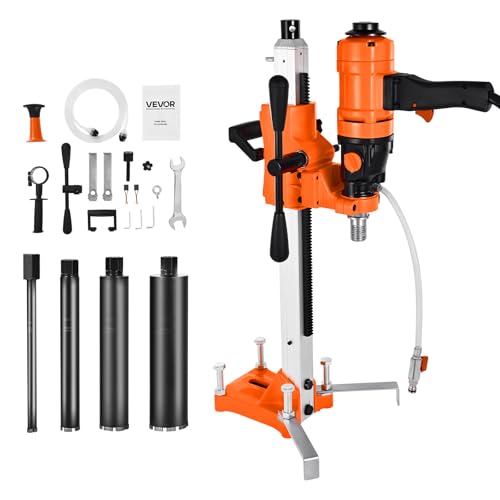 VEVOR Z1Z-CF03-80SHandheld or stand with four bits
What core drilling means
The word "core" is the key. A regular twist bit grinds all the material in the hole into chips or dust. A core bit only grinds a narrow ring, so the center stays in one piece and comes out as a plug.
That design has two big benefits. First, it removes less material, so the work goes faster and needs less force than cutting a solid hole of the same size. Second, the hole edges come out smooth and accurate, and the plug itself can be kept and examined.
You will hear the term used in two related ways. In construction, core drilling usually means making holes in concrete, brick, block or stone for services. In geology and materials testing, it means collecting a core sample to learn what is inside a slab, wall or patch of ground.
How a core drill works
A core drilling setup has a few main parts that work together. The motor turns a spindle, the spindle turns the bit, and the bit's cutting segments wear through the material one thin ring at a time.
With a diamond bit, the cutting edge is made of small industrial diamonds held in a metal segment. The diamonds do the grinding. As the segments wear, fresh diamonds are exposed, which is why the bit keeps cutting.
- Motor and gearbox: supply the rotation and decide how fast the bit spins.
- Core bit: a hollow steel tube with cutting segments on the rim.
- Water supply or dust control: cools the bit and carries away slurry or dust.
- Stand or rig: holds the drill square to the surface and gives steady feed pressure.
- Anchor or vacuum base: fixes the stand so it does not walk or tilt.
Where core drilling is used
Core drilling shows up wherever a neat, round opening is needed in a hard material. Plumbers, electricians and HVAC installers rely on it often because it leaves a precise hole that is easy to seal around.
Common jobs include:
- Running drain, supply or gas lines through a slab or wall.
- Adding vents, exhaust ducts or dryer outlets through masonry.
- Passing electrical conduit or data cable between floors.
- Installing anchors, posts or railings that need a larger round hole.
- Taking concrete samples to check strength, thickness or reinforcement.
- Soil and rock sampling in site investigation work.
Wet vs. dry core drilling
The biggest choice in the field is whether to cut with water or without. Both methods are common, and the right one depends on the material, the bit and the site.
Wet drilling feeds water to the bit as it cuts. It keeps the segments cooler, usually helps the bit last longer, and holds down dust. The tradeoff is slurry, which needs to be contained and cleaned up, and it adds a water-and-electricity hazard.
Dry drilling uses bits designed to cut without water, often paired with a dust extractor. It is tidier indoors and where water could cause damage, but heat and dust control need more attention.
| Factor | Wet drilling | Dry drilling |
|---|---|---|
| Cooling | Water carries heat away | Relies on bit design and short, steady cuts |
| Dust | Mostly captured in slurry | Needs a dust shroud and extractor |
| Cleanup | Slurry must be contained | Dry debris is vacuumed |
| Best for | Heavy concrete, larger holes | Indoor work, light to medium masonry |
| Extra hazard | Water near electricity | Fine dust in the air |
The basic process, step by step
Exact steps vary by machine, but most core drilling jobs follow the same pattern. Always follow the instructions that come with your drill and bit.
- Mark the hole center and check the area for rebar, pipes, conduit and cables using a scanner or the building plans.
- Fit the right bit to the spindle and confirm it is tight and undamaged.
- Set up the stand or base so the drill is square to the surface, and anchor it firmly.
- Connect the water supply or dust extractor, depending on the method.
- Start the drill at a low, steady setting and let the bit seat a shallow groove before applying full feed.
- Feed at a steady rate without forcing the bit. Let the diamonds do the cutting.
- Stop when the bit is through or at the target depth, then remove the core carefully, since it can be heavy and have sharp edges.
Safety notes
Core drills are powerful tools, and the combination of rotation, water and concrete dust calls for care. Treat these points as the minimum.
Electricity and water: use a drill with a ground fault circuit interrupter (GFCI) protection, keep cords and connections off wet surfaces, and never use damaged cords. Keep plugs and switches clear of slurry.
Hidden hazards: before cutting, locate electrical lines, gas pipes and water pipes. Hitting live wiring or a gas line can cause serious injury. Cutting through rebar can also stall or damage the bit.
Protective gear: wear safety glasses or goggles, hearing protection, gloves and sturdy footwear. Concrete and masonry dust can harm your lungs, so use dust control and a suitable respirator when dry cutting.
Bracing and heights: anchor the stand properly. If you are drilling overhead or from a ladder or scaffold, make sure the setup is stable and the core cannot fall on anyone below. Stay clear of the area under a hole as it breaks through.
Choosing a core drill
Start with what you will cut most often: hole diameter, material and depth. A small job through block is very different from regular work in thick, reinforced concrete, and the drill, stand and bit should suit that work.
Also think about whether you need handheld use or a stand-mounted rig, and whether you will cut wet, dry or both. You can see how models line up on published specifications in our best core drill comparison, which is a good place to narrow options before you commit.
If you are still deciding what features matter, reading through the core drill comparison side by side can help you see which specs affect your type of work, such as motor rating, bit size range and weight.
Frequently asked questions
What is the difference between a core drill and a hammer drill?
A hammer drill pounds and spins a solid bit to break material into chips. A core drill spins a hollow bit that cuts a ring and leaves a plug, which suits larger, cleaner holes.
Can I core drill through rebar?
It is possible with the right diamond bit, but it wears the bit faster and can cause the drill to bind. Locate rebar first and plan the hole position if you can.
What is the leftover plug called?
It is called the core, or core sample. In construction it is often discarded, while in testing it is kept and labeled for study.
Do I need a stand for core drilling?
For larger holes or hard materials, a stand gives better control and safety. Smaller holes may be done handheld if the drill is designed for it.
Why does the bit need water?
Water cools the cutting segments and flushes out debris. Without it, heat and dust build up, which can dull the bit and cause hazards, unless the bit is made for dry use.