What Is a Utility Knife Used For?
A utility knife is a general-purpose cutter for jobs that are too small or too rough for specialized tools. In a workshop or at home, it opens boxes and trims materials like carpet, vinyl and drywall. In a kitchen, the same name means a mid-size knife that sits between a paring knife and a chef's knife and handles everyday slicing and trimming.
 WORKPRO W013053Best overall
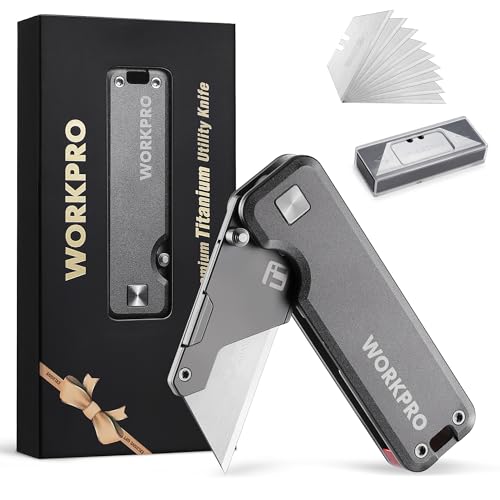 WORKPRO W011073Lightest in the lineup
 EQUIPTZ UK1Auto reload blade storage
One name, two different tools
The phrase "utility knife" points to two separate tools, and which one you want depends on where you will use it.
The first is a work knife with a replaceable razor blade, often called a box cutter. It lives in toolboxes, garages and warehouses. The second is a kitchen knife, usually with a fixed blade, built for light food prep.
Both share the same idea: one versatile knife that handles many small tasks so you do not reach for a bigger or more specialized tool every time. This guide covers both, starting with the work knife.
What a work utility knife is used for
A work utility knife uses a thin, sharp blade that you extend, use and then retract or fold away. Because the blade is replaceable, you can swap it the moment it dulls. That makes it a good fit for repeated, practical cuts.
The product listings we compare name a consistent set of jobs. The WORKPRO W013053, for example, is listed for cardboard, carpet, drywall, rope, vinyl, leather and flooring, plus precise cuts for arts and crafts.
- Opening boxes and cutting packing tape, plastic packaging and straps
- Trimming carpet, vinyl and flooring to fit
- Scoring drywall so it snaps along a clean line
- Cutting rope and cord to length
- Cutting leather, craft paper and other hobby materials
- Scraping, on models with a scraper mode such as the Klein Tools FLICKBLADE, which the listing describes as a 2-in-1 utility knife and scraper
What a kitchen utility knife is used for
In cooking, a utility knife is a slim, mid-size knife that fills the gap between a paring knife and a chef's knife. It is too big for peeling in your hand, but too small for breaking down a large roast or chopping a big pile of vegetables.
That in-between size makes it handy for everyday small jobs. People reach for it when pulling out a chef's knife feels like overkill and a paring knife feels too short.
Typical kitchen tasks include:
- Slicing sandwiches, tomatoes and soft fruit
- Trimming fat or silver skin from small cuts of meat
- Cutting cheese, herbs, shallots and small vegetables
- Cleaning up chicken breasts or fish fillets
- Making quick cuts when you only need one or two slices
Which utility knife fits which job
Choosing between these tools is easier when you match them to the task. The table below sums up where each one works best.
Note that a kitchen utility knife and a work utility knife should never be swapped. A razor blade is not made for food, and a kitchen knife is not made for cutting carpet or drywall, which dull the edge fast.
| Knife | Best for | Not suited for |
|---|---|---|
| Work utility knife (replaceable blade) | Boxes, carpet, drywall scoring, rope, packaging | Food prep |
| Kitchen utility knife | Sandwiches, small produce, trimming meat | Cutting boxes or building materials |
| Paring knife | Peeling and detail work in hand | Slicing large items |
| Chef's knife | Chopping, large produce, bigger cuts of meat | Tiny precision tasks |
How to choose a work utility knife
If you are shopping for a work knife, a few features matter more than looks. Our best utility knife page puts several models on one spec sheet so you can compare them side by side.
Start with how the blade is held. A lock keeps the blade from folding or sliding back while you cut. The Fiskars Pro lists a dual lock, while the WORKPRO 2-in-1 lists a single lock. Retractable models, like the WORKPRO W013053, use a slider with three positions instead. Some listings do not name a lock, so confirm it before you buy.
Next, look at blade changes and spares. A quick-release button lets you swap a blade without tools and keeps your fingers clear of the edge. Storage in the handle helps too. The EQUIPTZ UK1 lists storage for 10 SK5 blades, and the Klein Tools FLICKBLADE lists built-in storage with 3 blades included.
Finally, think about carrying. The WORKPRO titanium folder is listed at 3.17 oz, while the WORKPRO 2-in-1 folder is listed at 7.05 oz. A light knife is easy to carry all day, while a heavier one can feel steadier on thick material. You can see the full weight and length details on our utility knife comparison.
Use any utility knife safely
Utility knives cause a lot of minor injuries because people treat them as harmless. A few habits make a big difference.
Follow these steps each time:
- Cut away from your body and keep your free hand out of the cutting path.
- Use a sharp blade. A dull blade needs more force and is more likely to slip.
- Extend only as much blade as the job needs.
- Lock the blade before cutting, and retract or fold it before you set the knife down or put it in a pocket.
- Cut on a stable surface, not in your hand or on your lap.
- Wear cut-resistant gloves for long or repetitive cutting, and eye protection when cutting tough or springy material, since blades can snap.
- Dispose of used blades in a rigid container, such as a sturdy can with a lid, so no one gets cut in the trash.
Care and storage
Keep a work knife dry and free of dust, and change the blade rather than trying to sharpen a razor edge. Store spare blades in the handle if your knife supports it, or in a small closed case.
For a kitchen utility knife, hand wash and dry it right after use, and keep it in a block, sheath or magnetic strip rather than loose in a drawer. This protects both the edge and your fingers.
Frequently asked questions
Is a utility knife the same as a box cutter?
In the workshop sense, mostly yes. Box cutter is a common name for a utility knife with a replaceable razor blade, though utility knives can also cut materials like carpet and drywall.
Can I use a kitchen utility knife instead of a paring knife?
For many tasks, yes. It handles slicing and trimming well, but a paring knife is easier for peeling or fine work held in your hand.
Should I choose a retractable or folding utility knife?
Retractable models hold the blade with a slider and pull it back into the body. Folding models tuck the blade into the handle and often add a lock and belt clip. Pick the one that feels secure in your hand and fits how you carry it.
How often should I replace the blade?
Replace it as soon as it tears instead of cutting cleanly or you need extra pressure. Having spare blades on hand makes this easy.