What Is a Tool Belt Used For and Why Wear One?
A tool belt, also called a work belt, holds the tools and fasteners you reach for most so they stay on your body instead of on the floor, a ladder or a bench. Wearing one saves trips, keeps your hands free for climbing and carrying, and makes it easier to find the right tool fast. It works best when the load is sized to the job and the belt fits your waist.
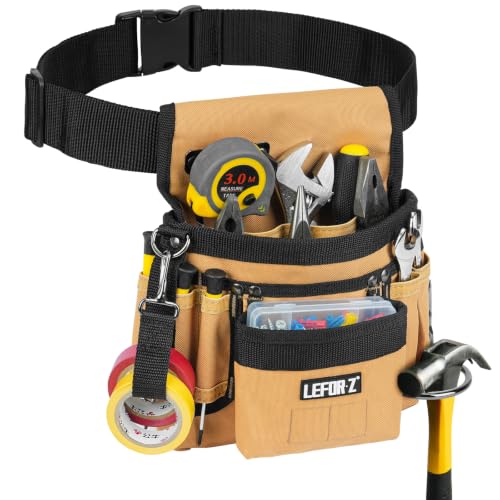 LEFOR·Z L-Single Tool Pouch-A-BK/BN-USBest overall
 UUP Tool belt yellowMagnetic, pocket-rich belt
 LEFOR·Z Heavy Duty Tool Belt-Black-UKSuspenders and widest waist range
What a tool belt (or work belt) actually is
A tool belt is a wide belt with pouches, pockets and loops attached. Some versions are a simple apron with pockets stitched into the front. Others are a padded belt with separate pouches that clip on and off. People also call these work belts, tool pouches or nail aprons, and the words overlap a lot.
The idea is simple. You work with a small set of tools over and over, and a belt puts those tools at hip height. You do not need to bend down, walk back to a toolbox or hunt through a bucket. That is the whole purpose, and most design choices serve it.
What a tool belt is used for
Different trades fill a belt differently, but the jobs it does are much the same. Here are the most common uses:
- Carrying hand tools such as a hammer, screwdrivers, pliers and a tape measure.
- Holding loose fasteners like nails, screws and anchors so they do not roll away.
- Keeping a hammer in a dedicated holder or loop so it is easy to grab and stow.
- Storing small items like pencils, utility knives, tape and markers.
- Letting you move tools between pouches or positions so the heavy items sit where they feel best.
- Carrying tools up a ladder or across a roof without needing a free hand to hold a bucket.
Why wear one
The biggest reason is speed and convenience. When the tool you need is within a hand's reach, you stay in the flow of the job instead of stopping to look for it. Over a full day, those small pauses add up.
The second reason is hands-free movement. Climbing a ladder, working in a crawl space or moving through a half-built house is easier when your hands are empty. A belt keeps tools secure on your body, which also means fewer tools left behind on a work surface or dropped from a height.
The third reason is organization. Dedicated pockets teach you where everything goes. After a short time you can grab a tape measure or a screwdriver without looking, which helps when your eyes are on the work.
Finally, a good belt can spread weight better than carrying a bag or filling your pockets. Wider, padded belts help share the load around your waist, and suspenders can shift part of it to your shoulders. Our best tool belt comparison covers how weight, padding and suspenders differ from product to product.
Types of tool belts and who they suit
Not every belt fits every job. The published specs on our comparison page show how widely they vary. Weights range from 0.21875 lb for a leather apron to 5.51 lb for a full suspender system. Pocket counts run from 12 up to 27.
| Type | Example from our data | Good for | Trade-off |
|---|---|---|---|
| Light leather apron | Custom Leathercraft 12-pocket apron: 12 pockets, 0.21875 lb | Carpenters and woodworkers who want a simple setup | Fewer pockets and no detachable pouches listed |
| Compact detachable belt | LEFOR·Z 14-pocket: 0.99 lb, detachable pouches, steel hammer holder | General home and job use with a light load | Fewer pockets than larger systems |
| Pocket-rich magnetic belt | UUP Magnetic: 26 pockets, magnets, double stitching, 1.87 lb | Fastener-heavy work | More to carry once filled |
| Belt with suspenders | LEFOR·Z Heavy Duty: 27 pockets, suspenders, 2.84 lb, waist range 32 to 60 in | Heavy loads and wider waist sizes | More straps to adjust |
| Padded electrician combo | Gatorback B240: 27 pockets, 1250 D nylon, ventilated memory foam padding, 4.99 lb | Long days with many tools | Heavier, and the listed waist range is 31 to 35 in |
How to wear and set up a belt
Start with fit. Measure your waist over the clothes you will wear on the job, then check the maker's stated range. Waist ranges differ a lot, from 31 to 35 in on one belt to 32 to 60 in on another, so a belt that works for one person may not suit another.
Next, balance the load. Most people keep the main pouches on the sides, near the hips, because that is the position they reach most easily. Put the heavier items so the weight sits evenly, and keep the hammer on the side of your dominant hand.
A simple setup routine can help:
- Load only what the job needs. Leave the rest in the toolbox.
- Put the tools you use most often in the easiest-to-reach pockets.
- Keep sharp items in closed or lined pockets, and keep their tips pointed down.
- Cinch the belt so it sits snug on your hips without pinching.
- Walk around and bend a few times. Adjust anything that swings, sags or catches.
Safety notes
A loaded belt changes how you move, so treat it as part of your safety setup, not just storage.
Be careful on ladders and at heights. Bulky pouches can catch on rungs or railings, and a heavy belt can shift your balance. Keep the load modest and check that nothing hangs low enough to snag. Tools that could fall should be secured, and nobody should be standing below.
Handle sharp tools with care. Utility knives, chisels and screwdrivers should be stored so the blade or tip cannot cut you or the pouch. Lined pouches and dedicated holders help.
When working near electricity, remember that metal tools in a belt can contact live parts. Switch the power off and verify it is off before you work on circuits, and follow local rules. Wear eye protection when hammering, drilling or cutting, and hearing protection around loud tools.
Take weight seriously, too. If your back or hips ache by midday, reduce the load, try suspenders or a wider padded belt, and take the belt off during breaks.
What to check before you choose one
Match the belt to your work. Electricians and fastener-heavy trades tend to want more pockets. Carpenters and framers need a solid hammer holder. Detachable pouches let you adjust the load for each job.
Look at the details that affect durability. Fabric thickness is sometimes listed as denier, where higher usually means tougher fabric. In our data only a few products list it, with 600 D on three and 1250 D on the Gatorback. Rivets, bar-tack and double stitching at stress points also matter, because pouches tend to tear where straps and loops meet.
To see these specs side by side, ranked by our Best Score, open our best tool belt page. Where a maker does not publish a spec, we say so rather than guess.
Frequently asked questions
Is a tool belt the same as a work belt?
Mostly, yes. Work belt is a general term, while tool belt usually points to one with pouches and loops. Some work belts are plain support belts with no pockets at all, so check the product description.
Do I need suspenders?
Not always. Suspenders move part of the load to your shoulders, which can help if your belt gets heavy. Light setups often do fine without them.
Can I wear a tool belt for home projects?
Yes. A lighter belt or apron is often enough for occasional DIY work. Carry only what the project needs.
Where should the hammer go?
Most people place it on the side of their dominant hand, in a dedicated holder or loop, so it can be drawn and put back without looking.
Why do some belts have magnets?
Magnets hold small steel items like nails and screws so they are easy to grab. Our data shows magnets on several belts, including the UUP and both LEFOR·Z models.