What Is a Tankless Water Heater and How Does It Work?
A tankless water heater heats water only when you open a hot tap, instead of keeping a tank of hot water ready. Cold water flows through the unit, a gas burner or electric heating element warms it as it passes, and hot water leaves at the temperature you set. Because there is no tank to empty, hot water keeps coming as long as the unit can keep up with the flow.
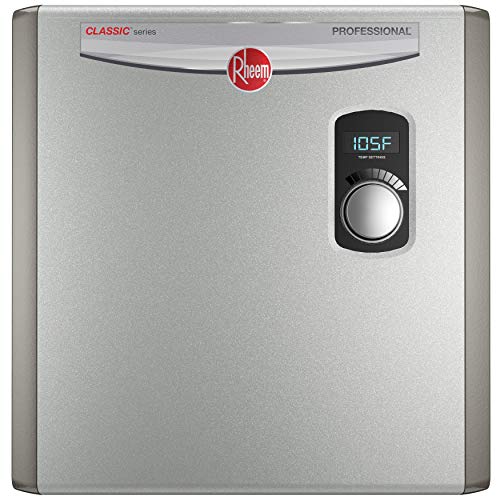 Rheem RTEX-24Best overall
 Rheem RTG-70DVLN-3Top UEF, indoor gas
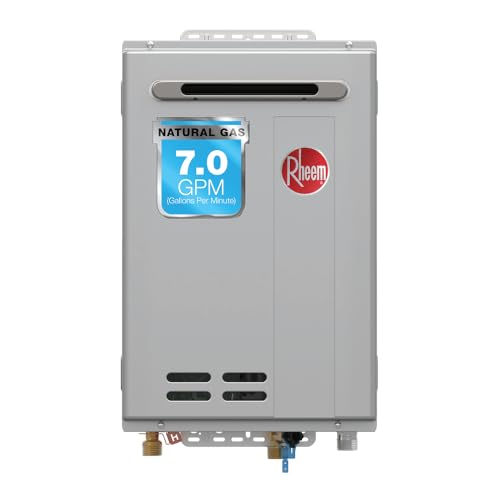 Rheem RTG-70XLN-3Outdoor gas, no venting
The basic idea in plain terms
A traditional storage heater keeps a large tank of water hot around the clock. A tankless heater skips the tank. It stays idle until water starts moving, then it heats that water on the spot.
That is why the category is also called on-demand or instant hot water. The unit is usually a compact box on the wall, which saves floor space compared with a tank. The Rheem RTG-70DVLN-3 gas model in our data is a wall-mount design, for example.
One caution: the name is used loosely in product listings. Some products that show up in this category are small storage tanks or low-flow point-of-use units, not whole-house heaters. We call these out on our best tankless water heater page.
How a tankless water heater works, step by step
Whether the unit runs on gas or electricity, the sequence is much the same. If you picture a diagram, think of a straight path: cold water in, heat exchanger in the middle, hot water out.
- You open a hot tap or start an appliance. Water begins to flow through the heater.
- A flow sensor inside the unit detects the moving water and signals the control board to start heating.
- Cold water enters the heat exchanger, a set of pipes or channels built to pass heat into the water quickly.
- A gas burner or electric heating element fires up and warms the heat exchanger. Water picks up heat as it passes through.
- A temperature sensor checks the outgoing water. The controls raise or lower the heat output to match your setpoint.
- Hot water leaves the unit and travels through your pipes to the fixture.
- When you close the tap, the flow stops and the heating shuts off.
How an electric tankless heater differs from a gas one
The steps are the same, but the heat source changes what your home needs. An electric unit uses heating elements, so it needs a strong electrical supply and no venting. A gas unit uses a burner, so it needs a gas line and a way to exhaust combustion gases, or an outdoor location.
The table below uses units from our data to show how that plays out.
| Type | Example | Key spec | What it needs |
|---|---|---|---|
| Electric whole-house | Rheem RTEX-24 | 24,000 W, 5.9 GPM | 240V single-phase, three 40-amp double-pole breakers, recommended 200-amp panel |
| Gas, indoor | Rheem RTG-70DVLN-3 | 7 GPM, 0.82 UEF | Gas line and direct vent system |
| Gas, outdoor | Rheem RTG-70XLN-3 | 7 GPM, 0.82 UEF | Gas line and outdoor mounting, no venting |
| Small electric | Jflapil 3000W | 3,000 W, 110V | Standard power; its listing says it is not for showers |
Why flow rate matters so much
Flow rate, measured in gallons per minute (GPM), is the most important number on a tankless heater. It tells you how much water the unit can heat at once. Run more fixtures than the unit can handle and the water will turn lukewarm or the flow will drop.
The idea behind it is temperature rise: how many degrees the unit must add to the incoming water. Colder incoming water means more work for the heater, so the same unit delivers less flow in a cold climate than in a warm one. The Rheem gas models list 7 GPM at a 35°F rise, which the listing ties to two to three showers at once.
At the high end, the MIZUDO gas unit lists up to 10.3 GPM, the highest in our data. It also lists a 0.53 GPM low-flow activation point, which is the minimum flow needed for the unit to start heating. Count your showers, dishwasher and laundry, then choose a rating that covers your busiest moment.
What installation involves, and the safety side
Tankless heaters are often sold as simple swaps for a tank, but the supporting work can be larger than people expect. Plan for it before you buy.
Electric units draw a lot of power. The RTEX-24 listing calls for heavy-gauge copper wiring and three dedicated breakers. That work belongs to a licensed electrician. Turn off power at the panel before anyone touches the wiring, and never bypass a breaker.
Gas units involve fuel and exhaust. A wrong vent or gas connection can leak gas or carbon monoxide into the home. Use a qualified installer, and keep working carbon monoxide alarms near sleeping areas. The Rheem listings say professional installation is required.
Cold climates call for care too. The Rheem and MIZUDO listings mention freeze protection, and MIZUDO says to drain residual water if the unit sits unused for long periods in cold weather. Follow the maker's manual for your setup.
What tankless does well, and where it falls short
The main appeal is that heating happens only when you use hot water, so the unit does not spend energy holding a tank at temperature. The Rheem listing describes this as removing the energy used to maintain water temperature in a standard tank. Hot water is also not limited by tank size, which suits big families with back-to-back showers.
The tradeoffs are real, though. Output is capped by flow rating, so too many fixtures at once can overwhelm a small unit. Electric models may need a panel upgrade. Gas models need venting or an outdoor spot. And there can be a short wait for hot water to travel through the pipes, since the unit starts heating only after the tap opens.
If you are still deciding between a tank and a tankless design, our best water heater page compares both styles side by side.
What to check before you choose
A few quick checks will narrow the field before you look at brands.
- Peak demand: add up the fixtures you might run together and match them to a GPM rating.
- Fuel and service: confirm whether your home has the gas line, venting or electrical capacity the unit needs.
- UEF rating: higher means more efficient, but only some listings show one. In our data the listed values run from 0.8 to 0.82.
- True type: make sure the product is tankless and meant for whole-house use. The GE 18 gal heater, for example, is a storage unit.
Frequently asked questions
Does a tankless water heater give unlimited hot water?
Not quite. It does not run out the way a tank does, but it can only heat a certain flow at a time. If demand goes past its GPM rating, the water will cool or the flow will drop.
Do tankless water heaters work during a power outage?
Most need some electricity to run, even gas models, because the controls, sensors and fans use power. For example, the MIZUDO gas unit in our data lists 120V. Check the manual for any backup options.
Is a tankless heater smaller than a tank heater?
Usually, yes. The RTEX-24 is listed at 3.5 in. tall, and tankless units mount on a wall. Gas models are larger, like the Rheem RTG-70DVLN-3 at 24.2 in. tall.
Can I install one myself?
Electrical and gas work carries real risk, and listings such as Rheem's call for professional installation. Hire a licensed electrician or plumber, and check local code and warranty terms first.