What Is a Self-Latching Gate and How Do You Set One Up?
A self-latching gate has a latch that catches on its own when the gate swings shut, so you never have to reach over and lock it by hand. Most are gravity latches: a lever drops into a catch on the post, and you lift it to open. To set one up, match the latch to your swing direction and gate material, mark the position, drill pilot holes, and screw both halves on so the lever drops cleanly every time.
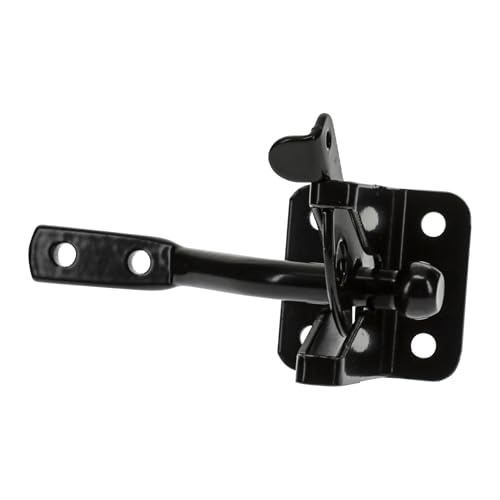 National Hardware N184-861Best overall
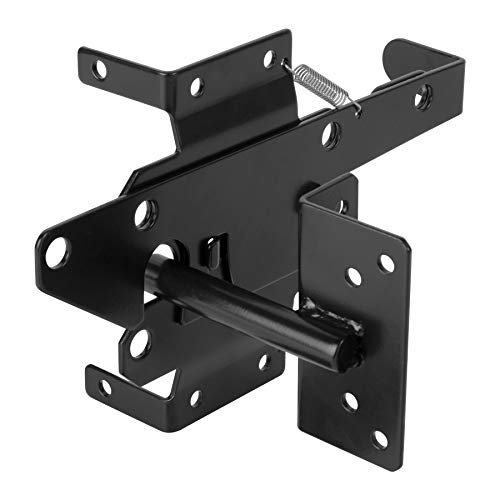 HILLMASTER 001112 screws, both swings
 HTHOOOOOME N-Gate Latch-1Wood to iron gates
What a self-latching gate actually is
"Self-latching" describes the hardware, not the gate itself. Any gate can be self-latching if it has a latch that engages automatically when the gate meets the post. You push the gate closed, and the latch locks without a second step.
The most common design is the gravity latch. A hinged lever or bar sits on the gate. When the gate closes, the lever rides over a catch (often called the strike) on the post and drops into place under its own weight. To open the gate, you lift the lever with a fingertip, or on some models with a pull string.
This is different from a self-closing hinge. A hinge pulls the gate shut, while a latch holds it shut. Many yards use both: the hinge swings the gate closed and the latch catches it. If your gate tends to drift open or stop short of the post, the latch alone will not fix that.
Why people choose them
The main appeal is that the gate gets latched every time, even if your hands are full or a child runs through without looking back. That matters for pets, kids and pool areas, where a gate left ajar is the real risk.
Self-latching hardware also tends to be simple. There are few moving parts, no keys, and nothing to remember. Many models also accept a padlock, so you can add real security when you want it. Padlocks are usually sold separately, so check the listing.
How to choose the right latch
Start with the same checks our best gate latch page uses. Three details decide whether a latch works on your gate.
First, swing direction. Some latches only work when the gate opens one way. The National Hardware N184-861, for example, is listed for outswing only. Others, such as the HILLMASTER 0011 and both SANKINS models in our data, list inward and outward swing.
Second, gate material. Wood, vinyl and metal hold screws differently. The HILLMASTER listing advises replacing the included screws with hard screws when you mount it on aluminum or metal gates.
Third, hardware in the box. Screw counts in our data run from 4 to 12 where stated. The HTHOOOOOME data does not confirm screws, so check before you order.
Latch examples compared
This table pulls a few published specs from our comparison data. A dash means the maker's data does not state it.
Length matters mostly for how much gap and gate width the latch can bridge, so match it to the space between your gate and post.
| Latch | Swing direction | Length | Screws listed |
|---|---|---|---|
| National Hardware N184-861 | Outswing only | Not listed (4 in strike) | Included, count not stated |
| HILLMASTER 0011 | Inward and outward | 9 in | 12 |
| SANKINS xy301 | Inward and outward | 4.125 in | 6 |
| SANKINS 782902358389 | Inward and outward | 8.5 in | Included, count not stated |
| HTHOOOOOME N-Gate Latch-1 | Inward and outward | - | Not confirmed |
Tools and safety before you start
You do not need much. A pencil, a tape measure, a level, a drill with a bit slightly smaller than your screws, and a screwdriver cover most installs. Check the listing for anything specific to your latch.
Safety first:
- Wear safety glasses when drilling, especially into metal, where chips can fly.
- Use a drill bit sized for the screw. Do not force screws with a tool that can slip.
- Keep fingers clear of the gap between the lever and the post while you test the latch.
- If the gate is part of a pool barrier, check your local rules. A latch is one part of the barrier, and local codes may set height and release requirements.
- Work on a stable surface. Use a sturdy stepladder if you are mounting high, and do not lean off the side.
How to install a self-latching gate latch
Most gravity latches install the same way. Always follow the instructions in your box, since the details vary by model.
Work with the gate closed and held in its final position. If it sags or does not meet the post squarely, fix that first, because the latch needs a consistent gap.
- Choose the side. Most latches mount on either the left or right, and many mount on the gate or the post. Pick the side that matches how you will reach it.
- Hold the latch body against the gate at a comfortable height and mark the screw holes with a pencil. Use a level so the lever sits flat.
- Close the gate and mark where the catch will sit on the post. The lever should drop into the catch with a little room to spare.
- Drill pilot holes at each mark. Pilot holes keep screws from splitting wood and from wandering as you drive them.
- Screw the latch body to the gate. Do not fully tighten until you check the alignment.
- Mount the catch on the post, then swing the gate closed to test it. The lever should lift over the catch and drop in on its own.
- Tighten all the screws, then test the latch ten or more times, in both directions if your gate swings both ways.
Troubleshooting and upkeep
If the lever does not drop fully, the usual cause is a gate that sags or a catch set slightly too high or low. Loosen the screws and shift the catch by a small amount, then retest.
If the latch sticks, check for dirt, paint or rust around the pivot. A quick cleaning and a drop of lubricant on the moving point usually helps. Choose a lubricant that suits outdoor use.
Check the screws a couple of times a year. Wood swells and shrinks with the seasons, and loose screws change the alignment over time.
If you are still comparing options, the spec sheet for gate latches lists swing direction, length and screw counts side by side so you can narrow it down.
Frequently asked questions
Is a self-latching gate the same as a self-locking gate?
People use the terms loosely. Self-latching means the gate catches shut automatically. Self-locking sometimes implies a key or code, but many products called self-locking are simply gravity latches that you can add a padlock to.
Can I put a self-latching latch on a gate that swings both ways?
Only if the latch lists inward and outward swing. Some models are outswing only, so check the listing before you buy.
Do I need a padlock?
No. The latch keeps the gate closed on its own. A padlock is optional for added security, and it is often sold separately.
Why won't my gate latch every time?
Usually the gate sags, the post has shifted, or the catch is a little off. Adjust the catch position, and consider tightening the hinges.