What Is a Scroll Saw Used For?
A scroll saw is used to cut intricate curves, sharp corners and fine detail in thin material, mostly wood. It uses a thin blade that moves up and down, which lets you steer around tight shapes and make cuts in the middle of a piece. Typical jobs include puzzles, signs, ornaments, inlay and decorative trim.
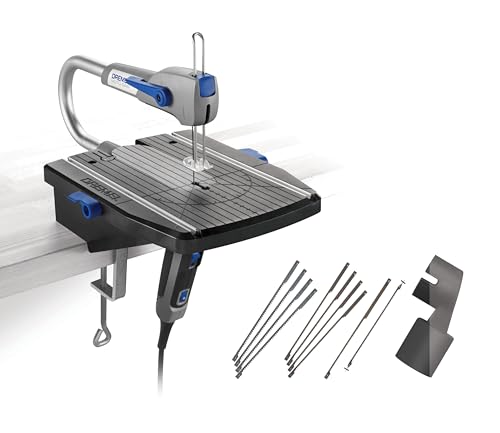 Dremel MS20-01Best overall
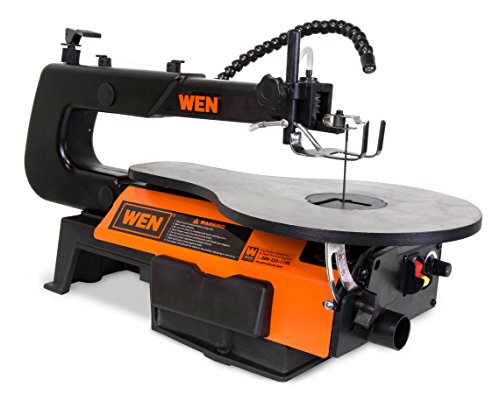 WEN 3921Blades load two directions
 Skil SS9503-00Fastest top stroke speed
What a scroll saw is best at
A scroll saw is a benchtop saw built for detail. Its blade is thin and narrow, and it is held under tension in a frame. That design lets you turn a workpiece freely and follow a pattern line with a lot of control.
If you want to cut a lettered sign, a lacy ornament or a jigsaw puzzle, this is the saw made for that kind of work. It is slower than a band saw or a circular saw, but it is far more precise on small, complex shapes.
It is also a quiet, low-vibration tool compared with most power saws, which makes it a popular choice for hobby workshops, garages and small craft spaces.
How a scroll saw works
The motor drives an arm or a linkage that moves a thin blade straight up and down. The blade is clamped at both ends in most models, and a tension knob keeps it tight. A tight blade cuts straighter and is less likely to snap.
The cutting happens on the downstroke. A small table holds your material, and a hold-down foot presses the wood flat so it does not chatter or lift with the blade. Many saws also have a dust blower that clears sawdust from your pencil line.
You do not push the saw through the wood. You feed the wood gently into the blade and rotate it as you follow the pattern. Most of the skill comes from slow, steady feeding and letting the blade do the cutting.
Cuts that other saws struggle with
The feature that sets a scroll saw apart is the inside cut, often called a fretwork or piercing cut. You drill a small starting hole in the waste area, thread the blade through the hole, fasten it in the saw, and cut out the opening from the inside. You can also start at the outside edge and work inward.
That makes it a good match for several kinds of work:
- Cutting detailed patterns, such as lettering, animals, snowflakes and scenes
- Making wooden puzzles with interlocking pieces
- Creating inlay and marquetry, where contrasting wood pieces fit together
- Cutting decorative trim, brackets and small scrollwork for furniture or finishing work
- Cutting small joinery, such as fine dovetails, when you need clean, narrow kerfs
- Making toys, nameplates, wall art and seasonal decorations
What materials it can cut
Wood is the main material, especially thin hardwood, softwood and plywood. Fine-grained woods tend to give crisp edges, while very hard or very thick stock slows the cut and can burn.
With the right blade, a scroll saw can also handle some plastics, thin soft metals such as brass or copper sheet, and materials like acrylic, bone, shell and horn. Blade choice matters more than most beginners expect, so check our guide to the best scroll saw blades before buying a pack.
Very thick lumber is a poor fit. The blade is thin and the cut is slow, so this saw is better for thin to medium stock than for heavy framing or construction work.
Scroll saw vs. other saws
People often ask whether a scroll saw can replace a jigsaw or a band saw. In practice each saw has its own strengths, and the right choice depends on the job.
The table below compares them in general terms.
| Saw | Best for | Weak spot |
|---|---|---|
| Scroll saw | Fine detail, tight curves, inside cuts, small projects | Slow on thick material |
| Jigsaw | Quick curved cuts in larger boards and panels, handheld work | Rougher edges, less control on tiny details |
| Band saw | Larger curves, resawing and thicker stock | Wider blade, so tight turns are limited |
| Coping saw | Occasional detail cuts by hand, no power needed | Slow and tiring on big projects |
Safety basics
A scroll saw is gentler than many power tools, but it still deserves respect. The blade is small, and fingers can slip into it when you are focused on a pattern line.
Follow these habits every time you use one:
- Wear safety glasses, since blade fragments and dust can fly up toward your face.
- Wear a dust mask, because fine sawdust builds up quickly and some woods and composites such as MDF are especially irritating to breathe.
- Keep your fingers out of the blade path and use the hold-down foot.
- Unplug the saw before changing blades or making adjustments.
- Keep the cord away from the cutting area and plug into a properly grounded outlet.
- Use hearing protection if you run the saw for long sessions, particularly with a dust collector running nearby.
Is a scroll saw right for you?
Choose a scroll saw if your projects are small, detailed and decorative. If you mostly build furniture frames, cut sheet goods or trim lumber to length, a different saw will serve you better.
If you decide to buy one, our best scroll saw comparison lays out published specifications side by side so you can match features to the work you plan to do. Pair it with good blades, a few patterns and some patience, and you can start with simple shapes before moving on to detailed fretwork.
Frequently asked questions
Is a scroll saw hard to learn?
The basics are easy to pick up. Most beginners struggle with feeding speed and turning the wood smoothly, and both improve with practice on scrap pieces.
Can a scroll saw cut straight lines?
Yes, but it is not the ideal tool for long straight cuts. A table saw or circular saw is faster and more accurate for those.
Do I need patterns to use a scroll saw?
No, but patterns help. Many people print or draw a design, attach it to the wood and cut along the lines.
Can I use a scroll saw on a workbench at home?
Yes. It is a benchtop tool, so it fits a sturdy table or workbench. Clamp or bolt it down so it does not walk while running.
Why do scroll saw blades break?
Common causes are too much tension, pushing the wood too hard, cutting material that is too thick, or using a blade that does not suit the material.