What Is a Rolling Toolbox and How Does It Work?
A rolling toolbox is a tool chest or cart mounted on wheels, so you can push it around a garage or shop instead of lifting it. It works by spreading the load across casters, while drawers with slides and locks keep tools organized and secure. Wheels, empty weight and drawer slides decide how well it does that job.
 LARBANKE tool chestBest overall
 VEVOR TBT112405BKThick Q235 steel body
 Sormols No.1Detachable rolling combo
What a rolling toolbox is
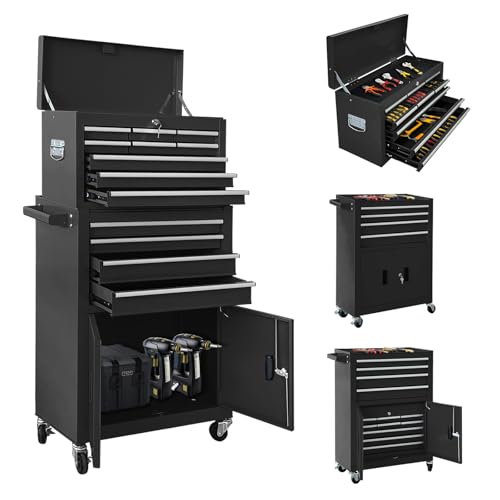
A toolbox is simply a container for storing and carrying tools. The phrase "tool box" covers everything from a small plastic case to a tall steel cabinet. A rolling toolbox is the version that sits on wheels, usually with several drawers and a handle you push or pull.
People also call it a rolling tool chest, a rolling tool cart or a rolling box. The names overlap, and makers use them loosely. What matters is the same: the storage can travel with you without you carrying the weight.
Some shoppers searching "roll tool" are actually looking for a tool roll, which is a fabric wrap that holds wrenches or screwdrivers and rolls up like a bedroll. That is a different product. It has no wheels and no drawers. This guide covers wheeled chests.
How a rolling toolbox works
Four parts do most of the work. Knowing them makes spec sheets much easier to read.
Wheels, called casters, carry the weight. Swivel casters turn in any direction, which helps in tight spaces. Brakes lock a wheel so the chest stays put while you pull a drawer. Without brakes, a loaded drawer can nudge the whole box away from you.
- Casters: swivel wheels that let you steer. Look for brakes on at least some of them.
- Drawers: sliding trays that keep tools sorted by size or job. Ball-bearing slides help them open smoothly even when heavy.
- Locks and latches: a locking bar or latch keeps drawers shut while you roll, and a key lock protects tools when parked.
- Handle: lets you push or pull the chest without grabbing the drawers.
Rolling, carry-style and tool roll: how they differ
Not every chest sold as a "rolling" box actually has wheels. On our best rolling tool box comparison, several top-ranked chests are carry-style boxes with no casters listed. They are still good storage, but you lift them by a handle.
The table below shows the three common types.
| Type | Wheels | Best for | Main limit |
|---|---|---|---|
| Rolling chest or cart | Yes, often swivel casters with brakes | Garage or shop use with many tools | Heavier and takes floor space |
| Carry-style drawer chest | No, handle only | Moving tools between jobs by hand | You lift all the weight |
| Tool roll or organizer | No | Small hand tool sets | Holds few tools |
What the published specs show
Our comparison uses published listing specs, so these numbers come from the makers. The Sormols 13-drawer chest is a rolling example. It lists 360-degree swivel casters with brakes, measures 43.3 inches tall and weighs 73 lb empty. The top box detaches from the bottom cart, so you can use each part on its own.
The Maxority 7-drawer chest is a mid-size rolling cart. It lists four lockable swivel wheels, a 30 inch height and a 60 lb empty weight.
Carry-style boxes look different on paper. The LARBANKE 4-drawer chest weighs 27.51 lb and lists ball-bearing slides and a lock, but no wheels. The VEVOR 5-drawer steel box weighs 27.56 lb and has a carry handle. Both are easy to lift when empty, though a full drawer set adds a lot.
At the large end, one workstation on our page lists 1600 lb of load capacity but weighs 405.6 lb empty. That is a fixed-spot piece, not something you wheel in and out of a car.
How to use one safely
A loaded chest is heavy, and heavy things tip or roll. A few habits reduce the risk.
Start by putting the heaviest tools in the bottom drawers. A chest with a low center of gravity is steadier when you push it. Lock the brakes before opening a drawer, and open only one drawer at a time, since several open at once can shift the balance forward.
Latch or lock the drawers before moving the chest. Loose drawers can slide out and hit your legs or feet. Move slowly over cords, thresholds and uneven concrete, and push rather than pull so the chest does not roll toward you.
Never lift a full chest by yourself. Take the tools out first, or use the detachable top box where one is offered. If you plan to move a chest up steps or into a truck, check its empty weight on the listing before you buy.
How to choose between them
Start with where the chest will live. If it stays in one garage, a larger rolling chest makes sense. If you carry tools to job sites, a lighter carry box may serve you better, even though you lift it.
Next, check the listing for casters and brakes. As our buying guide notes, confirm the listing mentions wheels before you assume a chest will roll. Then compare empty weight, drawer count and load capacity. Many makers do not publish load capacity, so treat that gap with caution if you store heavy tools. Winado lists 330 lb, WORKPRO lists 1000 lb and HAUTMEC lists 1600 lb.
When you are ready to compare, our rolling tool box comparison puts size, weight, drawers and locks side by side so you can see the trade-offs in one place.
Frequently asked questions
What is the meaning of tool box?
A tool box is a container used to store, organize and carry tools. It can be a small hand-carry case or a large drawer cabinet.
Can a rolling toolbox go in a car?
Only if you can lift it. Check the empty weight on the listing. A 73 lb chest is better left on wheels, while a carry-style box near 27 lb is easier to load.
Do all rolling toolboxes have locks?
No. Many list a lock or latches, but you should check each listing. A lock keeps drawers shut while rolling and protects tools when parked.
Are steel toolboxes better than plastic ones?
Steel resists dents and handles heavy loads well, but it weighs more. Plastic is lighter. Our listings do not give steel thickness for most boxes, so compare weight and capacity too.