What Is a Pry Bar Used For? Uses, Types and How to Choose
A pry bar is a hand tool, usually hardened steel, that uses leverage to pry, lift, pull and separate materials. People use it to remove trim and nails, take apart boards and framing, lift heavy objects a short distance and open tight gaps. The right bar depends on the job: short flat bars suit trim and nails, and long forged bars suit demolition.
 Titan 11509Lightest in the lineup
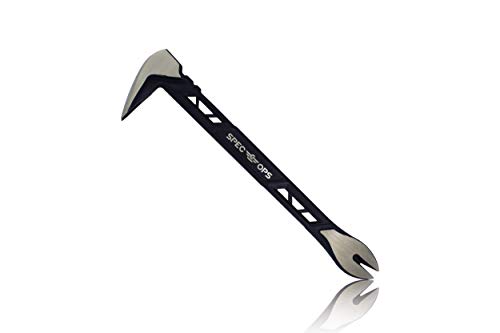 Spec Ops SPEC-D10CLAWDedicated nail puller
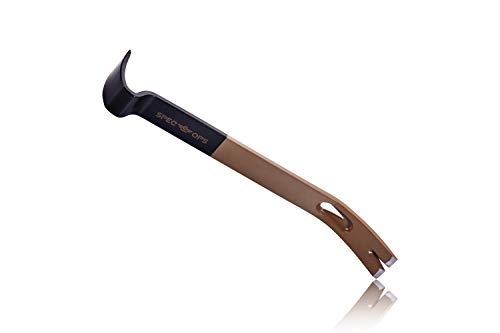 Spec Ops SPEC-D15BARMid-size flat bar
What a pry bar is and what the name means
A pry bar is a steel bar with one or both ends shaped to slip into a gap and push things apart. "Pry" means to force something up or open using leverage. The bar acts as a lever. You push on the long end, and the short end applies a much larger force to the material you want to move.
You may also hear the names crowbar, wrecking bar, flat bar, cat's paw and wonder bar. They overlap a lot. In general, a crowbar or wrecking bar is a long bar for heavy work, while a flat bar or cat's paw is smaller and made for precise jobs like pulling nails.
Common jobs for a pry bar
Most pry bar work falls into three groups: separating, pulling and lifting. The tool shines when you need to take something apart without wrecking everything around it.
- Removing baseboards, casing and other trim so you can reuse it or replace it.
- Pulling nails, tacks and staples, often with a slot or claw built into the bar.
- Lifting floorboards, plywood, deck boards and wood slats.
- Opening stuck windows, paint-sealed lids and crates.
- Prying apart framing and tearing out walls during demolition.
- Shifting heavy objects by small amounts, such as lifting one edge so you can slide a block underneath.
- Scraping caulk, adhesive and paint residue when the bar has a scraper edge.
Types of pry bars and what each does best
Bar style changes how the tool behaves. A thin, flat blade slides into narrow gaps. A curved or gooseneck bar gives more leverage and a pivot point. A handled bar with a strike cap lets you tap the tip under material with a hammer.
The table below uses examples from our best pry bar comparison so you can see how length and style line up with typical jobs.
| Style | Example and length | Typical use |
|---|---|---|
| Flat scraper | Titan 11509, 9.25 in, 0.1 lb | Light prying, nail pulling, scraping caulk and residue |
| Cat's paw | Spec Ops SPEC-D10CLAW, 10 in | Digging out and pulling nails |
| Flat bar | Spec Ops SPEC-D15BAR, 15 in | Trim, boards, plywood and general prying |
| Gooseneck wrecking bar | Estwing EWB-36PS, 36 in, 8 lb | Tearing out boards, framing and nailed assemblies |
| Handled angled set | TEKTON LSQ42103, 12, 17 and 25 in | Prying and positioning, with a strike cap for hammer taps |
| Long curved bar | Mayhew 14120, 58 in | Automotive and mechanical work, per its listing |
How to use a pry bar well
Good technique protects both you and the surface you are working on. Slow, steady force almost always beats a hard yank.
Here is a simple routine for most jobs:
- Look at what is behind or under the material. Check for wires, pipes and gas lines before you pry into a wall or floor.
- Find the gap. If there is none, tap the thin tip into the seam. Use a hammer only on a bar that has a strike cap.
- Place a thin scrap of wood under the bar's pivot point when you work against a finished surface. This spreads the load and limits dents.
- Pry a little at a time, moving along the seam rather than forcing one spot.
- Use a nail puller slot or claw to pull each exposed nail straight out, then clear them away so nobody steps on them.
Choosing the right size
Length is leverage. A longer bar lets you apply more force with less effort, but it needs more room and weighs more. Our best pry bar guide lists bars from 9.25 in to 58 in, and the right pick depends on how much force you need and how tight the space is.
For trim, tile and nails, a bar of roughly 10 to 15 in is easier to control. A set such as the SHALL 4-piece, with bars from 5.5 in to 15 in, lets you match the size to each task. For tearing out boards and framing, a long forged bar like the 36 in Estwing gives much more reach, though it weighs 8 lb.
Build matters too. A forged one-piece body has no weld or joint that can fail under load. Among the products on our page, only the Estwing lists this spec, so read other listings closely if heavy prying is your goal. The Titan scraper is the lightest bar on the page at 0.1 lb, but it is a light-duty tool and not a demolition bar.
Safety notes
Pry bars store a lot of force, and a slipping bar can hit your hand or face. Wear safety glasses every time, since nails, splinters and chips can fly when material gives way. Work gloves help protect your hands from sharp edges and splinters.
Keep your body out of the line the bar will travel if it slips. Pull the bar toward you only when you have a stable stance and clear space behind you. When you hammer on a strike cap for a long stretch, wear hearing protection.
Do not strike a bar that has no strike cap, and do not slide a pipe over the handle for extra leverage unless the maker allows it. Overloading a bar can bend or break it. When lifting a heavy object, support it with blocks as you go. Never rely on the bar to hold weight while you reach under the object.
Frequently asked questions
Is a pry bar the same as a crowbar?
They are close. Many people call any long, heavy pry bar a crowbar. Crowbars usually have a bent, chisel-like end and a hooked end for nails, while smaller pry bars are often flat and made for finer work.
Can I use a pry bar to remove nails?
Yes, if the bar has a nail puller slot, claw or cat's paw end. Slide the slot under the nail head and rock the bar back slowly so the nail comes out straight.
How do I avoid damaging walls and floors when prying?
Use a thin, flat bar, start with light force and place a wood scrap or putty knife under the bar's pivot point. Work along the seam in small steps instead of forcing one spot.
Do I need a strike cap?
Only if you plan to drive the tip into a tight seam with a hammer. A strike cap is built to take those blows. Without one, use hand pressure only.