What Is a Pruning Saw Used For? Jobs, Blade Shapes and How to Choose
A pruning saw is a hand saw built to cut tree limbs, shrub stems and woody growth that are too thick for hand pruners or loppers. Its teeth cut on the pull stroke, and most blades are curved so they bite fast and stay controlled when you work at arm's reach. Pick one by the thickest branch you cut and how often you need to carry it.
 Craft911 PS-11Best overall
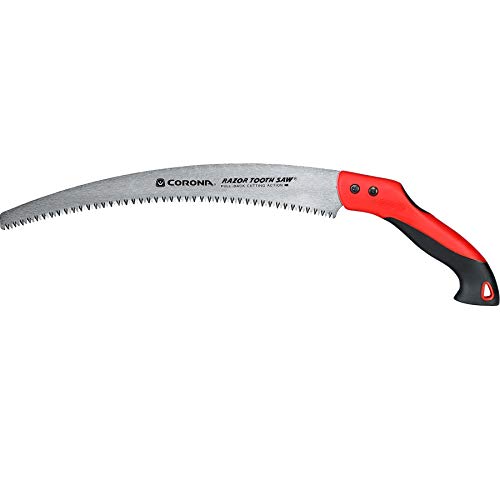 Corona Clipper RS 7395Longest blade, highest limit
 REXBETI REX025Rubber-coated folding grip
What a pruning saw does
A pruning saw is a handheld saw for trimming trees and shrubs. It handles live green wood and dead wood alike. Its teeth are shaped for cutting along and across the grain of branches, which is different from a carpentry saw made for lumber.
Think of it as the next step up from pruners and loppers. Pruners work on thin stems. Loppers work on somewhat thicker ones. Once a branch is too thick to squeeze through cleanly, a saw takes over, and it also fits into crowded growth where larger tools cannot reach.
The most common jobs
Most people reach for a pruning saw for a handful of repeat tasks around a yard or campsite. The tool is narrow and fairly light, so it suits careful, controlled cuts.
- Removing dead or damaged limbs from trees and shrubs.
- Thinning crowded branches so light and air reach the center of a plant.
- Cutting back overgrown shrubs and hedges with woody stems.
- Shaping young trees by taking off branches that cross or rub.
- Clearing trails and cutting small firewood while camping.
- Taking off branches flush to the trunk, where bulky tools will not fit.
Why pruning saws are curved
Most pruning saws have a curved blade, and the shape does real work. The curve keeps more teeth in contact with the branch through the stroke, and it tends to draw the blade into the wood as you pull. That makes the cut feel quicker with less pushing.
Pruning saws cut mainly on the pull stroke. Pulling keeps a thin blade under tension, so it stays straighter and is less likely to bend or bind. The curve also helps you reach into a branch fork and clears sawdust out of the cut.
Straight blades exist too, and some people prefer them for flat, controlled cuts on branches between waist and shoulder height. Curved blades are the usual choice for general pruning, and our best pruning saw page leans toward curved designs for that reason.
Blade length, teeth and grip
Three details decide how a pruning saw behaves: blade length, tooth design and handle. Longer blades make fuller strokes, so they clear thick limbs in fewer passes. Short blades fit tight spots and suit light trimming.
Tooth design matters as much. Triple-cut teeth have three ground faces and cut quickly in green wood. Teeth per inch (TPI) is a trade-off: fewer teeth cut faster and leave a rougher surface, while more teeth cut slower and finer. Among the saws we list, two show 7 TPI, and the Mossy Oak set includes blades at 5, 11 and 18 TPI for different materials.
Handles change how tired your arm gets. A non-slip or rubber-coated grip helps when your hands are wet or gloved. Listed weights among the models that publish them run from 0.5 lb to 0.93 lb, so even the heaviest is easy to hold, but a lighter saw is kinder overhead.
Matching the saw to the job
The table below uses published specifications from the saws on our comparison page. Dashes mean the maker does not list that number, so check the listing before assuming a capacity.
Fixed pistol-grip saws with long blades list the highest branch limits here. Folding saws pack small, but several do not publish a maximum branch diameter.
| Saw | Blade length | Listed branch limit | Weight | Style |
|---|---|---|---|---|
| Corona RazorTOOTH 14 in | 14 in | 8 in | 0.66 lb | Curved, pistol grip |
| Corona RazorTOOTH 13 in | 13 in | 7 in | 0.7 lb | Curved, pistol grip |
| Craft911 PS-11 | 11 in | Not listed | Not listed | Curved, folding, 7 TPI |
| REXBETI 11 in | 11 in | Not listed as a spec | 0.93 lb | Folding, 7 TPI, rubber-coated grip |
| Mossy Oak 3-in-1 | 7.5 in | 2.76 in | 0.77 lb | Folding, three blades |
Using a pruning saw safely
A pruning saw looks simple, but the blade is sharp and branches can move or fall. A few habits prevent most injuries.
- Wear safety glasses, since sawdust and bark chips fly toward your face.
- Wear snug work gloves with good grip, and keep your free hand well away from the blade path.
- Never saw above shoulder height from a ladder you cannot trust. Use a stable footing, or switch to a tool made for reach.
- Stay clear of power lines. Never cut near them, and call a professional for branches that touch wires.
- Check what the falling branch will hit, and clear people and pets from below.
- On folding saws, confirm the blade is locked open before cutting, and close it fully before you put it away. Use a sheath when the saw has one.
How to make a clean cut
Start with a short pull stroke to set a groove, then use long, steady strokes and let the teeth do the work. Forcing the blade bends it and tires your arm.
For thicker limbs, support the weight so the branch does not tear bark as it falls. A common method is to cut partway up from below, then finish from above a little farther out. Then trim the stub back to the branch collar, the slightly swollen ring where the limb meets the trunk.
If you are comparing models before buying, our best pruning saw page lines up the specs side by side, so you can match blade length and branch limit to the work you actually do.
Frequently asked questions
Can a pruning saw cut things other than branches?
Some can. Folding saws with triple-cut teeth are often described as handling plastic pipe or plywood, and the Mossy Oak set includes separate blades for hardwood and thin metal. Check the maker's listed limits first, and keep dedicated tools for materials a pruning blade was not built for.
Is a pruning saw better than loppers?
They suit different sizes. Loppers are quick on thinner stems. A saw is better once a branch is thick enough that loppers crush it or you cannot get the jaws around it.
Should I get a folding or a fixed-blade pruning saw?
Folding saws store small and travel safely in a bag, which suits camping and light yard work. Fixed long-blade saws list higher branch limits and make fuller strokes, so they suit regular heavy trimming.
How do I keep the blade in good shape?
Wipe off sap and moisture after use and store the saw dry, with the teeth covered. Hardened teeth are difficult to sharpen by hand, so many people replace the blade when it dulls.