What Is a Post Hole Digger and How Does It Work?
A post hole digger is a tool that cuts a deep, narrow hole in the ground, usually for a fence post, deck footing, sign or tree. Manual versions pinch soil between two blades, while powered versions spin a screw-shaped bit (an auger) that lifts soil out of the hole. Either way, the width of the blades or bit sets the width of the hole.
 NEO-TEC NEO-TECLightest gas digger
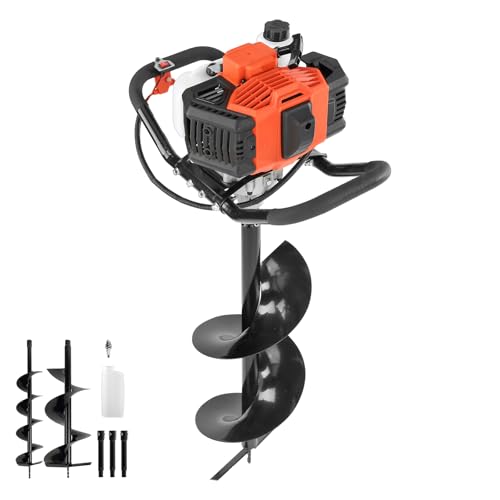 VEVOR D52-FMost extension rods
 WORKIT OO-EA62BWidest bit included
What a post hole digger is
A post hole digger makes round holes that are much deeper than they are wide. That shape is hard to cut with a regular shovel, which is why the tool exists. A post needs a snug hole with straight sides, and a digger is built to give you that.
There are two main families. The first is the manual digger, often called a clamshell or pincer digger. The second is the powered digger, also called an earth auger, which uses a gas engine or an electric motor to turn a bit. Both do the same job. The difference is how much effort they ask from you and how well they handle hard ground.
What a post hole digger looks like
A manual digger looks like a pair of long-handled shovels joined at a pivot near the blades. The blades are curved, so when they close they form a small scoop. The handles are usually wood, fiberglass or steel.
A powered digger looks quite different. It has a motor housing (the powerhead) with two handles, a throttle or trigger, and a long shaft that points down. A spiral auger bit clips onto the shaft. Here are the parts you will see on most models:
- Powerhead: the engine or electric motor that creates the spin.
- Handles: usually two, set wide so you can steady the machine. Some have anti-vibration grips.
- Drive shaft: the rod that carries the spin down to the bit.
- Auger bit: the spiral blade that cuts and lifts soil. Its diameter sets the hole width.
- Extension rod: an optional section that adds depth without making you bend over.
- Stop switch: a control that shuts the motor off fast.
How a manual digger works
The motion is simple and takes some leg and arm effort. You work in short cycles:
- Stand with the handles together and drive the blades into the soil by lifting and dropping the tool.
- Keep the handles shut and push down until the blades are buried.
- Spread the handles apart so the blades pinch the loosened soil.
- Lift the soil out and dump it beside the hole.
- Repeat until you reach the depth you need.
How a powered digger works
A powered digger turns the auger bit at a steady speed. The pointed tip bites into the ground, and the spiral flights carry the loosened soil up and out of the hole. A gas model has a 2-stroke engine that you start with a pull cord. An electric model uses a motor and a power cord.
Most powered diggers are one-person tools, but the machine pushes back as the bit catches. That twisting force is called torque. If the bit snags on a root or rock, the handles can try to spin in your hands. This is why a firm grip, a wide stance and a working stop switch matter so much.
Hole depth comes from the bit length plus any extension rods. Some kits include extra rods, so you can reach deeper holes without leaning over the machine.
What a post hole digger is used for
The most common job is setting fence posts. Other typical uses include deck footings, mailbox and sign posts, tree and shrub planting, and garden stakes. Narrow bits suit bulb beds and small stakes, while wider bits suit fence posts and footings.
Match the bit to the post. The hole should be wider than the post so you can pack gravel or concrete around it. Our best post hole digger page lists the largest bit in each unit, and in the group we compare the range runs from 6 in to 12 in.
How powered models compare on specs
Power sources and sizes vary a lot. The table below uses the published specifications from our comparison. A dash means the maker does not list that figure in the data we compare.
Gas engines here range from 43cc to 72cc, and the electric unit lists 1500 W. Compare engines with engines and watts with watts, not across the two.
| Model | Power | Largest bit | Weight | Extension rods |
|---|---|---|---|---|
| NEO-TEC 72CC Gas | 72cc gas | 10 in | 17.6 lb | 1 |
| VEVOR 52cc Gas | 52cc gas | 10 in | 34.5 lb | 3 |
| WORKIT 72CC Gas | 72cc gas | 12 in | - | 2 |
| XtremepowerUS Electric | 1500 W corded | 6 in | 28.3 lb | - |
| VEVOR 43CC Gas | 43cc gas | 8 in | 26.24 lb | - |
Choosing between manual and powered
Manual diggers suit a few holes in soft, clear soil. They have no fuel or engine to maintain, and they are quiet. They are slow work in clay, gravel or root-filled ground.
Powered diggers suit many holes, deeper holes or tougher soil. They cost you less effort but add weight, noise and upkeep. Gas models need a fuel mix and a pull start. The corded electric model needs an outlet within cord reach.
If you lean toward powered, weight and reach are good first checks. In our comparison the lightest gas unit weighs 17.6 lb, and the VEVOR 52cc comes with three extension rods. You can see every option on one sheet on the post hole digger comparison page.
Safety notes before you dig
Call your local utility locator service before you dig, so you do not hit a buried gas, water, power or data line. In the US, 811 is the national number for this.
Powered diggers call for basic protective gear:
- Wear safety glasses, hearing protection, sturdy boots and gloves.
- Keep loose clothing, long hair and cords away from the spinning bit.
- Know where the stop switch is before you start the engine or motor.
- Mix gas and oil in the ratio your manual gives. Ratios differ between models.
- Fuel the engine away from sparks and let it cool first. Run it outdoors only.
- Keep both hands on the handles and brace for a sudden twist if the bit snags.
- For an electric model, use a cord rated for outdoor use and keep it dry and clear of the bit.
Frequently asked questions
Can one person run a post hole digger alone?
Many models are made for one person, but larger or heavier units can be harder to control in tough soil. Check the weight and handle design, and use a two-person approach if the machine feels hard to hold steady.
How deep can a post hole digger dig?
It depends on the tool. Manual diggers are limited by handle and arm reach, while powered ones are limited by bit length plus any extension rods. Check each product's listed rods and depth figures.
Can a post hole digger cut through roots and rocks?
A manual digger can pry out small rocks and slice thin roots. A powered auger can handle some roots, but a large rock or thick root can stop the bit and jerk the handles, so stop and clear it by hand.
Do I need a different bit for different posts?
Yes, the bit sets the hole width. Pick one wider than your post so there is room for gravel or concrete, and confirm the kit includes that size.