What Is a Multimeter Used For? Home, Car and Electronics Uses
A multimeter is a handheld tester that measures electrical voltage, current and resistance. You use it to check outlets, batteries, fuses, switches, appliances and car electrics so you can find out what is working and what has failed. It is one of the most useful tools in a home toolbox because it turns guesswork into a clear number.
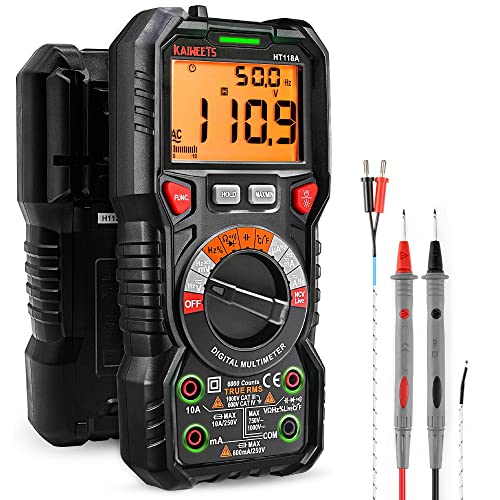 KAIWEETS HT118ABest overall
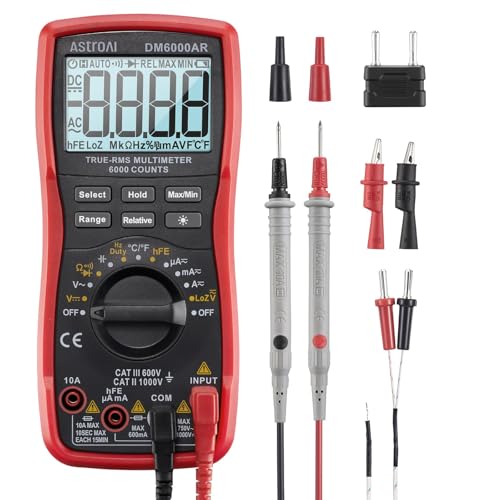 AstroAI DM6000ARBest for cars and home
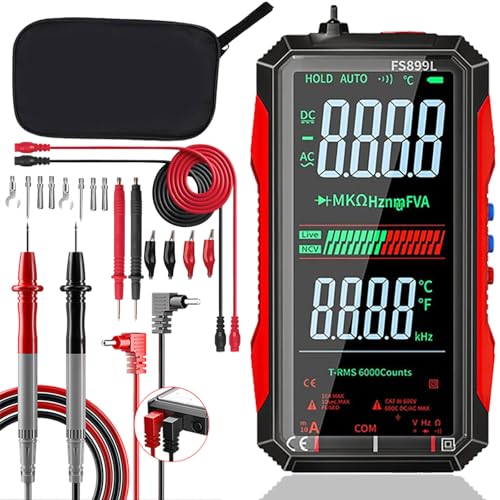 ZMIWNIED F899LBiggest screen
What a multimeter actually measures
A multimeter combines several small testers in one device. You turn a dial to pick what you want to measure, plug the test leads into the right jacks, and touch the probes to the circuit. The screen shows the result.
Three readings do most of the work. Voltage tells you whether power is present. Current tells you how much electricity is flowing. Resistance tells you how hard it is for electricity to pass through a part, which helps you spot broken wires and worn components.
- Voltage (V): AC for wall outlets and DC for batteries and car systems.
- Current (A): the flow through a circuit, measured with the meter placed in line with it.
- Resistance (ohms): how much a wire, heating element or switch opposes flow.
- Continuity: a quick beep test that shows whether a wire or fuse is unbroken.
- Diode test: checks that a diode lets current pass in one direction only.
Common jobs around the home
Most people first pick up a multimeter to answer a simple question: is this thing getting power? Checking an outlet, a light switch or a doorbell transformer takes a minute and tells you whether the problem is the device or the supply.
Continuity testing is just as handy. Pull a fuse from an appliance, touch the probes to each end, and a beep means the fuse is good. The same test works on extension cords, lamp cords, thermostat wires and switches.
You can also test batteries. A reading well below the rated voltage suggests a weak cell, even if the battery looks fine. That is useful for remotes, smoke detectors and garage door openers.
Using a multimeter on your car
Cars run on DC electricity, so a multimeter is a good fit for tracing electrical trouble. With the engine off, a healthy 12V battery should read a little above 12 volts. A much lower reading points to a discharged or failing battery.
You can also check fuses in the fuse box, test a ground connection, and look for a parasitic drain that empties the battery overnight. Sensors, relays and bulb sockets can all be checked with voltage or resistance readings.
Meters with a graph or waveform view, like the FNIRSI DMT-99 with 9999 counts, can show how a signal changes over time. That helps with intermittent faults that a single number would miss.
Other things many meters can do
Beyond the basics, many models add extra tests. Several meters on our spec sheet, such as the KAIWEETS HT118A, also measure capacitance, frequency, duty cycle and temperature. Capacitance checks help with fan, motor and HVAC start capacitors. Temperature readings are useful for HVAC and appliance checks.
Non-contact voltage detection, often called NCV, senses live wiring without touching metal. It is a quick first check, but it should never replace a proper test with the probes before you touch a wire.
Features that matter when you choose one
For general use, a few features make the job easier and safer. Our best multi meter page puts several models on one spec sheet so you can compare them side by side.
Auto-ranging picks the measurement range for you, so you do not need to guess. True RMS gives accurate AC readings on modern electronics and motors. A backlit screen helps in dark panels and engine bays. For counts, 6000 is plenty for home and car use, though some meters on our page reach 25000.
| Feature | Why it helps | Example from our data |
|---|---|---|
| Auto-ranging | No need to pick a range | KAIWEETS HT118A |
| True RMS | Accurate AC readings on electronics | AstroAI DM6000AR |
| CAT III rating | Suited to household circuits | ZMIWNIED FS899L, 1000V |
| NCV | Quick check for live wires | KAIWEETS HT118A |
| Backlit screen | Easier reading in dim spaces | ZMIWNIED FS899L, 4.8 in display |
Safety rules before you start
A multimeter is safe when you use it correctly, but household power can injure or kill. Pick a meter with a rating that suits the job. CAT III covers household wiring and panels, and CAT IV covers service entrances. Fused current inputs also protect the meter.
Follow these steps every time you test:
- Inspect the meter and leads for cracks or bare wire before use.
- Set the dial and the lead jacks for the right measurement first.
- Keep your fingers behind the finger guards on the probes.
- Never measure resistance or continuity on a live circuit.
- Switch off power and unplug devices before testing parts.
- Do not open a service panel unless you are qualified to work there.
- Wear safety glasses when working around batteries or live panels.
Frequently asked questions
Can a multimeter tell me if a battery is dead?
Yes. Set it to DC volts and touch the red probe to the positive end and the black probe to the negative end. A reading well below the battery's rated voltage means it is weak. For a car battery, test with the engine off.
Do I need a True RMS meter?
Not for simple checks like batteries and fuses. True RMS matters more when you measure AC on dimmers, variable speed motors and other modern electronics, where a basic meter can read inaccurately.
What does the beep mean on a continuity test?
A beep means there is a complete path for electricity between the two probes, so the wire, fuse or switch is intact. No beep means the path is broken.
Is a multimeter the same as a voltage tester?
No. A basic voltage tester only shows whether power is present. A multimeter gives you an actual number and can also measure current and resistance, so it helps you find the cause of a problem.