What Is a Lawn Edger Used For?
A lawn edger is a yard tool with a vertical blade that cuts a crisp, straight line where grass meets a sidewalk, driveway, patio or garden bed. It tidies the borders a mower can't reach and keeps grass from creeping onto hard surfaces. Most homeowners use one a few times per season to give the lawn a finished look.
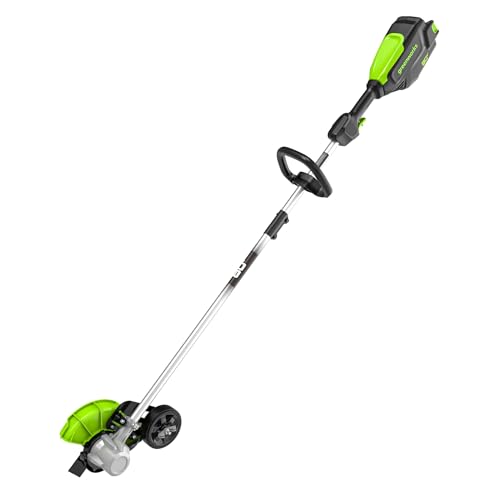 Greenworks ED80L02Deepest cut, most settings
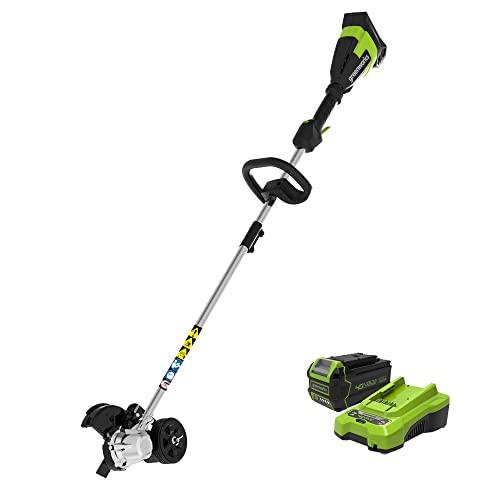 Greenworks ED40L410Battery and charger included
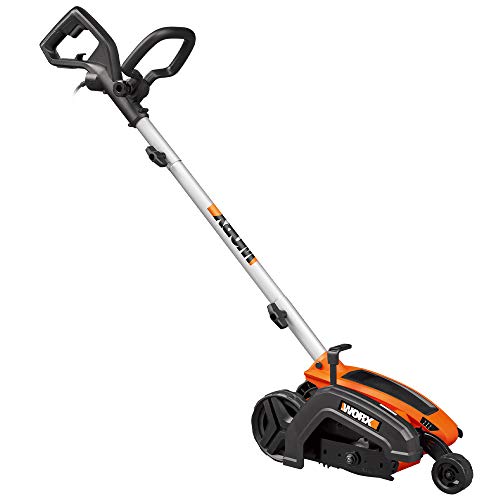 WORX WG896Corded with trenching mode
What a lawn edger actually does
A lawn edger cuts a clean, upright edge along the boundary of your lawn. Its blade spins vertically, like a small wheel, and slices down into the soil. This leaves a neat vertical wall of turf instead of grass flopping over a walkway.
That is all there is to the idea behind the terms people search for, such as edging lawn care or edging lawn mowing. Mowing shortens the grass across the open lawn. Edging defines the outline of that lawn. Even a freshly mowed yard can look unfinished if the borders are ragged, and a sharp edge makes the whole space look planned.
Edging also has a practical side. Grass that spreads over a driveway or into a flower bed is harder to control later. Cutting a clear gap each season keeps roots and runners from crossing the line, so you spend less time pulling stray grass.
Where you use one
Edgers work best along hard, straight boundaries and long garden lines. Here are the most common jobs:
- Along sidewalks and driveways, where grass spills over the concrete or asphalt.
- Around patios and paver walkways, to keep a clean line next to the stone.
- Around flower beds and shrub borders, to separate mulch from turf.
- Along curbs, where a wheel can ride the curb face and guide the blade.
- Cutting a new bed outline or a shallow trench for landscape edging or drainage, if the model has a trenching mode.
How an edger differs from a trimmer and a mower
People often ask whether an edger is just a string trimmer turned on its side. A trimmer can be used for edging, but it cuts with a spinning line that clips grass at the surface. An edger uses a solid blade that cuts into the ground, so the result is a deeper, straighter line.
A mower never goes near the border. Its deck has to stay clear of walls and hard surfaces, which leaves a strip of uncut grass along the edges. A trimmer cleans up that strip. The edger then creates the vertical boundary.
Many people use all three in order: mow the lawn, trim around obstacles, then edge the borders. If you want the edge to stay sharp for weeks, an edger is the better choice for the final step.
Types of lawn edgers and example specs
Edgers differ mostly by power source. Corded models plug into an outlet and need an extension cord for most yards. Battery models let you move freely, but check whether the battery and charger are in the box. Gas models also exist, though the products on our comparison page are electric or battery powered.
The table below shows published specifications for five edgers we compare. A dash means the maker does not publish that number. For a full ranking, see our best lawn edger page.
| Model | Power | Blade (in) | Max depth (in) | Depth settings | Weight (lb) |
|---|---|---|---|---|---|
| Greenworks 80V ED80L02 | Battery, not included | 8 | 2.25 | 5 | 10.3 |
| Greenworks 40V ED40L410 | Battery included | 8 | - | - | 11.9 |
| WORX WG896 | Corded electric | 7.5 | 1.5 | 3 | 14 |
| WORX 20V WG898.9 | Battery, not included | 7 | 2 | 3 | 7.06 |
| worksky WKS-LE-M | Battery, not included | 9 | 1.75 | 3 | 7.2 |
How to edge a lawn safely
Edging is simple, but the blade is sharp and it throws dirt and small stones. Take a minute to prepare before you start.
- Wear safety glasses or goggles and sturdy closed-toe shoes. Add hearing protection if your tool is loud.
- Walk the border first and remove toys, rocks, wires and sprinkler heads from the path.
- Set the depth to a shallow setting. Increase it only if the line needs to be deeper.
- Run the blade slowly along a straight guide, such as the curb or a string line, and keep the guide wheel on the hard surface.
- Sweep or blow clippings and soil off the pavement when you finish.
Safety notes before you start
With a corded model, keep the cord behind you and away from the blade, and use an extension cord rated for outdoor use. Never edge in wet grass or standing water. If a cord is nicked, replace it before using the tool.
With a battery model, remove the battery before changing the blade, adjusting the depth or clearing a jam. Check for buried irrigation lines, cables and pipes before cutting a deep trench, and call your local utility locator service if you are unsure what is underground.
What to look for when choosing one
Start with the power source, then match the rest to your yard. Long borders with no outlet nearby favor a battery model. A short, simple lawn near a house outlet suits a corded one. Our lawn edger comparison sets these specs side by side so you can see the trade-offs.
Depth matters because it controls how crisp the border looks. Among the four models on our page that list it, depth runs from 1.5 in to 2.25 in. More depth positions, up to 5, let you adjust for firm soil or soft beds.
Weight affects how easy it is to steer along curves. The lineup runs from 7.06 lb to 14 lb. A curb wheel and tool-free depth adjustment can also make long runs easier. Finally, confirm warranty terms where they are published, since they vary from 3 years to 4 years among the models that list them.
Frequently asked questions
How often should I edge my lawn?
Most people edge a few times during the growing season, or whenever the line starts to blur. Fast-growing grass near a driveway may need it more often. A fresh, deep cut in spring usually needs only light touch-ups afterward.
Can I use a lawn edger to dig a trench?
Some models have a trenching mode or deeper settings that cut a shallow groove for landscape edging or drainage. It is meant for light work, not deep digging. Check for buried lines before cutting, and use the manual's guidance.
Is edging bad for my grass?
No, when done at a sensible depth. Cutting along the border severs creeping roots and runners, which keeps them from spreading. Avoid cutting too deep along tree roots, and keep the blade away from sprinkler lines.
Do I need an edger if I already have a string trimmer?
Not necessarily. A trimmer held on its side can tidy edges, but the line is less crisp and less consistent. An edger is the better tool if you want a sharp, defined border along long walks and drives.