What Is a Detail Sander Used For?
A detail sander is a small power sander with a pointed, triangular pad that reaches corners, edges and narrow spots a larger sander cannot. It is used for fine, close-up work such as trim, furniture details, louvers and small repairs. The pad moves in tiny, rapid motions, so it smooths surfaces without much effort from you.
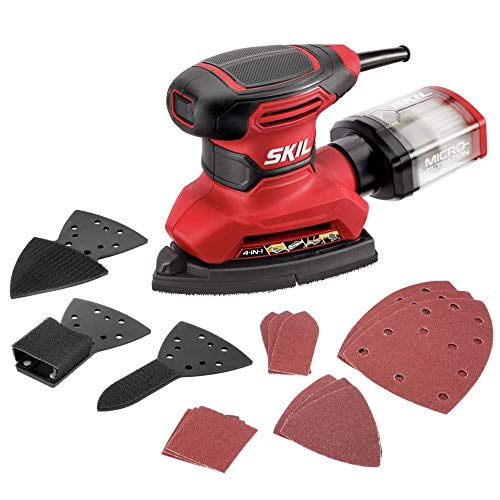 Skil SR232301Best overall
 HYCHIKA BETTER TOOLS FOR BETTER LIFE MS200WCompact with dust bag
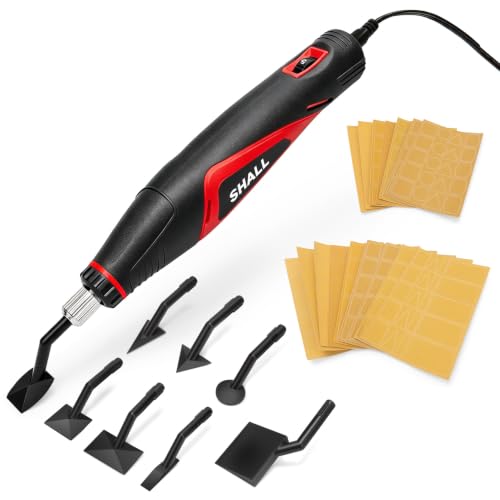 SHALL SH111052Lightest in the lineup
What a detail sander is good for
A detail sander is built for places where a regular sander is too big or too clumsy. Its triangular pad has a sharp tip, so it can slide into the 90-degree corner of a window frame, a drawer, or a cabinet door panel.
Most people use one to finish what bigger tools leave behind. A palm or random orbital sander handles the flat middle of a tabletop well, but it cannot reach where the rail meets the leg. The detail sander picks up from there.
It also suits small projects from start to finish, such as a picture frame, a toy, a small shelf, or a decorative box. The light weight and small footprint make it easy to control.
Common jobs for a detail sander
The tool earns its place on jobs that involve tight geometry or delicate surfaces. Here are the tasks it handles most often:
- Sanding inside corners on cabinets, shelves and window frames
- Smoothing trim, molding and baseboard details
- Working on louvered doors, shutters and slatted furniture
- Removing old finish from chair spindles, table legs and carved edges
- Scuffing a surface between coats of paint or varnish
- Feathering the edges of a small repair patch
- Prepping small hobby and craft pieces
What is a mouse sander?
People often call a detail sander a mouse sander or a mouse detail sander. The nickname comes from the shape. The body is small and rounded, and it fits in your palm like a computer mouse, while the pad tapers to a point like a snout.
It is the same type of tool. If you see "mouse sander" in a store or a video, it almost always means a detail sander with a triangular pad. Some models are corded and some run on batteries, so check the listing before you buy.
How a detail sander works
Inside the housing, a small motor turns an off-center weight. That makes the pad vibrate in very small, fast circles or oscillations, which is why you may also see these tools called oscillating sanders. The sandpaper on the pad scuffs away material a little at a time.
Most pads attach with hook-and-loop backing, so you press a sheet of sandpaper on and peel it off when it wears out. The sheets are cut in a triangle to match the pad. Many models also include small finger attachments or narrow tips for reaching into grooves and slots.
Because the pad is small and the motion is gentle, the tool removes material slowly compared with a larger sander. That is a good thing for detail work, since it gives you more control and a lower chance of gouging a delicate edge. Many models include a dust port or small dust bag, though the dust collection on a tool this small is limited.
How to use one well
Good results come from patience and light pressure. Follow these steps:
- Choose a sandpaper grit based on the job: coarser to remove old finish, finer to smooth before a new coat.
- Attach the sheet firmly so it lies flat on the pad with no wrinkles.
- Switch the tool on before it touches the surface, then lower it gently.
- Let the weight of the tool do the work and keep it moving, so you do not burn or dent the wood.
- Sand with the grain whenever you can, and use the tip only for corners.
- Wipe off the dust and check your progress by hand. Replace the sandpaper as soon as it feels smooth or clogged.
Detail sander or something else?
A detail sander is a specialist, so it helps to know where other tools fit. If you are shopping, our guide to the best detail sander options compares models side by side, so you can see how they differ before you decide.
Use this table to match the tool to the job:
| Tool | Best for | Weak spot |
|---|---|---|
| Detail sander | Corners, trim, small and intricate pieces | Slow on large flat areas |
| Random orbital sander | Tabletops, doors, large flat surfaces | Cannot reach into corners |
| Sanding block and paper | Light touch-ups and curved edges by hand | Takes more effort and time |
| Belt sander | Fast removal on big, rough boards | Too aggressive for fine detail |
Safety and buying tips
Sanding makes fine dust and noise, so protect yourself. Wear safety glasses and a dust mask or respirator rated for fine particles. If the tool sounds loud, add hearing protection too. Work in a ventilated space, and be extra careful with old paint, since paint on older homes may contain lead. Do not sand it dry without proper precautions.
With corded models, keep the cord clear of the pad and unplug the tool before changing sandpaper. With battery models, remove the battery first. Clamp small workpieces so they do not spin or slide.
When you compare models, look at pad shape, how easy it is to swap sandpaper, dust collection, cord or battery type, and weight. Our detail sander comparison lays out those published specifications in one place, which makes it easier to pick one that suits your projects.
Frequently asked questions
Can a detail sander replace my other sanders?
Not really. It is slow on big flat surfaces, so most people keep it as a companion to a larger sander rather than a replacement.
Can I use a detail sander on metal or plastic?
Yes, with the right sandpaper. It can scuff metal or plastic before painting, but use a grit suited to the material and wear eye and dust protection.
Why does the pad get hot?
Pressing too hard or using worn sandpaper creates extra friction. Ease off, swap the sheet, and let the tool move freely.
Do I need a dust bag?
It is helpful but not required. If your model has a port, connecting it to a vacuum keeps the air and your work area cleaner.