What Is a Concrete Mixer Used For and How Does It Work?
A concrete mixer combines cement, sand, gravel and water into an even batch of concrete, mortar or similar material. It does this with a rotating drum that tumbles the ingredients, usually driven by an electric motor on small home models. It saves hours of hard hand mixing and gives a more consistent result than a wheelbarrow and a hoe.
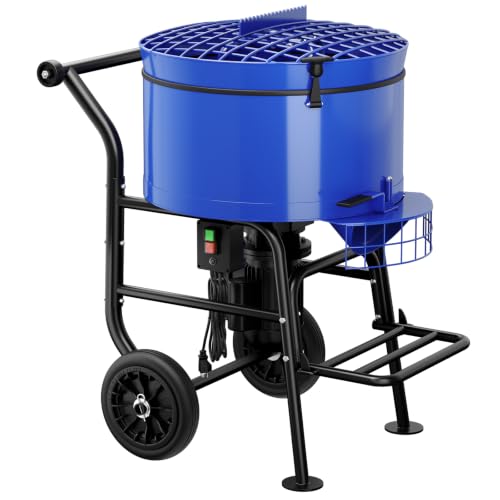 Dkenicor KF100368US-01LHC-001-YIH
 Dkenicor KF100248-02-YH-OBest compact steel drum
 Dkenicor KF100322US-02MLHC-001Best overall
What a concrete mixer is used for
Concrete is a blend of cement, aggregate (sand and gravel) and water. The cement and water form a paste that coats the aggregate and hardens as it cures. A mixer's job is to spread that paste evenly through every batch, so the finished concrete is the same strength from top to bottom.
Mixing by hand works for a bucket or two. Beyond that, it is slow and tiring, and weak spots are common where dry pockets are left behind. A mixer turns the same work into loading, waiting and pouring.
Common jobs in construction and at home
On large construction sites, mixing happens at a plant or in a truck mixer with a big rotating drum, used for foundations, slabs, bridges and similar work. Smaller portable mixers cover the many jobs that need only a few bags at a time.
Typical jobs for a portable electric mixer include:
- Setting fence posts and mailbox posts
- Pouring small patios, walkways and steps
- Making footings for sheds, decks and pergolas
- Mixing mortar for brick, block and stone work
- Mixing grout, stucco and repair mixes
- Blending bulk materials such as seed or fertilizer, which some makers list as extra uses
How a concrete mixer works
A portable mixer has a drum mounted on a tilted axis, turned by a motor through a gear reduction. The drum spins slowly, and fixed blades or fins on the inside wall lift the ingredients up and let them fall back down. This repeated lifting and tumbling blends the dry materials and water into a uniform mix.
The slow speed is on purpose. Drum speeds on the electric models we compare run from about 24 to 30 RPM, which is enough to tumble the load without throwing it against the wall. The motors themselves turn much faster, and the gearing brings the drum down to a workable speed. For example, one 500W model lists a motor speed of up to 1,680 RPM with a drum speed of 24 RPM.
Most small mixers have a tilting drum. You keep the drum angled up while mixing so the load stays inside, then tilt it down to pour the batch into a wheelbarrow or form. Some models allow a full 360° rotation of the drum angle, which makes both loading and emptying easier.
What a concrete mixer is made of
Most portable mixers have three main parts: the drum, the motor and gear drive, and the frame with wheels. Each part has its own materials and trade-offs.
The drum is either steel or polyethylene (poly). Steel drums are tough and traditional. Poly drums resist rust and dents and are easier to clean, which suits occasional use and outdoor storage. Several mixers on our spec sheet pair a poly drum with a powder-coated steel frame for corrosion resistance.
The motor is usually an electric motor sized for a household outlet, with the gearbox sealed to keep dust and water out. Some models add overload protection, which shuts the motor off if it overheats so it can cool before you restart. The frame is welded steel, and the wheels are rubber or flat-free tires so the mixer can roll over lawns and gravel.
Types of mixers and what they suit
Not every mixer is built the same way. The right type depends on how much concrete you need and where you will mix it.
| Type | How it works | Best suited to |
The table below sums it up.
| Type | How it works | Best suited to |
|---|---|---|
| Portable electric drum mixer | Tilting drum turned by an electric motor | Posts, small slabs, steps, repairs |
| Wheelbarrow-style mixer | Drum on a frame with a handle and a wheel | Moving across a site and pouring into forms |
| Gas-powered portable mixer | Same drum design with an engine | Sites without power outlets |
| Truck mixer | Large drum on a truck, turning on the road | Big pours for foundations and slabs |
What to look at when choosing one for home use
If you are comparing home models, a few specs matter most. Our best concrete mixer for home use page lays them out side by side, and our broader best concrete mixer comparison covers the wider range.
The key specs are:
- Drum capacity: drums on our home page range from 4 to 6 cu ft. A 4 cu ft drum handles one or two bags at a time, which is enough for fence posts and repairs. One 4 cu ft poly model lists a 235 lb load, or up to two 80 lb bags, and a 6 cu ft poly model lists three 80 lb bags.
- Motor power: motors run from 375W to 750W. A stronger motor keeps a full drum turning without stalling.
- Drum material: steel for toughness, poly for easy cleaning and rust resistance.
- Weight and wheels: mixers weigh around 90 to 125 lb, so large wheels and good handles help on grass and gravel.
- Opening size: a wider opening, such as the 22.4 in opening on one wheelbarrow-style model, makes loading easier.
Using a mixer safely
Cement is caustic and can burn skin, and the dust is harmful to breathe. Wear gloves, long sleeves, safety glasses and a dust mask when loading dry material. Wear hearing protection if your motor is loud.
Plug the mixer into a grounded outlet protected by a GFCI, and use an outdoor-rated extension cord of the right gauge. Keep the cord and plug away from wet concrete and standing water. Never reach into a turning drum or put a tool inside to scrape it. Unplug the mixer before any cleaning, adjusting or clearing a jam.
Set the mixer on firm, level ground so it cannot tip, and tilt the drum slowly when pouring, since a full load is heavy. Clean the drum right after use, before leftover concrete hardens. Rinse it with water, and use a bit of gravel and water spun in the drum to knock off buildup.
Frequently asked questions
Can I mix mortar and grout in a concrete mixer?
Yes. Most portable mixers handle mortar, grout and stucco as well as concrete. Add water gradually, since these mixes are usually wetter and smoother than concrete.
In what order should I load the ingredients?
Many people add part of the water first, then gravel, cement and sand, and add the remaining water slowly. Follow the mix instructions on your bag and the mixer manual.
Does a bigger drum mean you can fill it to the top?
No. Drum capacity is the size of the container, not the load you should mix. Check the maker's maximum load, because overfilling strains the motor and mixes poorly.
How long should I mix a batch?
Mix until the color and texture look uniform, with no dry pockets. The bag label usually gives a time, and the drum speed affects how quickly that happens.