What Is a Chalk Line and What Is It Used For?
A chalk line is a layout tool with a string coated in powdered chalk. You pull the string tight between two points and snap it, and it leaves a straight mark on the surface. Builders use it to lay out walls, flooring, roofing, tile and cuts. It is also called a chalk box, snap line or chalk reel.
 Tajima CR301JFBest overall
 IRWIN IWHT48441BCTough aluminum case
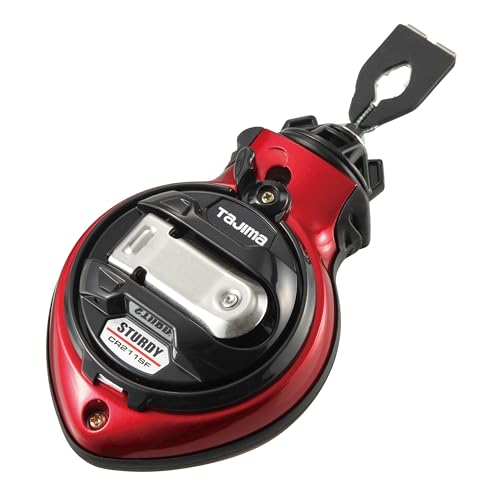 Tajima 1Metal body with belt clip
What a chalk line is
A chalk line is a marking tool made of a long string, a case that holds powdered chalk, and a hook or ring on the end of the string. The string runs through the chalk inside the case and comes out coated. When you stretch it tight over a surface and snap it, a thin line of chalk jumps onto the surface and leaves a straight mark.
The idea works because a taut string is the straightest path between two points. A pencil and a straightedge only reach as far as the straightedge does, and a long board can bow or flex. A string can mark many feet in one move, which is why the tool shows up on so many job sites.
Most chalk lines share the same basic parts:
- Case: holds the chalk and the wound-up string, and often has a grip or a fill opening.
- Line: the string, usually braided nylon or poly, that picks up the chalk.
- Chalk: fine powder, sold in several colors, that rubs off onto the line.
- End hook: catches on an edge or a nail so one person can hold the line in place.
- Crank: winds the line back into the case and recoats it with chalk.
What a chalk line is used for
The job is always the same: mark a long, straight reference line that you can follow with a saw, a nail gun or a trowel. What changes is the trade.
Framers snap lines to place wall plates and to mark where studs or joists go. Roofers snap lines to keep rows of shingles straight. Flooring and tile installers snap a starting line down the middle of a room so the pattern stays square. Drywall and siding crews use the marks to cut panels or align courses. Cabinet and trim work can use a line to mark a level or plumb reference on a wall.
Here are the most common uses:
- Laying out walls on a floor slab or subfloor
- Marking cut lines across long sheets of plywood or drywall
- Keeping shingle, siding and decking rows straight
- Setting a starting line for tile and flooring
- Marking a level line across a wall for shelves or cabinets
- Marking posts, fences or garden layouts outdoors
Chalk line, chalk box and chalk reel
If you have seen several names for this tool, they all describe the same thing. Chalk line is the general name. In carpentry you will also hear chalk box, snap line and chalk reel. The word reel points to the winding crank that rewinds the string, and box points to the case that holds the chalk.
Some cases double as a plumb bob. The case has a pointed, weighted end, so you can hang it from the line and let gravity show you true vertical. Our spec sheet lists that feature on the IRWIN STRAIT-LINE, whose center line can be used as a plumb bob.
If you want to see how different models handle length, weight and extras, our best chalk line comparison puts them on one spec sheet.
How to snap a clean line
Snapping a line takes a minute to learn. A few habits make the mark sharper and keep the line from tangling.
Follow these steps:
- Pull the line out of the case and hook the end over an edge, or have a helper hold it at the first mark.
- Walk the case to the second mark and pull the line tight. A sagging line gives a wavy mark.
- Press the line down at both ends, or use a line lock if your model has one, so it does not slip.
- Lift the line straight up a few inches near the middle. Lift it at a right angle to the surface, not sideways.
- Let go so the line snaps back flat against the surface.
- Lift the line away and check the mark, then wind the line back into the case with the crank.
What to look for when choosing one
Most buying decisions come down to line length, line thickness, weight and a few extras. Line length sets how far you can mark in one snap. A thicker line gives a bolder mark that is easier to see on rough framing, while a thinner line gives a finer mark for finish work.
Here is how five models on our spec sheet compare, using the published specifications:
| Model | Line length | Line thickness | Weight | Case |
|---|---|---|---|---|
| Tajima ChalkRite Jam Free CR301JF | 100 ft | 1 mm | 7.2 oz | ABS plastic |
| IRWIN STRAIT-LINE IWHT48441BC | 100 ft | Not published | 13.4 oz | Aluminum |
| Tajima Chalk-Rite Red | Not published | 1 mm | 13.6 oz | Metal |
| Tajima ChalkRite Jam Free UltraThin CR302JF | 100 ft | 0.5 mm | 6.38 oz | ABS plastic |
| Crescent Lufkin CL50 | 50 ft | Not published | 8.11 oz | Not published |
Features that save time
Beyond the basics, a few features are worth comparing. A line lock holds the line tight while you snap and releases when you wind. The two Tajima Jam Free models list one, and the Lufkin CL50 does not. A 5-gear wind system brings the line back faster than a 1:1 ratio, which is what the IRWIN lists.
Metal cases add weight, but they are meant to take a drop better. A belt clip, which the metal Tajima lists for belts up to 2.4 in wide, keeps the tool on you. Chalk capacity is only listed on the Lufkin, at 3 oz, so check the listing if refill frequency matters to you.
Our best chalk line page has the full details, including which specs makers did not publish.
Chalk colors and safety
Chalk comes in several colors. Lighter colors such as blue are usually easier to brush or wash away, while darker colors such as red tend to last longer and can stain porous surfaces. Check the chalk label, and test a small hidden spot if the mark must disappear later. Chalk on bare wood or concrete may stay visible longer than you expect.
A few safety points matter. Wear eye protection when filling the case or snapping a line overhead, because chalk dust can irritate eyes. Avoid breathing the dust in a closed room. When you snap lines on a roof or from a ladder, use proper fall protection and keep your footing stable instead of leaning to reach the mark. Stay clear of overhead power lines when working outdoors with a long line. If you use the case as a plumb bob, keep people out from underneath it, since the case is a weighted object.
Frequently asked questions
Can one person snap a chalk line alone?
Yes. Hook the end over an edge or a nail, walk back with the case, pull the line tight and snap it. A helper makes long runs easier, and a line lock helps hold the line tight by yourself.
How do you refill a chalk line?
Open the fill door or neck, pour in chalk powder until the case is about filled, and close it. Wind the line back in so it picks up chalk. Use the chalk the maker recommends, and wipe up any spills.
Can you remove chalk line marks?
Often, yes. Lighter chalk usually brushes or washes off smooth surfaces. Darker chalk can stain wood, concrete or other porous materials, so test a small spot first if marks will stay visible.
Do I need a plumb bob feature?
Not always. If you only mark horizontal lines, you can skip it. It helps when you also need a quick vertical reference, since one tool then covers both jobs. Some models list this feature and some do not.