What Is a Cable Cutter Used For?
A cable cutter is a hand tool made to cut cable cleanly, including wire rope, steel wire, and thick copper or aluminum power cable. People use it for railings, fencing, bike cables, electrical work, and similar jobs where ordinary pliers would crush or fray the cable. The right cutter depends on the cable, so match the tool to the material and size before you cut.
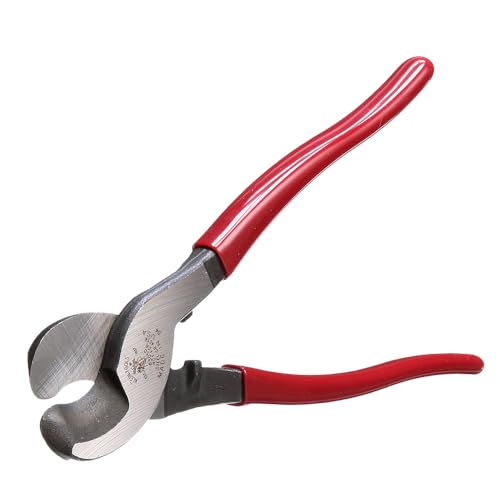 KLEIN TOOLS 63050Best overall
 Muzata MZZ1616Highest wire rope rating
 HKS Cable Cutter 36DLargest copper capacity
What a cable cutter actually does
A cable cutter is built to sever a bundle of strands in one clean motion. Ordinary pliers and wire snips are made for single thin wires. Used on a thick cable, they tend to pinch the strands flat, leave frayed ends, or chew up the jaws.
Cable cutters use curved or shear-style blades that slice through the whole bundle. The result is a straight cut with the strands still held together. That matters when the cable has to fit into a clamp, a ferrule, a terminal lug, or a connector afterward.
Cutters come in several styles, from compact one-hand models to long-handled ratchet tools. What they share is a focus on cable rather than loose wire.
Common jobs for a cable cutter
Most buyers pick one up for a specific project. Here are the jobs you will see most often.
- Cable railing and deck railing: trimming stainless steel wire rope to length before crimping end fittings.
- Fencing and trellis work: cutting tensioned wire rope or steel wire to size.
- Bicycle and cycling gear: trimming brake and shifter cable so the ends stay tidy.
- Electrical work: cutting large copper or aluminum conductors for feeders, service cable, or battery cable.
- Communications work: cutting multi-pair cable in tight spaces such as pull boxes and risers.
- Garage and vehicle projects: trimming aircraft cable, truck seal cable, and similar lines.
The main types of cable cutters
Cable cutters are not all the same. Some are made for steel rope, and others are made only for soft metals like copper and aluminum. The table below sums up the main styles using products from our comparison.
Our best cable cutter page puts these tools on one spec sheet so you can see which makers publish capacity numbers and which do not.
| Style | Best suited to | Example from our comparison |
|---|---|---|
| Shear-type, one hand | Aluminum, copper, and communications cable in tight spaces | Klein Tools 63050, listed for 4/0 aluminum and 2/0 soft copper |
| Wire rope cutter with safety lock | Stainless rope, hard steel wire, aircraft cable | Muzata MZZ1616, listed up to 4 mm wire rope |
| Ratchet cutter, long handles | Large copper and aluminum conductors | HKS Cable Cutter 36D, listed up to 300 mm² |
| Wire rope cutter, plastic-coated handles | Rope plus aluminum and copper cable | WORKPRO W015066AE, listed up to 3.97 mm wire rope |
Match the cutter to your cable
This is the step people skip, and it is where most damage happens. A cutter made for copper can chip or dent if you use it on hardened steel wire. A rope cutter can struggle on a thick power cable.
Start with the material. If the product page says it cuts steel wire, it is meant for rope and hard wire. If it says not to cut steel, as the HKS listing does, keep it to copper and aluminum.
Next, check the size. Rope cutters list a maximum wire rope diameter. Among the models on our page that give one, it runs from 3.97 mm to 4 mm. Power cable cutters list a copper size instead. The HKS lists 300 mm² (AWG 600MCM). If the maker gives no figure, ask the seller before you buy.
If your cable is close to the stated limit, expect to work harder. If it is above the limit, move up to a larger tool.
Using a cable cutter safely
Cutting cable involves force, sharp edges, and sometimes electricity. A few habits keep the job safe.
- De-energize first. Do not cut live cable, even with an insulated handle. The HKS handle is listed at 1000 volts, but its listing still says not to cut live cables.
- Wear safety glasses. Cut strands can spring or fly, especially with tensioned rope.
- Wear work gloves when handling cut wire rope. The ends can be sharp and may leave splinters.
- Support the cable. Let the cut end fall into your hand or a catch bag rather than onto the floor or toward your face.
- Keep the safety lock engaged during storage if your cutter has one. It keeps the jaws closed and prevents accidental cuts.
- Work from a stable position. If you are on a ladder or a deck, make sure your footing is secure before applying force.
What to check before you buy
Once you know the job, a few specs help you narrow the choice. Blade hardness is given in HRC, but only one model on our page lists it. The GRENPRO states 63-65 HRC.
Size and weight also matter. Lengths on our page run from 3.54 in to 10.74 in, and weights from 0.66 lb to 1.68 lb. Short, light cutters fit a tool pouch and are easy to carry. Longer handles and ratchet designs give more leverage on big cable.
A one-hand design helps when you are holding the cable steady with the other hand. A safety lock is useful if the tool rides loose in a toolbox. None of the five tools we compare lists a warranty length, so confirm coverage with the seller.
For a side-by-side look at all of these specs, see our best cable cutter comparison.
When a cable cutter is the wrong tool
A cable cutter is not a universal cutter. For small single wires, diagonal cutters or wire strippers do the job better and with more control. For solid steel rod, rebar, or chain, you need a bolt cutter or a different tool made for that material.
If you only need to trim a few thin bike cables, a small rope cutter is plenty. If you are cutting large service cable on a regular basis, a ratchet or long-handled cutter will save effort and give cleaner results.
Frequently asked questions
Can I use regular wire cutters instead of a cable cutter?
For thin single wires, yes. For stranded cable or wire rope, regular cutters often crush the strands and fray the end. They can also be damaged by hard steel. A cable cutter slices through the whole bundle and leaves a cleaner end.
Does a cable cutter strip insulation?
No. A cable cutter is made to cut through the conductor, not to remove the jacket. Use a separate stripping tool when you need to expose the conductor and keep it intact.
How do I keep fraying to a minimum?
Use a sharp cutter rated for your cable, and make the cut in one smooth motion. Some people wrap tape around the cable at the cut point to hold the strands together. A crimped ferrule on the end also helps.
What does the HRC number on a cutter mean?
HRC is the Rockwell C scale, a standard measure of how hard the metal is. A higher number means harder blades. Makers do not always publish it, so check the listing if blade hardness matters to you.