What Is a Benchtop Drill Press Used For?
A benchtop drill press is a compact, motor-driven drilling machine that bolts or clamps to a workbench. It is used to drill straight, accurate and repeatable holes in wood, metal, plastic and other materials, which is hard to do freehand. It also handles jobs like counterbores, sanding and mortising with the right accessories.
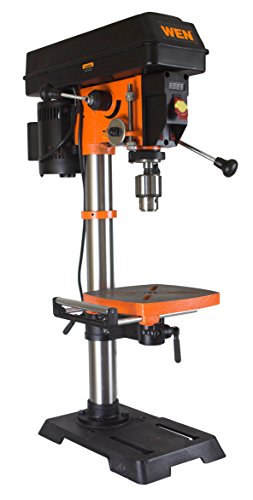 WEN DP1263VBest overall
 BACHIN BG-5156E
 Garvee 01Largest swing and travel
What a benchtop drill press is
A benchtop drill press is a smaller version of the floor-standing drill press found in many workshops. It has a motor and a spinning chuck mounted on a vertical column. You lower the bit into the work with a hand lever, and the work sits on a flat table below.
Because the bit travels straight down along a fixed path, the hole stays square to the table. A hand-held drill relies on your wrists and eyes to hold the angle. The press takes that guesswork away.
The bench-mounted size suits garages, hobby shops and small workspaces. You give up some drilling depth and power compared with a floor model, but you save a lot of space.
The main jobs it does well
The core use is drilling accurate holes. Most other uses build on that strength.
- Straight, perpendicular holes: ideal for dowel joints, shelf pin holes and anything where parts must line up.
- Repeatable holes: a depth stop lets you drill many holes to the same depth, which helps with blind holes that must not break through.
- Angled holes: tilt the table to a set angle and every hole matches.
- Metal drilling: a fixed machine with a clamped workpiece is safer and cleaner than drilling metal by hand, especially at lower speeds.
- Large-diameter holes: the leverage and rigid frame make bits like Forstner bits easier to control.
- Counterbores and countersinks: the depth stop gives consistent recesses for screw heads.
Extra tasks with accessories
With the right add-ons, a drill press can do more than drill. A sanding drum in the chuck smooths curved edges and inside cut-outs. A plug cutter makes wood plugs to hide screws. A hole saw cuts larger openings in thin stock.
Some people also use it for light mortising with a hollow chisel attachment, or for driving a wire brush to clean small parts. These jobs call for slow speeds and good clamping, so check your machine's speed range before trying them.
Benchtop drill press vs. hand drill
A hand drill wins on portability. You can carry it to a job site, drill into a wall or work overhead. A drill press only works on pieces you can bring to it. If you are weighing both, our best drill page covers handheld options.
The press wins on accuracy and control. The table below sums up the differences.
| Feature | Hand drill | Benchtop drill press |
|---|---|---|
| Portability | High, goes anywhere | Fixed to a bench |
| Hole accuracy | Depends on your aim | Square to the table |
| Repeatable depth | Manual, by eye or tape | Built-in depth stop |
| Work holding | One hand often needed | Both hands free, work clamped |
| Angled holes | Hard to repeat | Tilting table, repeatable |
| Best for | Site work, quick holes | Shop work, precise joinery and metal |
Choosing one for your needs
If you mostly drill small holes in wood and plastic, a basic benchtop model is usually enough. If you plan to drill metal or large bits often, look closely at the motor rating, the speed range and the chuck size on each model.
Our best benchtop drill press comparison lines up published specifications side by side so you can match them to your projects. Also check the throat distance and maximum drilling depth, since they limit how big a workpiece you can handle.
Safety basics
A drill press is simple, but it can still injure you. Follow these habits every time.
- Wear safety glasses to guard against chips and flying debris. Add hearing protection if the machine or the material is loud.
- Clamp the workpiece to the table or hold it in a vise. Never hold small parts by hand, because the bit can grab and spin them.
- Tie back long hair and remove loose sleeves, jewelry and gloves that could catch in the chuck.
- Remove the chuck key before you switch on the machine.
- Unplug the machine before changing bits, belts or speed settings.
- Match the speed to the bit and material. Larger bits and harder materials generally need slower speeds.
Frequently asked questions
Can a benchtop drill press cut metal?
Yes, if the motor and speed range suit the job. Use sharp bits, a slow speed, cutting oil for steel, and clamp the metal firmly.
Do I need to bolt it down?
Bolting the base to a sturdy bench is the safest choice. It stops the machine from tipping or shifting when you apply pressure.
What is the difference between benchtop and floor-standing models?
A floor-standing press is taller and usually allows deeper drilling and longer workpieces. A benchtop model is smaller and fits on a workbench.
Can I use it as a mill?
No. A drill press is built for downward force only. Side loads from milling can damage the bearings and make the work unsafe.
What bits work in a drill press?
Twist bits, brad point bits, Forstner bits, spade bits and hole saws all work, as long as the shank fits the chuck and the speed is set correctly.