What Is a Bench Grinder Used For? 10 Common Jobs and Safe Use
A bench grinder is a stationary power tool with two abrasive wheels, used to sharpen tools, shape and smooth metal, remove rust and paint, and polish surfaces. It is a shop staple because it makes quick work of jobs that take a long time by hand. It also demands respect: always wear eye protection and keep the work rest and wheel guards set correctly.
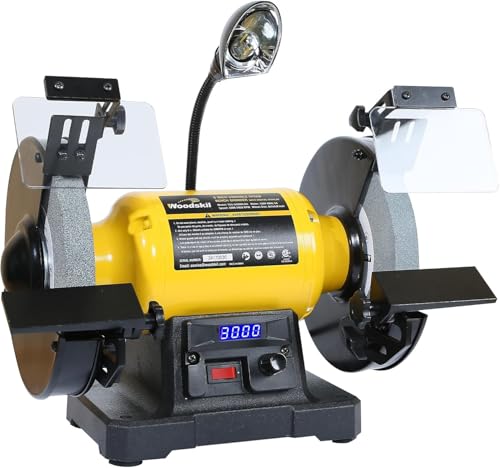 Woodskil TDS-G200VLGABest overall
 WEN BG625VVariable speed with warranty
 Greteefor NS-SLJ-01-3Cast iron variable speed
What a bench grinder is
A bench grinder is a motor mounted on a base, with a spinning shaft that holds a wheel on each end. You bolt it to a workbench or a stand, switch it on, and bring the workpiece to the wheel. The wheels do the cutting, and the motor keeps them turning at a steady speed.
Most models come with two wheels of different grit, often one coarse and one fine. Each wheel has a guard, a spark deflector and an adjustable tool rest. Some models also let you swap a wheel for a wire brush or a buffing wheel, which widens what the machine can do.
10 things a bench grinder is good for
Here are the jobs people most often use a bench grinder for. Some are everyday shop tasks, and others only come up now and then.
- Sharpening chisels and plane irons, with the right wheel and light pressure.
- Sharpening lawn mower blades and garden tools such as shovels, hoes and pruners.
- Sharpening drill bits, which takes practice to hold the correct angle.
- Smoothing sharp or rough edges after cutting metal with a hacksaw or angle grinder.
- Removing burrs from freshly cut bolts, rods and pipe.
- Rounding over thread ends on a cut bolt so a nut starts easily.
- Shaping metal parts, such as tapering a rod or rounding a corner.
- Removing rust, scale and old paint with a wire wheel.
- Cleaning and polishing metal with a buffing wheel and compound.
- Grinding down weld spatter or a rough weld bead.
Which wheel or accessory fits the job
The wheel you choose matters as much as the grinder. A coarse wheel removes material fast but leaves a rough surface. A fine wheel removes less and gives a cleaner edge, which suits finishing and sharpening.
Wire wheels and buffing wheels are different tools in practice. A wire wheel strips rust and paint, while a buffing wheel gives a shine. Make sure any accessory is rated for your grinder and fits the shaft size.
| Job | Wheel or accessory | Why it fits |
|---|---|---|
| Heavy shaping, removing a lot of metal | Coarse grinding wheel | Cuts quickly |
| Sharpening edges and finishing | Fine grinding wheel | Leaves a smoother edge |
| Rust and paint removal | Wire wheel | Brushes surface material off |
| Polishing metal | Buffing wheel with compound | Brings up a smooth shine |
What a bench grinder is not for
A bench grinder is not a general cutting tool. The side of a standard grinding wheel is not built to take sideways force, so never grind on the side of the wheel unless it is made for that. Use the face of the wheel as designed.
Be careful with soft materials too. Aluminum, brass and some plastics can clog a wheel, which makes it less effective and can be hazardous. Wood is a poor match as well, because dust and heat create a fire risk and clog the wheel. If you do a lot of woodworking sharpening, a slow-speed grinder or a different sharpening system may suit you better.
Safety basics before you switch it on
A bench grinder spins fast and throws sparks and fragments, so set it up with care. Wear safety glasses or a face shield every time, and add hearing protection if the noise is loud. Skip gloves and loose sleeves, which can catch on a spinning wheel, and tie back long hair.
Check the wheel before use. Look for cracks, chips or damage, and do not use a wheel that is damaged or that has been dropped. Let the grinder run for a short time on its own before you start work, and stand to the side while it spins up, not in line with the wheel.
- Set the tool rest close to the wheel, with only a small gap, so work cannot get pulled between them.
- Adjust the spark deflector as the wheel wears down.
- Keep the guards in place at all times.
- Hold the work firmly and apply light pressure. Do not force it.
- Dip hot metal in water to cool it, and keep flammable items and sawdust away from the sparks.
- Plug into a properly grounded outlet and keep cords clear of the wheels.
Choosing a bench grinder
If you only need to sharpen a few tools, a smaller model is usually enough. If you shape metal often or run the grinder for longer sessions, look at motor power, wheel size and build quality more closely. Features such as a sturdy base, adjustable rests and smooth, low-vibration running are worth checking too.
To see how specific models stack up on their published specifications, read our best bench grinder comparison. It is a good place to start once you know which jobs you plan to do most. Whichever you pick, bolt it down firmly, because a grinder that walks across the bench is both annoying and unsafe.
Keeping your grinder working well
A little upkeep makes the machine safer and more accurate. Dress the wheel when it becomes glazed or uneven, using a dressing tool, so it cuts cleanly again. Replace wheels that are worn down or damaged, and always match new wheels to the grinder's rated speed.
If you plan to add a new tool to your setup, our bench grinder comparison can help you match features to your workload. Store the grinder in a dry spot, because rust on the base and rests can affect how steadily you can hold the work.
Frequently asked questions
Can I use a bench grinder to cut metal?
Not safely with a standard grinding wheel. These wheels are made for grinding on the face, not for slicing. Use a hacksaw, band saw or a tool designed for cutting instead.
Do I need a stand for a bench grinder?
You need a solid, stable mount. Many people bolt the grinder to a sturdy workbench, and others use a dedicated stand. Either way, it should not rock or slide.
How do I know when to replace a grinding wheel?
Replace it if it is cracked, chipped or badly out of round, or if it has worn down close to the guard or rest. A wheel that vibrates heavily is another sign something is wrong.
Is a bench grinder the same as an angle grinder?
No. A bench grinder is fixed in place and you bring the work to it. An angle grinder is handheld and you bring the tool to the work.
Can a beginner use a bench grinder?
Yes, with care. Learn the safety basics, start with simple jobs like deburring, and practice on scrap metal before sharpening tools you care about.