What Happens If My Transmission Fluid Pump Goes Bad?
If the pump inside your transmission goes bad, fluid stops circulating with enough pressure. You will usually notice whining, slipping, delayed shifts, leaks or a burning smell, and the transmission can fail completely. Stop driving once symptoms appear and have the car inspected, because there is no safe time limit for running a failing pump.
 FOUR UNCLES FU-6502Best overall
 Lustriix QDSDCYBTransmission oil on the list
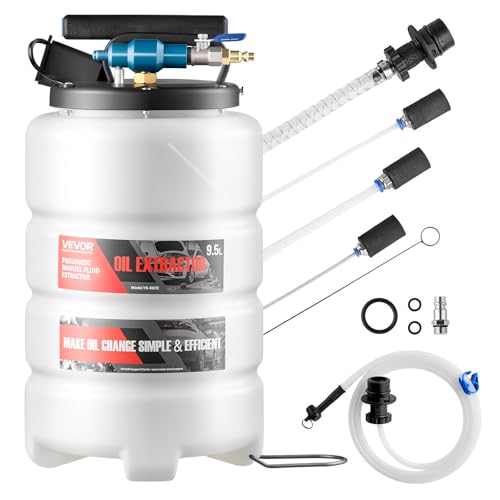 VEVOR YS-087CLong reach, big tank
Which transmission fluid pump do you mean?
People use the phrase for two different things. The first is the pump built into an automatic transmission, which pushes fluid through the gearbox. The second is a hand-held or air-powered extractor and fill pump that a DIYer uses to pull fluid out or add fluid through the dipstick tube or fill port.
Most of this guide covers the internal pump, since that is the part that causes expensive trouble. The last sections cover the tool, in case your extractor or fill pump is the one acting up.
What the internal pump does and what happens when it fails
An automatic transmission relies on fluid pressure to apply clutches, change gears, cool moving parts and keep metal surfaces from touching. The pump is driven by the engine, so it works whenever the engine runs. If it wears out, the fluid cannot circulate properly and pressure drops.
Low pressure means the clutches do not grip firmly. They slip, heat builds up, and the fluid breaks down and can smell burnt. Debris from worn parts then spreads through the transmission and speeds up the damage. Left alone, a weak pump can end with a car that will not move in any gear.
A pump that is leaking at its front seal causes a different problem. Fluid escapes from the front of the transmission, the level drops, and the pump starts sucking air. That produces many of the same symptoms as a worn pump.
Common symptoms of a bad transmission pump
No single sign proves the pump is the culprit, but a cluster of them points that way. Watch for these:
- A whining or humming noise that changes with engine speed.
- Slipping, where the engine revs but the car does not accelerate to match.
- Delayed or harsh engagement when you shift into Drive or Reverse.
- Overheating or a transmission warning light.
- A burnt smell from the fluid, or fluid that looks dark or has metal flecks.
- Fluid leaking at the front of the transmission.
- The car refusing to move in any gear.
How long can you keep driving?
There is no reliable number. A pump can limp along for a short time or fail soon after the first symptom, and it depends on the damage already done. Every mile driven with low pressure adds heat and wear to parts that are costly to replace.
The safest plan is to stop driving as soon as you notice slipping, grinding or a burning smell. If the car is still running and you must move it, keep the trip short and slow, and arrange a tow instead of driving it to a shop. Towing a front-wheel-drive or all-wheel-drive car can also need special handling, so check the owner's manual.
Is it the pump or something else?
Several cheaper problems look like a failing pump. Check the simple things first, and ask a transmission shop to confirm before you commit to a repair.
The table below shows what else can cause each symptom.
| Symptom | Possible pump-related cause | Other common causes |
|---|---|---|
| Whining noise | Worn pump gears or bushings | Low fluid level, clogged filter |
| Slipping | Low line pressure | Worn clutches, old or degraded fluid |
| Delayed engagement | Weak pressure after startup | Low fluid, faulty solenoid |
| Fluid leak at the front | Failed pump seal | Leaking pan gasket or cooler line |
| Burnt smell | Overheated fluid from slipping | Overheating from towing or a clogged cooler |
What to do next
Start by checking the fluid level and condition, following the procedure in your owner's manual. Some cars have no dipstick and need a fill-port check. If the level is low, find the leak before adding fluid. If the fluid is dark, burnt or full of metal, the problem is likely inside the transmission.
A shop can test line pressure, which is the most direct way to judge the pump. Repair usually means removing the transmission, so ask about repair, rebuild and replacement options and compare them. Fresh fluid will not fix a worn pump, but a fluid and filter service can be part of the repair.
If the tool is the problem: extractor and fill pumps
A fluid extractor can also fail. Usual causes are a loose air fitting, a worn seal or a tube that does not reach far enough. Before replacing it, check that the cap and fittings are tight and that the tube is the right size for your dipstick opening.
If you are shopping for a new one, our best transmission fluid pump page lists specs side by side. Reach matters because transmission tubes can be long and angled. Among models that list a main tube length, 60 in is the longest on that page. Power matters too. Pneumatic models need an air compressor, with 1.8 L/min listed for two of them, while the 12V electric model lists 100W and 0.95 L/min.
Also confirm that transmission fluid, ATF or gear oil is named in the compatible fluids. Many extractors are sold mainly for engine oil. You can compare these details in the transmission fluid pump comparison before you buy.
Safety notes
Transmission work has real hazards, so keep these in mind:
- Never work under a car supported only by a jack. Use rated jack stands on level ground.
- Hot fluid can burn. Let the car cool before opening any fill port or dipstick tube.
- Wear safety glasses and gloves, because fluid can spray when a line or fitting is loosened.
- Compressed air tools need a secure fitting and a regulator set within the pump's rating. Do not exceed it.
- Do not use extractors with gasoline or volatile fluids unless the maker clearly says they are rated for them.
- Clean up spills quickly and dispose of used fluid at a recycling center.
Frequently asked questions
Can a bad transmission pump be repaired without replacing the whole transmission?
Sometimes. A shop may replace the pump or its seal, but it usually has to remove the transmission to reach it. If debris has spread, a full rebuild or replacement may make more sense.
Will adding transmission fluid fix a bad pump?
No. Topping off helps only if a leak lowered the level, and then the leak still has to be fixed. A worn pump cannot be cured with fluid.
Does a manual transmission have a pump?
Most manual gearboxes do not have an engine-driven pump like an automatic does. They rely on splash lubrication, so noise and shifting problems usually come from other causes.
Can I use an extractor pump to check for pump problems?
It can help you inspect fluid color and look for debris, but it cannot diagnose the pump. Only a pressure test can show whether the internal pump is working as it should.