What Do LED Light Bulbs Do to Your Body?
For most people, LED bulbs are safe. They give off almost no UV and very little heat. The two effects worth knowing about are evening blue light, which can make it harder to wind down for sleep, and flicker you cannot see, which can bother sensitive eyes. Choosing a warm, flicker-free bulb and using it at the right time of day takes care of most of the concern.
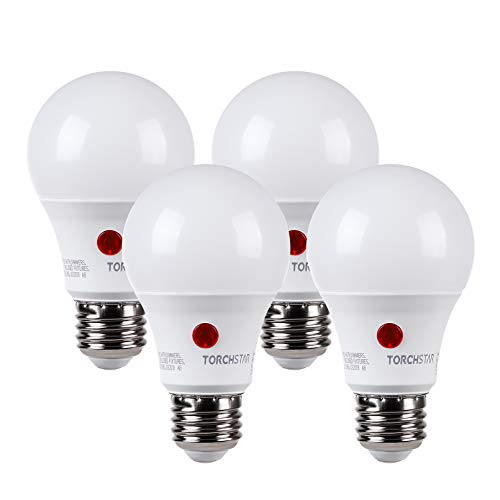 TORCHSTAR A-50408Top-ranked outdoor sensor bulb
 TJOY QASN83+85Best fit for eye comfort
 SETEN LED BULB 10WBrightest A19 in top ten
What LEDs actually do to your body
Any light you see affects your body in two ways. It lets your eyes see, and it also sends timing signals to your internal clock. LEDs do both, just like the sun, a candle or an old incandescent bulb. The difference is in the mix of colors an LED puts out and how its electronics drive it.
Headlines about LEDs being harmful usually come from one of two places. Some concerns are about blue-heavy light at night. Others are about fast flicker caused by cheap power circuits. Neither problem applies to every LED, and both can be avoided by reading the spec sheet.
Blue light, melatonin and sleep
Your body uses bright, blue-rich light as a cue that it is daytime. In the evening, that cue can delay the release of melatonin, the hormone that helps you feel sleepy. This is the best-supported health concern about LED lighting, and it applies to anything blue-rich, including phone and laptop screens.
Color temperature is the quickest way to judge this. It is measured in kelvin, and lower numbers look warmer and contain less blue. Our best light bulbs for health page suggests 2700K to 3000K for bedrooms and living rooms at night. A 5000K daylight bulb is the coolest option on that page, so it suits a garage or task area better than a bedside lamp.
Blue-rich light is not bad in itself. Bright, cool light during the day can help you feel alert. The trouble is mostly about timing, so the fix is mostly about timing too.
Flicker, headaches and eye strain
Every LED bulb converts household AC power into steady current. Well-built bulbs smooth that out. Poorly built ones, or good bulbs paired with a mismatched dimmer, can pulse many times a second. You will not see it, but some people notice headaches, tired eyes or a vague sense of discomfort in a room.
Few makers publish a flicker rating, so you usually have to read the listing. In our lineup, the TJOY A19 3000K 8-pack and a few other bulbs describe themselves as flicker-free. That is a maker claim, not a measured result, so treat it as a useful sign rather than proof.
Dimmer mismatch is a common cause of flicker. A non-dimmable bulb on a plain switch avoids that problem, which is one reason the TJOY bulb is listed as non-dimmable. If you want dimming, pick a bulb that is rated as dimmable and use it with a compatible dimmer.
Eyes, skin and heat
Standard white LEDs do not give off meaningful UV or infrared, so they are not a sunburn or skin-damage concern at normal home distances. They also run cooler than incandescent bulbs for the same brightness, which lowers the chance of burns from touching a bulb.
The eye concern is glare. Looking straight at a bright bare LED is uncomfortable, and very intense blue-rich sources can stress the eye if you stare at them for a long time. Household bulbs are not built like that, but it is still sensible to keep bare bulbs out of your direct line of sight. Use a shade, a frosted bulb or a fixture that points the light away from your eyes.
Color accuracy matters for comfort as well. CRI tells you how true colors look under a bulb. On our health page, only 9 of the 34 bulbs list a CRI, and the listed values run from 80 to 85. The TJOY 3000K bulb lists 85, which is the top of that range.
How to pick a gentler LED bulb
You do not need to avoid LEDs. You need to match the bulb to the room and the time of day. Here is a short checklist:
- Choose 2700K to 3000K for bedrooms, living rooms and any lamp you use in the evening.
- Look for a flicker-free or zero-flicker claim in the listing, and be wary of listings that say nothing at all.
- Check for a CRI number. If it is missing, you cannot judge color accuracy.
- Use a non-dimmable bulb on a plain switch, or a dimmable bulb with a compatible dimmer.
- Keep bare bulbs out of your direct line of sight with a shade or diffuser.
- Save 5000K daylight bulbs for garages, workshops and other task areas.
| Bulb | Color temp | Brightness | What it suits |
|---|---|---|---|
| TJOY A19 3000K 8-pack | 3000K, CRI 85 | 800 lm, 9 W | Bedrooms and living rooms; listed as flicker-free and non-dimmable |
| TORCHSTAR A19 dusk to dawn 4-pack | 5000K | 800 lm, 9 W | Outdoor use only per its listing |
| SETEN dusk to dawn A19 | 5000K | 1100 lm, 10 W | Sensor bulb; listing mentions indoor use but gives no safety listing |
Match the bulb to the room
Many top-ranked bulbs on our health page are dusk to dawn sensor bulbs for porches and driveways. They switch on by themselves and use cool light, which is fine outdoors but not ideal beside a bed. If you are comparing outdoor options, see our best light bulbs for outdoor fixtures page. For general household picks across all rooms, start with best light bulbs.
For a desk, bedroom or reading lamp, choose a standard A19 with an E26 base and a warm tone. Putting a sensor bulb indoors can also cause odd behavior, since it reacts to daylight and may stay off in a bright room.
Safety notes
Turn off the power at the switch, and let a bulb cool before you change it. Make sure the bulb fits the fixture's rated wattage and base type, and never force it into a socket.
Use only bulbs rated for the place you install them. The TORCHSTAR listing says outdoor use only, and the SETEN listing gives no safety listing for indoor spaces. Use a stable ladder when you work at height, and do not climb on furniture to reach a ceiling fixture.
If you get frequent headaches or sleep problems that seem tied to lighting, try changing the bulb first. If symptoms continue, talk with a doctor or an eye care professional.
Frequently asked questions
Do LED bulbs cause cancer?
No reliable evidence shows that normal household LED bulbs cause cancer. They give off very little UV. The main documented concern is the effect of evening blue light on sleep timing.
Are warm white LEDs really better for sleep?
Warmer bulbs contain less blue light, so they are less likely to signal daytime to your body in the evening. Dimmer light and turning lights down an hour or so before bed can help too.
Can I tell if an LED bulb flickers?
Not usually by eye. One rough check is to film the bulb with your phone camera and look for dark bands on screen. A flicker-free claim in the listing is also a useful sign, though it is the maker's claim.
Are LEDs worse for my eyes than old bulbs?
Not by themselves. Glare, harsh cool light and flicker are the real issues, and they can be reduced with a warm, flicker-free bulb behind a shade.