What dB Level Needs Ear Protection? A Plain Guide
Start wearing hearing protection at about 85 decibels (dB), especially if you are exposed for hours at a time. Louder sounds need protection in less time, and very loud impulse noise such as gunfire calls for protection every time. Choose muffs by noise reduction rating (NRR) and match them to the job.
 Walker's GWP-RSEMBest overall
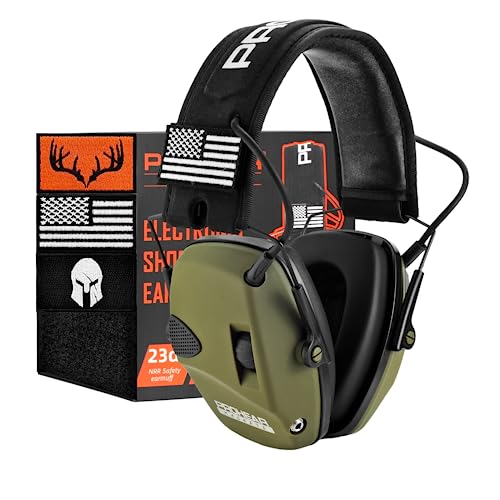 PROHEAR PROHEAR 066Light electronic, long battery
 Pro For Sho PAS-GYHigh NRR, low weight
The 85 dB rule of thumb
The most common answer is 85 dB. Workplace safety rules in the US use 85 dB, averaged over an eight-hour day, as the point where employers must set up a hearing conservation program. Hearing experts generally treat sounds at or below about 70 dB as safe for everyday exposure.
Decibels do not work like ordinary numbers. Every 3 dB increase roughly doubles the sound energy, so the safe listening time gets cut in half. That is why a 100 dB sound is far more dangerous than an 85 dB one, even though the numbers look close.
Damage depends on both loudness and time. A short burst of something very loud can hurt your hearing, and so can a long stretch of something that only seems annoying. If you have to raise your voice to talk to someone an arm's length away, the noise is likely in the range where protection makes sense.
How loud are everyday noises?
You can measure sound with a phone app or a dedicated meter, but the figures below are rough guides. Real levels vary with the equipment, the room and how close you are.
Use the table as a starting point, and treat anything near or above 85 dB as a prompt to put protection on.
| Situation | Rough level | Protection advice |
|---|---|---|
| Normal conversation | Around 60 dB | None needed |
| Busy traffic or a loud restaurant | Around 70 to 85 dB | Usually fine for short periods |
| Lawn mower or leaf blower | Often around 85 to 95 dB | Wear protection for the whole job |
| Power tools and chainsaws | Often 100 dB or more | Wear protection every time |
| Concerts and sporting events | Often 100 dB or more | Wear protection, even for a few hours |
| Gunfire | Well above 130 dB | Wear protection every shot, consider doubling up |
What NRR tells you
The noise reduction rating, or NRR, shows how many decibels a hearing protector can take off under lab conditions. Our best ear protection page lists models from 22 dB to 37 dB NRR, so you can see the range available in muff form.
A higher number blocks more sound, but it is not a guarantee. A muff that does not seal around your ears will not give its rated protection. Glasses arms, hair, hats and a headband set too loose can all break the seal.
A simple way to use NRR is to compare it with the noise you face. If a task runs around 95 dB and your muffs are rated 23 dB, the real-world reduction will usually be smaller than that label number, but it should still bring the sound down toward a safer range. For very loud work, pick a higher rating.
Matching protection to the situation
Mowing and yard work are on the quieter end of the loud list, so a mid-range muff is often enough. Concerts are loud but happen in short sessions. Shooting is the most demanding case because of sudden, intense bursts.
For shooting, many people like electronic muffs because they let you hear range commands and conversation. In our lineup, the Walker's Razor Slim lists 23 dB NRR with sound amplification and an audio input, and the PROHEAR 066 lists 23 dB with amplification and about 300 hours of battery life. Electronic models in this lineup list 22 dB or 23 dB, so you trade some raw reduction for awareness.
If you want the most reduction, passive models run higher. The Pro For Sho lists 34 dB NRR at 7.2 oz, and the Decibel Defense lists 37 dB NRR at 12 oz. Both are passive, so they have no batteries and cannot boost quiet sounds. The Pro For Sho listing also suggests wearing earplugs under the muffs for extreme noise.
You can see how all eight products stack up on the ear protection comparison, including weight, cushions and extras.
Fit and comfort checklist
The best-rated muff does little if you take it off after twenty minutes. Check these points before you buy:
- Look for ANSI S3.19 or CE EN 352 listings, which several models in our lineup carry.
- Confirm the size. Some muffs suit adults, one lists kids through adults, and one is made for smaller heads.
- Check weight, cushion material and headband adjustment. A padded headband and foam or gel cushions spread pressure.
- Make sure the cups fully cover your ears and sit flat against your head.
- Expect a snug fit. The Pro For Sho and Decibel Defense listings both say a tight feel is intended to create a seal, and suggest stretching them gently over a box if they feel too tight at first.
- Move glasses arms and hair out of the way so nothing breaks the seal.
When to wear ear protection
A good habit is to put protection on before the noise starts, not after your ears ring. Ringing or muffled hearing after an event is a sign you were exposed to too much.
Here are common times to wear it:
- Running a mower, trimmer, leaf blower or chainsaw
- Using power tools in a workshop or on a job site
- Firing guns at a range or while hunting
- Attending concerts, races, sports events or fireworks
- Working near loud machinery or generators
- Any time you cannot talk normally with someone an arm's length away
Safety notes
Hearing damage is usually painless and permanent, so do not wait for discomfort. Never skip protection for just one quick cut or one shot.
Electronic muffs help you hear your surroundings, but they are not a reason to turn volume up high. Keep amplification at a level where you still hear safely. If you use an audio input, keep the volume low enough to hear people around you, especially near moving machinery.
When using a chainsaw or working at heights, also wear eye protection, and make sure muffs do not stop you from hearing warnings from coworkers. Check battery compartments and replace worn cushions, since cracked foam lets noise leak in.
Frequently asked questions
Is 70 dB harmful?
Sounds at or below about 70 dB are generally considered safe for everyday exposure. Risk rises as levels climb above that, and most guidance focuses on 85 dB and up.
Do I need protection at a concert?
Usually yes. Concerts are often louder than 85 dB, and the sound lasts for hours. Muffs or earplugs reduce the risk, and many people find they can still enjoy the music.
Can I wear earplugs and muffs together?
Yes. For very loud noise such as gunfire, combining earplugs with muffs adds protection. The Pro For Sho listing recommends this for extreme noise.
Are electronic muffs less protective than passive ones?
In our lineup the electronic models list 22 dB or 23 dB NRR, while passive models that list a type run 27 dB to 37 dB. Electronic muffs trade some reduction for the ability to hear speech.
Do kids need hearing protection too?
Yes, in loud places. Check the size information, since some muffs fit kids through adults and others are made for adult heads or smaller heads only.